ACROSS sub-Saharan Africa, a silent recruitment crisis is ensnaring thousands of young men into one of the 21st century’s bloodiest conflicts, revealing a toxic convergence of economic desperation, criminal networks, and geopolitical manipulation that threatens to destabilise Africa’s relationships with both Moscow and Kyiv.
The dimensions of African participation in the Russia-Ukraine war have only recently come into focus, and the numbers are staggering. Ukrainian intelligence reports document more than 1,400 African fighters embedded within Russian military formations, drawn from over 30 African nations. This is not a marginal phenomenon – it represents a systematic, continent-wide recruitment operation that has exploited Africa’s youth unemployment crisis and porous regulatory environments.
Kenya’s Ministry of Foreign Affairs confirmed Wednesday that more than 200 Kenyan nationals are currently deployed alongside Russian forces in Ukraine. But Kenya is merely the tip of the spear. South Africa has 17 citizens trapped in the Donbas region, many from KwaZulu-Natal province, aged between 20 and 39. The geographic and demographic spread suggests these recruitment networks have achieved continental reach, targeting the young, the unemployed, and the desperate across multiple nations.
The recruitment methodology reveals a sophisticated criminal enterprise. Kenyan recruits were promised up to $18,000 covering visas, travel, and accommodation—extraordinary sums in economies where youth unemployment exceeds 40% in some sectors. The initial pitch carefully avoided mention of combat: recruits believed they were being hired for technical roles, including drone assembly, chemical handling, and equipment maintenance.
The South African case exposes even more calculated deception. The 17 men were lured by promises of high-paying security jobs and bodyguard training, allegedly linked to an organisation connected to the uMkhonto weSizwe (MK) Party. For a 24-year-old who had unsuccessfully sought employment with the South African Police Service, such an offer represented not just income but professional legitimacy—a credential that could transform his future prospects.
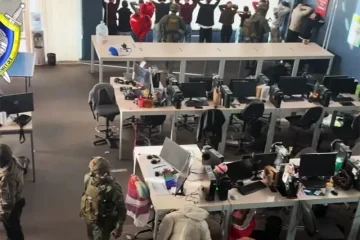
The September raid near Nairobi, which rescued 21 Kenyans before their deployment, revealed the operation’s industrial scale. These men were in advanced stages of processing, housed together, documented, and awaiting transport to the front lines. One individual connected to the scheme now faces prosecution, but the networks remain active in both Kenya and Russia, according to Kenya’s Ministry of Foreign Affairs.
Legal Prohibitions and State Failures
South Africa’s case is particularly damning because it involves clear violations of domestic law. The Foreign Military Assistance Act of 1998 explicitly prohibits South African citizens from participating in armed conflicts abroad without government authorisation. President Cyril Ramaphosa has ordered a full-scale investigation into how these men left the country and who facilitated their recruitment—questions that implicate potential failures across immigration control, intelligence services, and law enforcement.
The Act was designed precisely to prevent scenarios like this: South African citizens being deployed as mercenaries in foreign conflicts, a legacy concern dating to the apartheid era’s extensive use of private military forces across the continent. That 17 men could be recruited, processed, and transported to a war zone thousands of miles away without detection represents a catastrophic intelligence and regulatory failure.
Other African nations face similar legal constraints, though enforcement varies widely. Kenya does not have specific legislation prohibiting mercenary activity, creating a grey zone that recruiters have exploited. The Ministry of Foreign Affairs’ acknowledgement that recruitment networks remain active in Kenya suggests the government lacks either the legal tools or the enforcement capacity to shut them down.
The Continental Legal Patchwork creates opportunities for criminal networks to forum-shop, targeting nationals from countries with weak enforcement while avoiding those with robust legal frameworks. This has transformed the recruitment operation into a transnational criminal enterprise that no single African state can effectively combat alone.
Diplomatic Complexities and Geopolitical Entanglement
The diplomatic response has been hampered by competing narratives and geopolitical sensitivities. The Ukrainian embassy in Pretoria denies any connection to the South African recruits, instead alleging involvement by Russian operatives. Ambassador Olexander Scherba has stated that should the men surrender, they would be treated as prisoners of war under international law—a designation that acknowledges their combatant status while offering minimal practical assistance.
Russia’s embassy has maintained complete silence on the issue, even as Russian forces control the Donbas region where the South African men are trapped. This silence is strategic: acknowledging the recruits’ presence would confirm Moscow’s use of foreign mercenaries, undermining Russia’s narrative that it is fighting a legitimate defensive war against NATO expansion.
Jacob Zuma, president of the MK Party, has reportedly made direct appeals to the Russian government for the men’s release, warning that deploying inexperienced volunteers into combat risks devastating losses and could damage Russo-African relations. Zuma’s intervention is significant – it suggests the recruitment networks may have cynically exploited the MK Party’s name recognition and liberation credentials to lend legitimacy to their operations, even if the party had no formal involvement.
The South African government has urged families to maintain silence while “sensitive diplomatic negotiations” proceed—a request that highlights Pretoria’s limited leverage. South Africa has attempted to maintain neutrality in the Russia-Ukraine conflict, a position that has drawn Western criticism but preserved relationships with Moscow. Now that neutrality is being tested, securing the men’s release requires either Russian cooperation or their surrender to Ukrainian forces, both politically fraught options.
The Human Cost: Profiles of the Trapped
Behind the statistics lie individual tragedies that illuminate Africa’s broader economic crisis. The 24-year-old South African who sought a career in the police service represents millions of young Africans who cannot find formal employment despite education and ambition. In South Africa, youth unemployment exceeds 60%—the highest rate globally. For such individuals, an $18,000 contract or promises of bodyguard training represent transformative opportunities, enough to overcome scepticism about the offer’s legitimacy.
Kenyan recruits injured on the front lines have contacted their country’s embassy in Moscow, revealing that the promised compensation and support have evaporated. They face combat conditions for which they received minimal training, speaking languages they don’t understand, fighting in a conflict about which they know little, thousands of miles from home.
The 17 South Africans in Donbas face particularly acute danger. The region has been a primary theatre of intense artillery warfare, with casualty rates among infantry units reportedly exceeding 70% in some Russian formations. These men, lacking military experience, appropriate training, or even basic language skills for communication with command structures, face survival odds that approach lottery-level randomness.
Civil Society Response and Systemic Critique
Tebogo Mashilompane of the Forum for South Africa has called for immediate government action, including deploying military aircraft and leveraging all diplomatic channels for repatriation. His critique extends beyond emergency response to systemic failure: he argues that economic desperation makes young men vulnerable to online deception, and that intelligence agencies failed catastrophically to detect and disrupt these recruitment networks before men were deployed.
The intelligence failure is indeed striking. These operations are required:
- Establishing contact with hundreds of recruits across multiple countries
- Processing travel documents and visas
- Arranging international transportation
- Coordinating with Russian military structures for integration into units
- Maintaining communication networks across continents
Each step created potential detection opportunities that intelligence services apparently missed or ignored. This suggests either severe capacity constraints or, more troublingly, possible corruption and complicity at some level of state bureaucracy.
Continental Implications and Future Risks
This crisis exposes several uncomfortable realities about contemporary Africa:
First, economic desperation has reached levels where young men will accept transparently suspicious offers involving travel to war zones, suggesting that formal economies have failed to provide viable pathways to dignity and security for millions.
Second, state capacity across the continent remains insufficient to protect citizens from transnational criminal networks, even when those networks are recruiting citizens for illegal foreign military service.
Third, Africa’s attempts to maintain neutrality in great power conflicts are being undermined by these recruitment operations, which force African governments to take positions and make demands that inevitably favour one side or the other.
Fourth, the precedent is dangerous. If recruitment networks can successfully deploy thousands of Africans to Ukraine with minimal consequence, what prevents similar operations for other conflicts? Yemen, Myanmar, and numerous African civil wars could all become destinations for future recruitment drives targeting the continent’s unemployed youth.
Conclusion: A Crisis Requiring Continental Response
The African soldiers trapped in Ukraine represent more than individual tragedies or bilateral diplomatic incidents. They are symptoms of a continental crisis at the intersection of economic failure, state weakness, and geopolitical manipulation.
The immediate priority must be repatriation—through negotiation, surrender arrangements, or covert extraction operations. But the underlying pathologies require long-term, coordinated responses: economic development that provides alternatives to mercenary service, intelligence cooperation to detect and disrupt recruitment networks, legal harmonisation to eliminate forum-shopping opportunities, and diplomatic coordination to present unified positions to external powers.
Until African states address these structural vulnerabilities, the continent’s youth will remain targets for recruitment into conflicts that serve others’ interests, dying in wars that have nothing to do with Africa’s security or prosperity. The question is whether this crisis will finally catalyse the coordinated continental response these challenges demand—or whether it will be merely another scandal that generates temporary outrage before fading from attention, leaving the recruitment networks intact and operational, ready to ensnare the next wave of desperate young men seeking opportunity in all the wrong places.