THE curfew has lifted. The internet flows again. But in the haunted streets of Dar es Salaam, no one is celebrating liberation – only counting the cost of survival.
The sun rises over Tanzania on a landscape transformed by violence, and the question hanging in the humid air is not whether normalcy will return, but whether the word “normal” still means anything at all.
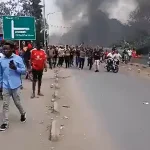
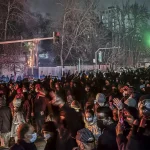
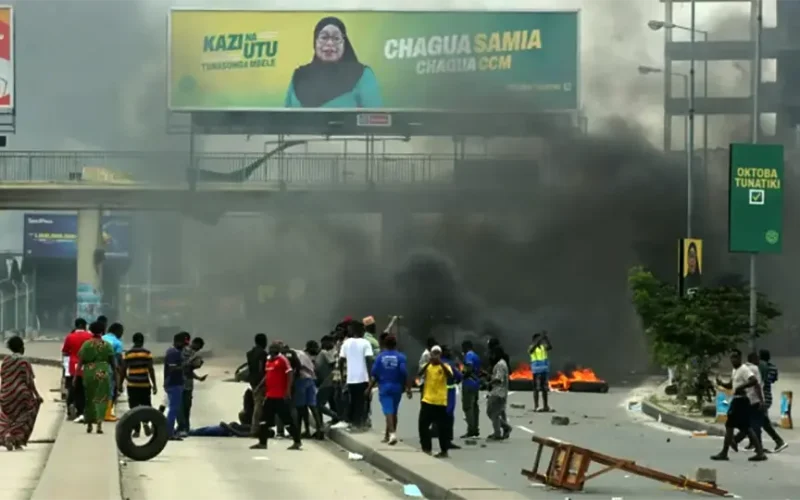
Burnt-out vehicles mark the capital’s arteries like breadcrumbs from a nightmare. Armed soldiers stand watch at intersections where, just days ago, crowds surged and bullets flew. Shop owners peer cautiously from doorways, calculating risk against hunger, while above them, the internet, silent for a week of darkness, crackles back to life, carrying with it a flood of testimonies, accusations, and grief that the blackout had dammed.
This is Tanzania on the morning after: electricity restored, curfew lifted, and utterly, profoundly changed.
Over 700 dead, according to opposition claims. The government offers no counter-figure, no confirmation, no denial – only an eloquent silence that speaks volumes. These are not statistics; they are mothers, students, vendors, and fathers. They are the price Tanzania paid for an election that half the country believes was stolen, and the other half is too afraid to question.
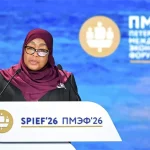
The disputed October 30 election – condemned internationally as fundamentally flawed – has torn open fissures in Tanzanian society that decades of relative stability had papered over. President Samia Suluhu Hassan’s contested re-election triggered protests across Dar es Salaam and Mwanza that security forces met with a ferocity shocking even to observers familiar with authoritarian crackdowns. What followed was a week that will define this generation: internet blackouts, nationwide curfews, the metallic sound of live ammunition in residential streets, and then – silence.
Now, as the controls ease and communication resumes, Tanzania faces a reckoning it cannot postpone and a question it cannot avoid: What have we become?
A City Learning to Breathe Again
Walk through Kariakoo today, and you witness a masterclass in collective trauma. The international market – that perpetual engine of commerce, noise, and life – operates at half-volume, like a patient recently removed from intensive care. Some shops have cracked their shutters, testing the atmosphere. Many remain sealed, their owners clustered outside in anxious knots, speaking in voices that don’t carry.
The absence is most telling along Uhuru and Congo streets, usually choked with machinga – the small-scale traders who are Dar es Salaam’s economic lifeblood. These are people who cannot afford not to work, yet their empty pitches speak to a fear deeper than poverty. When those who must work choose not to, you understand how thoroughly terror has penetrated the social fabric.
Regional Commissioner Albert Chalamila announced yesterday that regular commuter buses will receive temporary licenses to replace the suspended Bus Rapid Transit system, a bureaucratic solution to infrastructural trauma. But the BRT terminal at Mbagala tells the real story: ringed with armed personnel, officers stationed on the pedestrian footbridge, a transit hub transformed into a military checkpoint. This is what “returning to normal” looks like – normal with a gun.
Traffic on Kilwa Road, one of Dar es Salaam’s busiest arteries, flows thin and cautiously. Passengers wait hours for irregular buses. The rhythms of urban life have been disrupted at a cellular level, and it will take more than lifted curfews to restore them.
The Unfinished Business of Truth
The Legal and Human Rights Centre’s call yesterday for an independent judicial investigation cuts to the heart of Tanzania’s existential crisis. The organisation, expressing relief at President Hassan’s promise of “dialogue and reconciliation,” nevertheless insists on something more fundamental: accountability.
“Individuals who committed unlawful actions must face legal consequences,” the LHRC statement read, carefully avoiding the question of which individuals, which actions. But the ambiguity is strategic, not accidental. In a country where truth itself has become contested terrain, even human rights organisations must navigate carefully.
The demand echoes across social media and civil society: transparency, investigation, consequences. These are not radical demands – they are the basic architecture of the rule of law. That they must be demanded at all reveals how far Tanzania has drifted from its own stated principles.
But here is the uncomfortable truth: accountability requires agreement on facts, and facts require information, and information is precisely what the week-long blackout was designed to obscure. What happened when the internet went dark? Who fired on whom? How many died, and where are the bodies? Which orders were given, by whom, and under what authority?
These questions multiply in the darkness and will not disperse in the light without deliberate investigation. Yet President Hassan’s government has offered promises of dialogue without mechanisms for truth-finding, reconciliation without acknowledgement of what requires reconciling.
The Opposition’s Impossible Position
Chadema and other opposition parties refuse to recognise the election results, citing vote suppression, candidate disqualification, and systematic manipulation favoring the ruling CCM party. From their perspective, they are defending democracy; from the government’s perspective, they are sowing chaos.
But refusing to recognise election results is not a sustainable political strategy – it is a cry of desperation from actors who believe every other avenue has been closed. The question is what comes next. Opposition parties cannot govern from a position of non-recognition, nor can they mobilise mass protests indefinitely in the face of lethal force.
The tragic logic of disputed elections is that they create situations where everyone loses: The government’s victory is tainted by questions of legitimacy. The opposition’s moral position is undermined by associated violence. And the people, caught between competing claims of rightness, suffer the consequences of both.
The International Gaze
Global condemnation has been swift and emphatic. Human rights organisations, diplomatic missions, and regional bodies have called for accountability, investigation, and respect for democratic norms. These statements matter- they apply pressure, constrain options, and signal that Tanzania’s crisis is not purely internal.
But international pressure is a blunt instrument. It cannot compel investigation, cannot enforce accountability, cannot bridge the chasm of distrust between government and governed. At best, it creates space for Tanzanians themselves to demand change. At worst, it allows the government to frame legitimate domestic grievances as foreign interference.
The international community faces its own dilemma: How to support democratic aspirations without enabling chaos? How to condemn violence without abandoning citizens to their fate? How to demand accountability from a government that has demonstrated a willingness to use force to maintain control?
Calm or Prelude?
The central question is whether this tentative peace represents resolution or merely intermission. Several indicators suggest the latter:
The core grievance remains unaddressed. Opposition parties have not withdrawn their claims. Citizens have not received credible explanations for what they witnessed. The election dispute—the spark that ignited this conflagration—festers without remedy.
The security posture contradicts the rhetoric. If normalcy has returned, why are soldiers still manning transit hubs? Why does a heavy police presence persist in Kariakoo and Mbagala? The government’s actions suggest it expects renewed unrest, even as its words promise peace.
Economic fragility compounds political instability. Every day of reduced commerce deepens Tanzania’s economic wound. The damage assessment for the BRT system continues. Supply chain disruptions persist. The longer this twilight state continues, the harder recovery becomes – and economic desperation often fuels political volatility.
The information landscape has shifted. Internet restoration is double-edged. It allows coordination among opposition groups and wider dissemination of testimony about the crackdown. Social media now carries images, videos, and stories that the blackout suppressed. This information flow could facilitate dialogue – or fuel the next wave of outrage.
The accountability vacuum grows more toxic with time. Without investigation, without consequences, without even official acknowledgement of the scope of casualties, grievances metastasise. The LHRC understands this; its call for a judicial commission is not merely about justice for the past but stability for the future.
The New Normal
Perhaps the most chilling aspect of Tanzania’s current state is how quickly the extraordinary becomes ordinary. A week ago, internet blackouts and shoot-on-sight curfews would have been unthinkable. Today, their lifting is cause for cautious relief rather than outrage at their imposition.
This is how authoritarian normalisation works – not through dramatic coups but through incremental adjustments to what citizens accept as tolerable. Each crisis expands the boundaries of acceptable state violence. Each emergency becomes precedent for the next.
The burned vehicles will be cleared. The soldiers will eventually withdraw from transit hubs. Commerce will resume. But something more fundamental has shifted: Tanzania’s understanding of what its government is capable of doing for its citizens.
The Path Not Chosen – Yet
President Hassan’s promise of “dialogue and reconciliation” offers a rhetorical off-ramp, but words without architecture are just noise. Genuine dialogue requires acknowledging all parties’ legitimate grievances, not just hearing them. Real reconciliation requires accountability for abuses, not enforced amnesia.
The government faces a choice masquerading as a dilemma: It can treat this moment as an unfortunate disruption to be suppressed back into compliance, or it can recognise it as an inflexion point demanding fundamental rethinking of the social contract. The first path leads to brittle stability maintained by force, always vulnerable to the next spark. The second requires courage, compromise, and institutional imagination.
So far, every signal suggests Tanzania’s leadership is choosing the first path. The security-heavy response, the information control, the lack of transparent investigation—these are tactics of suppression, not reconciliation. They may succeed in preventing immediate unrest, but they store up pressure for future explosions.
Beyond the infrastructure damage and economic disruption lies a more profound loss: trust. Trust between citizens and the state. Trust between communities. Trust in electoral processes. Trust that grievances can be addressed through institutional channels rather than street confrontations.
Trust is the social capital that allows diverse societies to function without constant violence. It is built slowly through consistent, transparent, accountable governance. It can be destroyed in a week.
Rebuilding it will require more than lifted curfews and restored internet. It will require truth-telling about what happened, consequences for those who committed abuses, and institutional reforms to prevent recurrence. None of these appears imminent.
The World Watches, Tanzania Waits
As normal life tentatively resumes – shops reopening, buses running, people returning to work – the question persists: Is this recovery or merely a reset before the next crisis?
The answer depends on choices not yet made by President Hassan’s government. Will there be an independent investigation, or will the events of recent days disappear into official silence? Will opposition parties find space for meaningful participation in governance, or will they face continued marginalisation? Will the security forces face accountability for excessive force, or will impunity reign?
International observers watch these dynamics carefully, knowing that Tanzania’s stability has regional implications. But ultimately, this is Tanzania’s crisis to resolve or fail to resolve. The international community can pressure, cajole, and condemn, but it cannot compel the fundamental political compromise that durable peace requires.
Morning After, Morning Of
In the Kariakoo market, a shopkeeper unlocks his shutters for the first time in a week. Down the street, a machinga sets up his mobile phone accessories stand, testing whether customers will return. At the BRT terminal, armed guards watch commuters with the intensity of people expecting trouble.
This is Tanzania today: a nation in liminal space, no longer in active crisis but not yet at genuine peace. The curfew has lifted, but fear remains. The internet flows, but truth is contested. Life returns, but not as it was.
The burned vehicle shells will eventually be cleared from the streets. The visible scars will fade. But the invisible wounds – to trust, to social cohesion, to the democratic project itself – will persist without deliberate treatment.
Tanzania stands at a crossroads, though it may not recognise it as such. One path leads toward accountability, institutional reform, and genuine reconciliation – difficult, costly, but ultimately constructive. The other leads toward suppression, selective memory, and the slow normalisation of authoritarianism – easier in the short term, catastrophic in the long run.
The morning after has arrived. The question is whether Tanzania is ready for the morning of – the morning of reckoning, of truth-telling, of choosing what kind of nation it wants to be.
For now, the burnt shells remain, the soldiers stand watch, and the people of Dar es Salaam navigate their uncertain peace with the wariness of those who have learned that normal can disappear in an afternoon – and may take a generation to rebuild.