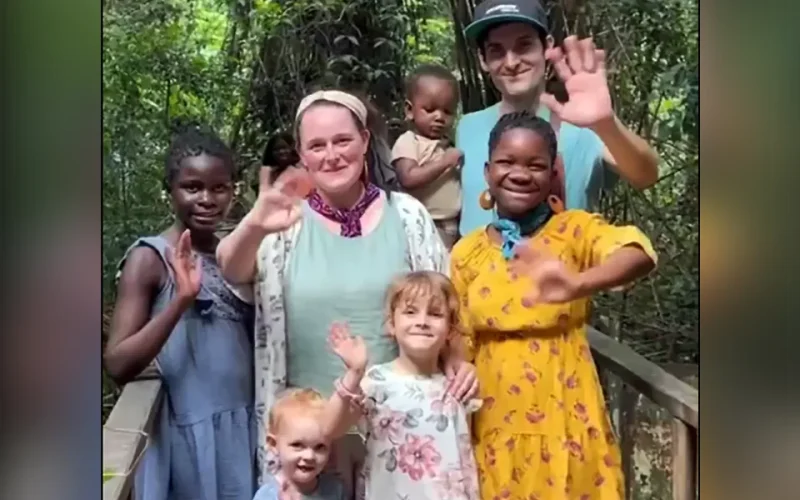
AN American family remains stranded in Nigeria after President Donald Trump’s latest immigration proclamation blocked their newly adopted special-needs infant from entering the United States, marking what advocates say is an unprecedented restriction on international adoptions.
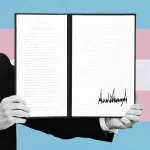
The Wilson family, whose case has drawn attention on social media, cannot return home because Presidential Proclamation 10998 — signed shortly after Trump’s January 20 inauguration — removed the traditional exemption for adopted children from travel restrictions affecting 39 countries, including Nigeria.
“No parent should have to choose between staying in a dangerous place or leaving their child behind,” the family wrote in advocacy materials being circulated to U.S. lawmakers.
Historic Departure from Adoption Policy
The proclamation represents the first time in American history that the federal government has blocked children already legally adopted by U.S. citizens from entering the country, according to adoption advocacy groups.
Historically, international adoptees have been excluded from immigration restrictions because adoption establishes a permanent parent-child relationship under U.S. law. The new policy treats adopted children the same as other foreign nationals from the affected countries, which the administration identifies as presenting security concerns.
The restrictions particularly affect families who have already completed lengthy adoption processes, including extensive background checks by the FBI and Department of Homeland Security — screenings required of all prospective adoptive parents under U.S. law.
Families Facing Impossible Choices
The Wilson family’s situation illustrates the immediate human cost of the policy. With their adopted infant unable to obtain travel authorisation, the family faces an indefinite stay in Nigeria, disrupting their lives and separating them from their support networks in the United States.
“Right now, the government is letting foreign athletes, diplomats, and business people enter the U.S., but it is stopping toddlers,” advocates note in template letters being sent to members of Congress.
Other American families find themselves in similar predicaments: some remain trapped abroad with their children, while others face the agonising prospect of children remaining in orphanages with no clear path forward.
Growing Advocacy Campaign
Affected families and supporters have launched a coordinated campaign urging congressional representatives to press the White House to reinstate the adoption exemption. The campaign argues that adopted children who have undergone rigorous vetting pose no security threat to the United States.
“A child who is adopted by U.S. citizens is not a threat to our country, and it is wrong to treat them like one,” the advocacy materials state.
The families are asking lawmakers to request either an amendment to the proclamation or its retraction as it applies to adopted children. Only presidential action can restore the exemption, advocates say, making direct intervention from Trump necessary to resolve the crisis.
International Scope
The 39 countries affected by the restrictions span multiple continents, though the administration has not publicly disclosed its complete methodology for designating which nations fall under the travel limitations. The policy affects pending and recently completed adoptions across Africa, Asia, and other regions.
As of Tuesday, there has been no indication from the White House that it plans to modify the proclamation to address the adoption cases, leaving families like the Wilsons in limbo and uncertain when — or if — they will return home together.
The administration has not responded to questions about how many families are currently affected or whether any exceptions are being considered for humanitarian grounds.