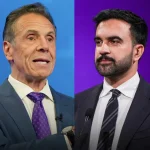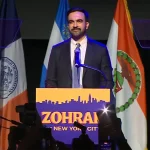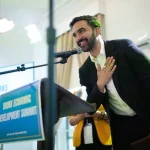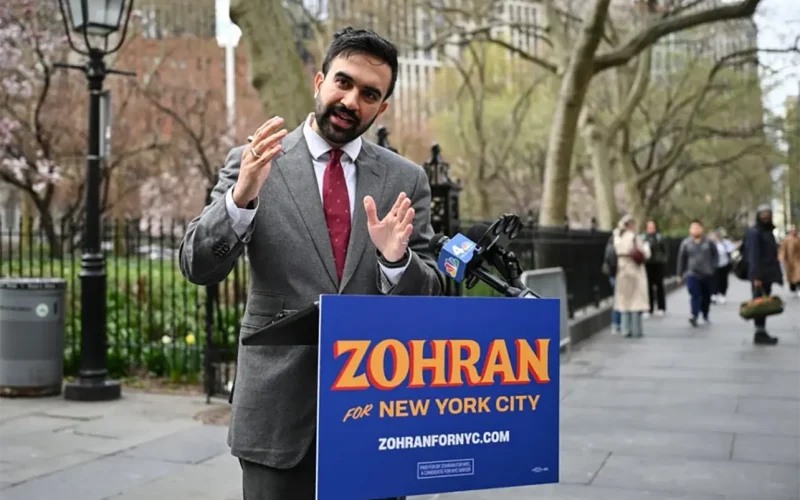
IN a historic and stunning political upset, Zohran Mamdani, a 33-year-old Uganda-born New York State assemblyman and self-identified democratic socialist, has emerged as the Democratic nominee for Mayor of New York City, poised to become one of the youngest and most progressive leaders of the nation’s largest city.
Mamdani decisively defeated former Governor Andrew Cuomo in the Democratic primary, securing approximately 43.5 percent of first-choice votes to Cuomo’s 36.4 percent, with Cuomo conceding shortly after polls closed. The final outcome is expected to be confirmed through ranked-choice voting, but Mamdani’s commanding lead and strategic alliances with other progressive candidates make his victory nearly certain.
Before the primary, Mamdani was relatively unknown outside political circles. His rise mirrors that of Alexandria Ocasio-Cortez, another young democratic socialist who shook up New York politics in 2018. Mamdani’s campaign gained momentum by focusing on the city’s affordability crisis, a pressing issue for millions of New Yorkers struggling with high living costs.
His platform includes ambitious proposals such as free public transportation, universal childcare, rent freezes on subsidised housing, and city-operated grocery stores. Mamdani has emphasised the urgency of addressing poverty and hunger in the city, stating, “This is a city where one in four residents lives in poverty, where 500,000 children go to bed hungry each night.” His message resonated strongly with younger voters and progressives across Brooklyn, Manhattan, and Queens, while Cuomo’s support was stronger in the Bronx and Staten Island.
Mamdani’s victory is seen as a referendum on the future direction of the Democratic Party amid ongoing national debates about leadership and policy priorities. His campaign was energised by a grassroots volunteer army and endorsements from prominent progressives, including Ocasio-Cortez and Bernie Sanders.
The race attracted national attention as Democrats grapple with how to regain support after Donald Trump’s surprising 2024 presidential victory, which saw gains even in traditionally liberal New York City neighbourhoods. Mamdani’s success signals a shift toward bold progressive policies and a new generation of leadership within the party.
Despite the enthusiasm, Mamdani’s platform has faced criticism for its ambitious scope and financial feasibility. Some analysts and media outlets have questioned whether policies like rent freezes could inadvertently reduce housing availability. The New York Times editorial board described his proposals as “uniquely ill-suited to the city’s challenges,” highlighting the complexities of governance and necessary compromises.
Nevertheless, Mamdani’s campaign emphasised engagement with diverse communities and cross-endorsements with other candidates to maximise support under New York’s ranked-choice voting system, which played a crucial role in his surge past Cuomo, a political veteran with significant name recognition and financial backing.
With Cuomo conceding and congratulating Mamdani on his victory, the 33-year-old is set to become a transformative figure in New York politics. In his victory speech, Mamdani pledged to be “a mayor for every New Yorker,” promising a city that is affordable, safe, and inclusive.
His ascent from a relative unknown to the Democratic nominee for mayor of the “Big Apple” marks a milestone not only for New York City but also for African-Americans and immigrants in American politics, symbolising the growing influence of diverse voices in shaping the future of urban governance.
As the general election approaches, all eyes will be on Mamdani as he seeks to translate his progressive vision into effective leadership for one of the world’s most complex and dynamic cities.