
ACROSS the vast expanse of Africa, the drums of democracy beat with both hope and trepidation as five nations prepare to test the strength of their democratic foundations in the coming months. From the rolling hills of Malawi to the bustling streets of Dar es Salaam, millions of voters will cast their ballots in what should be celebrations of democratic choice. Yet beneath the surface of these electoral exercises lies a troubling reality: the very leaders entrusted to safeguard democracy are systematically dismantling it from within.
The elections scheduled across Malawi, Uganda, the Ivory Coast, Cameroon, and Tanzania tell a tale of two democracies – one where the people’s voices ring clear and strong, and another where those voices are muffled by the heavy hand of authoritarian incumbents who have weaponised the criminal justice system against their opponents.
The Theatre of Controlled Democracy
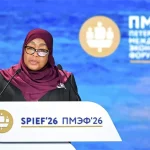
In Tanzania, the façade of democratic competition has crumbled entirely. President Samia Suluhu Hassan’s ruling CCM party has orchestrated what can only be described as electoral theatre, barring the main opposition party, CHADEMA, from participating after they refused to sign what amounts to a loyalty oath disguised as an “electoral code of conduct.” The arrest and disqualification of opposition leader Tundu Lissu strips away any pretence of fair competition, leaving voters with a ballot that offers choice in name only.
Similarly, the Ivory Coast presents a masterclass in selective justice, where the Constitutional Council – operating more like a political tribunal – has disqualified prominent figures, including former president Laurent Gbagbo and opposition leader Tidjane Thiam, on dubious legal and nationality grounds. Meanwhile, 83-year-old President Alassane Ouattara seeks an unprecedented fourth term, his longevity in power a testament not to democratic renewal but to the systematic elimination of credible alternatives.
The situation in Cameroon reads like a political obituary for competitive democracy. Paul Biya, who has ruled since 1982, seeks an eighth term at an age when most leaders would be enjoying retirement. His opponent, Maurice Kamto, represents not just political opposition but courage itself, having faced imprisonment and persecution for daring to challenge the established order. The 2008 constitutional amendment that removed term limits stands as a monument to how democratic institutions can be perverted to serve autocratic ends.
The Machinery of Suppression
What emerges from these electoral preparations is a sophisticated machinery of democratic suppression that operates with clinical precision. The playbook is remarkably consistent across these nations: opposition leaders are arrested on fabricated charges, disqualified through manipulated legal processes, or intimidated into silence through state-sanctioned harassment.
In Uganda, the upcoming January 2026 election will see Yoweri Museveni – already four decades in power – face opponents operating in an atmosphere thick with repression. The National Unity Platform’s continued participation represents an act of democratic defiance, though their leaders navigate a minefield of media restrictions and arbitrary arrests that would make their predecessors in liberation movements proud of their courage if not their circumstances.
The criminal justice system, once designed to protect citizens’ rights, has been transformed into a political weapon of devastating effectiveness. Court orders become tools of electoral engineering, police arrests morph into campaign strategies, and constitutional amendments serve as burial shrouds for democratic norms.
Flickering Flames of Hope
Yet democracy’s flame, though dimmed, refuses to be extinguished. In Malawi, the memory of the 2019 election annulment – a rare African example of judicial courage overturning a flawed election – continues to inspire. The reforms implemented since then offer a glimmer of what’s possible when institutions choose principle over political expedience.
President Lazarus Chakwera faces former President Peter Mutharika in what represents one of the few genuinely competitive races on the continent. While economic challenges cloud Chakwera’s record, the fact that he must defend his performance before voters rather than eliminate his opponents speaks to Malawi’s democratic resilience.
The candidacies of independents like Adil James Chilungo and Cosmas Felix Chipojola, though facing long odds, demonstrate that the democratic spirit endures even in Africa’s smallest political spaces. Their campaigns, focused on agricultural innovation and grassroots development, remind us that democracy thrives when it addresses citizens’ daily concerns rather than elite political games.
The Continental Reckoning
These elections arrive at a moment of profound continental soul-searching. Africa’s post-independence promise of democratic governance stands at a crossroads, with these five nations serving as crucial test cases for whether the continent can reclaim its democratic trajectory or slide further into the comfortable authoritarianism that has become the norm rather than the exception.
The international community watches these contests with a mixture of hope and resignation. Diplomatic statements calling for “free and fair elections” have become as ritualistic as they are ineffective, while regional bodies that should serve as democratic watchdogs often bark softly when their own leaders are among the worst offenders.
Beyond the Ballot Box
What makes these elections particularly significant is not just their immediate outcomes, but what they reveal about the state of African democracy in 2025. The systematic exclusion of opposition candidates, the manipulation of electoral frameworks, and the criminalisation of political dissent represent more than campaign tactics – they constitute a fundamental assault on the democratic compact between rulers and the ruled.
The tragedy is not just that incumbents win through manipulation rather than merit, but that such victories hollow out the very concept of democratic legitimacy. When citizens know that their votes count only if they align with predetermined outcomes, the social contract that binds societies together begins to fray.
Yet perhaps the most remarkable aspect of these electoral cycles is the persistence of opposition voices despite overwhelming odds. In every country, brave individuals continue to raise their hands for public service, knowing they face arrest, harassment, or worse. Their courage serves as a reminder that democracy’s greatest strength lies not in its institutions – which can be corrupted – but in the indomitable human spirit that refuses to accept that might makes right.
The Verdict of History
As voters across these five nations prepare to cast their ballots in the coming months, they participate in more than electoral exercises—they engage in a continental struggle for the soul of African democracy. The outcomes will reverberate far beyond national borders, either reinforcing the trend toward competitive authoritarianism or demonstrating that the democratic impulse, however suppressed, cannot be permanently contained.
The lights of African democracy may be dimmed by the conduct of sitting presidents who have forgotten that power is borrowed from the people, not seized from them. But in the courage of opposition candidates who run despite knowing the deck is stacked against them, in the determination of civil society organisations that document abuses despite intimidation, and in the simple act of citizens who still believe their votes matter, democracy’s flame continues to flicker.
The question that hangs over these elections is not whether incumbents will retain power—their control of state machinery makes that outcome largely predetermined. The question is whether the democratic spirit can survive another assault, whether institutions can retain even a glimmer of independence, and whether the next generation of African leaders will remember that true strength comes not from eliminating opposition but from earning the genuine consent of the governed.
In the end, these elections will be remembered not for who wins, but for what they reveal about a continent still struggling to fulfil its democratic promise in an era when authoritarianism wears the mask of popular mandate.