THE tears that flowed at the Niger Government House in Minna told two conflicting stories. Relief washed over some faces as parents clutched their returning children, transformed overnight from hostages to homecomers. Yet the same ceremony was shadowed by the hollow-eyed desperation of those whose children remain somewhere in the vast, dangerous expanse of northern Nigeria, still prisoners of armed gangs.
When 100 schoolchildren walked free after weeks in captivity, it marked both a triumph and a devastating reminder of an incomplete mission. The rescue represented a hard-won victory in Nigeria’s grinding battle against the scourge of mass kidnappings, yet the celebration was muted by a brutal arithmetic: at least 150 students from St. Mary’s Catholic School still languish in the hands of their abductors, their fate uncertain, their families suspended in agonising limbo.
A Crisis That Has Become Routine
The November 21 raid on St. Mary’s Catholic School in Papiri community has become emblematic of a crisis that has metastasised across northern Nigeria. Armed gangs, driven by the lucrative economics of ransom, stormed the school and seized 303 children along with 12 teachers. While 50 managed to escape in the chaotic hours following the attack, the remainder became commodities in a cruel marketplace of human suffering.
For the families reunited on Monday, the emotion was visceral and overwhelming. Mothers wept openly. Fathers stood rigid with relief, as if any sudden movement might shatter the fragile reality of their children’s return. But lurking beneath every embrace was an unspoken guilt, the knowledge that other parents in the same room still waited, still hoped, still endured the torture of not knowing.
“Merely looking at them, I can’t say this is their condition, but we all know that for being over two weeks in captivity, those children certainly need some help,” observed Theresa Pamma of UNICEF Nigeria, her words carefully measured. The physical toll of captivity was evident in the children’s faces, but the psychological scars would take far longer to assess, let alone heal. Medical checkups, she stressed, were critical and urgent.
100 of the kidnapped school children of St Mary school in Papiri, Niger State have been released. Niger State Governor, Umaru Bago, was seen receiving them at the Government House in Minna.
— Kingprince (@Kingprince006) December 8, 2025
Nigeria should be on Netflix https://t.co/uSwTLDSFwZ pic.twitter.com/0GzvZHzlyx
A Governor’s Promise, A President’s Pressure
Niger State Governor Mohammed Umar Bago stood before the gathered families with the weight of expectation heavy on his shoulders. “Today is fundamental and very, very important to redefining the history of this state,” he declared, framing the partial rescue as a turning point rather than an incomplete chapter.
His gratitude toward President Bola Tinubu was effusive, thanking him for providing “all the necessary input” to secure the children’s release. Yet his appeal for continued prayers betrayed the reality that this battle is far from won. “We wish to recover the remaining students that are still in captivity, and by the grace of God, in a very short time from now, we’re going to record it, inshallah,” he vowed.
The pressure on Tinubu’s administration has been mounting from multiple fronts. Domestically, Nigerian families have grown weary of a crisis that has transformed schools from sanctuaries of learning into hunting grounds for criminals. Internationally, former U.S. President Donald Trump has amplified allegations that Christians are being specifically targeted in Nigeria’s security crisis, adding diplomatic weight to the domestic outcry.
Tinubu has responded with a categorical promise: he will not rest until all hostages are freed. It’s a commitment that rings with political urgency but must now be tested against the complex realities of negotiation, security operations, and the shadowy economics of kidnapping in northern Nigeria.
The Silent Economics of Ransom
What remains conspicuously absent from official statements is any detailed account of how these children were freed. Nigerian authorities have perfected the art of opacity when it comes to rescue operations. Details of captivity, the conditions endured, the negotiations conducted—all remain locked behind official silence.
Analysts have long understood the unspoken truth: ransoms are paid. They must be paid. The machinery of kidnapping in northern Nigeria operates on economic logic, and armed gangs have refined their business model over the years of practice. Yet officials never admit to payments, maintaining a careful fiction that protects political reputations while perpetuating a cycle that makes the next kidnapping almost inevitable.
Arrests in such cases are vanishingly rare. The gangs operate with a level of impunity that suggests either sophisticated evasion or deeper failures in Nigeria’s security apparatus. Each successful kidnapping emboldens the next, each ransom payment funds future operations, and each official silence leaves families vulnerable to a threat that has become grimly predictable.
A Pattern of Pain
The Papiri kidnapping is merely the latest in a relentless sequence of mass abductions that has become northern Nigeria’s new normal. In the same month, 25 schoolchildren were taken in neighbouring Kebbi state. A church in Kwara state was attacked, with 38 worshipers seized before being freed last month. The targets vary—schools, churches, communities—but the methodology remains consistent: overwhelming force, mass seizure, and the grim wait for ransom.
No group has yet claimed responsibility for the St. Mary’s attack, though locals point to the armed gangs that have proliferated across the region, filling power vacuums and exploiting security gaps. Whether they are purely criminal enterprises or have ideological dimensions linked to Islamic extremism remains a question that blurs with each new attack.
The Families Left Behind
As Monday’s ceremony concluded and families departed—some whole again, others still fractured—the true measure of this crisis became clear. For 100 families, anxiety has been replaced by the difficult work of healing. But for at least 150 families, the nightmare continues. They return to empty homes, to children’s beds that remain cold, to a waiting that erodes the soul.
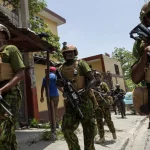
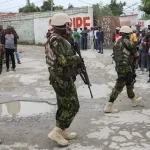
The Nigerian government has mobilised military and law enforcement resources on an unprecedented scale, dedicating personnel and equipment to both rescue operations and long-term counter-kidnapping strategies. Yet the challenge is immense: vast territories, porous borders, armed groups that know the terrain intimately, and a population that has learned to distrust official promises.
This is the bitter reality of contemporary northern Nigeria—a landscape where every homecoming is shadowed by those who haven’t come home, where every rescue is incomplete, and where families live with the knowledge that the next school day could bring not education but terror.
The hundred children who returned on Monday are miracles, certainly. But they are also reminders of a battle that Nigeria is still struggling to win, and of the 150 who remain somewhere in the darkness, waiting for their own miracle to arrive.