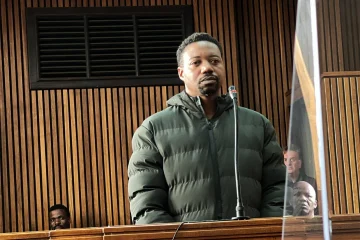
IN a stunning development that has sent shockwaves through the international boxing community, Nigerian police have formally charged the driver involved in Monday’s catastrophic crash that claimed the lives of two men closest to British heavyweight boxer Anthony Joshua.
Adeniyi Mobolaji Kayode, 46, now faces a battery of serious criminal charges including dangerous driving causing death and operating a vehicle without proper licensing – revelations that raise disturbing questions about how the tragedy unfolded on that fateful stretch of Nigerian highway.
The Charges: A Damning Indictment
The Ogun State Police Command dropped the hammer Friday, slapping Kayode with four separate counts that paint a picture of alleged recklessness behind the wheel:
- Dangerous driving causing death
- Reckless and negligent driving
- Driving without due care and attention
- Driving without a valid national driver’s licence
The final charge – that Kayode allegedly lacked proper licensing – adds a chilling dimension to an already devastating incident. How did an unlicensed driver end up behind the wheel of a vehicle carrying one of boxing’s biggest stars and his most trusted associates?
The Victims: Brothers in Arms
The crash didn’t just claim two lives—it tore through the heart of Joshua’s professional and personal world. Latif Ayodele, described as being like a “twin brother” to the British-Nigerian champion, was more than a trainer. He was family. Just hours before the collision, the two men were captured on social media engaging in friendly table tennis competition, their bond evident in every frame.
Sina Ghami, Joshua’s strength and conditioning coach, represented the technical expertise behind the boxer’s formidable physical presence in the ring. These weren’t merely colleagues—they were the foundation of Joshua’s success, his confidants, his inner circle.
The Collision: A Preventable Disaster?
The black Lexus SUV struck a stationary truck on a major road near Lagos with devastating force. The wreckage photos tell a story of catastrophic impact – twisted metal and shattered glass marking the spot where two promising lives ended and a champion’s world changed forever.
Joshua, 36, was traveling in the rear of the vehicle when disaster struck. While he survived and has since been discharged from hospital care, witnesses report the two-time world champion was left “shocked” and “couldn’t talk” in the immediate aftermath – a psychological trauma that may prove as lasting as any physical injury.
Questions That Demand Answers
As Kayode awaits his January 20 trial date at Sagamu Magistrate Court, critical questions hang in the air like smoke over the wreckage:
How was an allegedly unlicensed driver permitted to operate a vehicle carrying a figure of Joshua’s stature? Were proper security protocols followed? Could this tragedy have been prevented with basic due diligence?
The allegations of reckless driving and lack of proper credentials suggest systemic failures that extended far beyond a single moment of error. This wasn’t a split-second decision gone wrong—if the charges hold, this was a preventable disaster waiting to happen.
A Champion in Mourning
On Wednesday, Joshua and his mother visited a Lagos funeral home to pay final respects to the departed—a heartbreaking scene that underscores the deeply personal nature of this loss. The boxer, now recuperating at his Nigerian home, faces not just physical recovery but the agonizing process of grief while the world watches.
Lagos State Commissioner for Information Gbenga Omotoso confirmed the visits, adding official weight to the tragedy’s toll on the Joshua family.
The Road Ahead
As the legal proceedings unfold over the coming weeks, the boxing world watches and waits. But no verdict, no sentence, no legal resolution can restore what was lost on that highway near Lagos: two lives, countless futures, and the irreplaceable bond between a champion and those who helped forge his greatness.
The charges against Kayode represent justice’s first step. But for Anthony Joshua, the hardest journey – one measured not in legal proceedings but in grief, memory, and somehow finding a way forward – has only just begun.
The trial is scheduled to commence January 20, 2026, at Sagamu Magistrate Court.