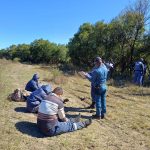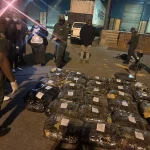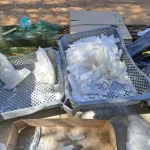
IN the dense Abidagba forest of Ogun State, Nigerian drug agents last week discovered what their agency’s chairman would describe as a criminal landmark: the largest clandestine methamphetamine laboratory ever uncovered on Nigerian soil, industrial in scale, transnationally financed and operationally dependent on Mexican expertise imported specifically to cook drugs deep in West African bush.
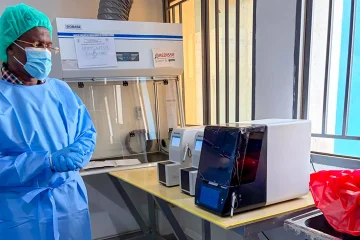
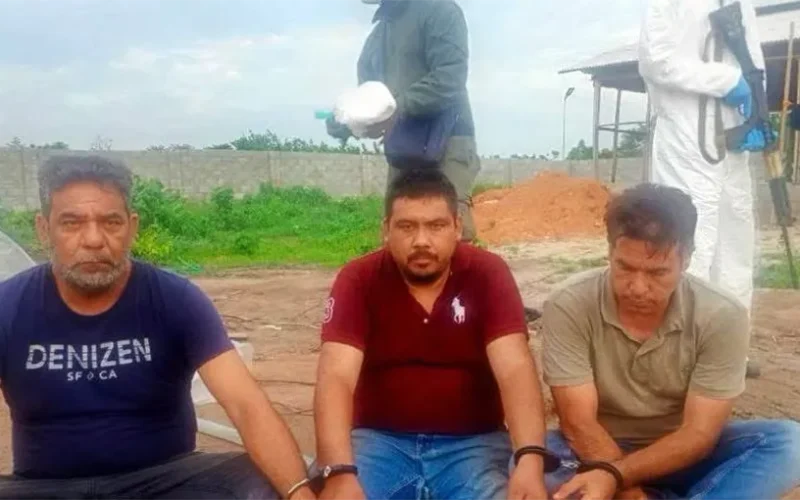
The bust, announced on Wednesday by the National Drug Law Enforcement Agency (NDLEA), has stunned narcotics analysts not only for its size – over 2.4 tonnes of meth and precursor chemicals seized, valued at $362.9 million (approximately ₦480 billion) on the international market – but for the architecture of the criminal network that ran it. Three Mexican nationals, identified as Martinez Felix Nemecto, Jesus López Valles and Torrero Juan Carlos, had been flown into Nigeria as technical methamphetamine experts. They answered to a Nigerian kingpin, Anochili Innocent, who lived in luxury in Lekki, Lagos, while his forest lab processed industrial quantities of one of the world’s most destructive synthetic drugs.
Ten suspects in total – the cartel baron, his three Mexican chemists and six Nigerian collaborators – are now in NDLEA custody following a coordinated 48-hour operation that simultaneously raided the Ogun forest site and multiple upmarket Lagos properties. The agency’s Special Operations Unit also recovered two vehicles used by the syndicate and dismantled what it described as a strategic stash house.
“Through a clinical, simultaneous operation executed by the elite operatives of our Special Operations Unit, we have successfully dismantled a sophisticated, transnational methamphetamine production syndicate run jointly by a Nigerian drug cartel and their Mexican counterparts,” NDLEA chairman Brigadier-General Mohamed Buba Marwa (retd) told reporters in Abuja. “This network did not just traffic drugs; they were actively manufacturing industrial-scale quantities of highly lethal illicit substances right on our soil.”
Not a Nigerian Anomaly
Nigeria’s record seizure would be alarming as a standalone event. What makes it a continental alarm bell is the pattern it completes. Across the border, South Africa has been logging near-identical incidents with increasing frequency – Mexican chemists, remote properties, industrial-scale infrastructure, and a Nigerian criminal connection threading through multiple operations.
In July 2024, the Hawks – South Africa’s elite investigative directorate – raided a remote farm near Groblersdal in Limpopo Province and uncovered a crystal methamphetamine laboratory valued at R2 billion. Three Mexican nationals, Jorge Humberto Gonzales, Alejandro Gutierrez Lopez and Ruben Vidan Rodriguez, were arrested alongside two South Africans. Hawks chief Lieutenant-General Godfrey Lebeya would later suggest the Mexicans may have been members of the Sinaloa cartel.
Four months later, in November 2024, an undocumented Mexican national was arrested in Rietfontein, Pretoria, for allegedly operating a R100-million drug laboratory, again following extensive surveillance. By October 2025, five Mexican nationals and one South African had been apprehended at an industrial-scale meth operation in Volksrust, Mpumalanga, a facility estimated to be worth R350 million. Investigators also found another laboratory in nearby Standerton, less than 100 kilometres away, with chemicals and finished products valued at more than R50 million.
In a December 2025 development that extended the cartel footprint beyond South Africa’s borders entirely, six Mexican nationals appeared before a Gaborone magistrate charged with illegal entry into Botswana – the latest in a widening arc of cartel-linked arrests that now spans Nigeria, South Africa, Botswana and transit seizures in Panama.
A Structural Shift in Global Drug Production
Security analysts say what is unfolding is not opportunistic – it is strategic. South African police have busted at least four industrial-scale Mexican-linked meth labs since mid-2024, with a combined estimated value exceeding $150 million. The pattern points, experts say, to a deliberate offshoring of production by cartels increasingly squeezed in their home country and on their primary trafficking routes into the United States.
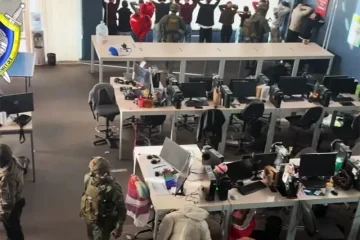
A major breakthrough for Nigeria’s anti-drug war: NDLEA officials stormed the largest secret methamphetamine production site ever found in the country, hidden in Ogun State. The operation led to the arrest of three Mexicans and other cartel members, alongside the recovery of… pic.twitter.com/iV2NrOHrP3
— Mohammed Jammal (@whitenigerian) May 20, 2026
The US Drug Enforcement Administration’s 2024 National Drug Threat Assessment had already noted what it termed “occasional” reports of the Sinaloa cartel exporting its clandestine laboratory expertise into Africa. The events of 2024, 2025, and now 2026 suggest that “occasional” may no longer be an adequate descriptor. The Jalisco New Generation Cartel, Sinaloa’s primary rival and one of Mexico’s most dangerous criminal organisations, has also been cited in connection with South African operations.
The operational logic is apparent. Africa offers weaknesses in border monitoring and forensic capacity that make detection harder. The continent’s vast ungoverned spaces – forests, remote farmland, disused industrial sites – provide ideal cover for production infrastructure. Local distribution networks, including Nigerian syndicates with global reach, offer cartels a ready-made last-mile apparatus without requiring the cartels to build it themselves.
Crucially, the African continent represents a growing consumer market in its own right. South Africa’s methamphetamine crisis, concentrated in the Western Cape and spreading, has long been documented. But analysts now warn that the continent’s drug crisis is entering a more dangerous phase – with cheap, locally produced synthetic drugs threatening to flood markets from Lagos to Johannesburg.
The Nigerian Model: Importing Expertise
Marwa emphasised a feature of the Ogun operation that security analysts say is particularly significant: the cartels are not simply using Africans as couriers or low-level traffickers. They are importing skilled foreign personnel to establish local production capacity. “The bust highlights an emerging trend of cartels importing foreign experts to establish local production hubs in Nigeria,” the NDLEA chief said.
This technology transfer model – in which cartel chemists teach and establish operations before departing or being arrested – is precisely the vector the DEA had warned about in its Sinaloa assessment. Once local expertise is established, enforcement agencies face a far more complex challenge: disrupting a network that can reconstitute itself without foreign personnel.
The Ogun operation also revealed a sophisticated command-and-control structure. While Mexican chemists worked the forest lab, the Nigerian kingpin Anochili Innocent managed operations from a luxury estate in Lekki, one of Lagos’s most exclusive suburbs. Follow-up raids on May 18 uncovered additional properties used by the syndicate, including a Mayfair Estate address in Lakowe and a strategic stash house operated by syndicate member Emeka Nwobum – layers of operational insulation designed to keep the cartel’s leadership at arm’s length from its production floor.
The Panama Thread
The African dimension of the Latin American drug trade is not limited to production. In January 2025, Panamanian authorities, in coordination with the country’s Public Prosecutor’s Office, seized 504 packages of suspected narcotics in a container originating from Mexico and in transit to South Africa – tangible evidence of established trafficking corridors between Latin America and the continent.
That seizure came months after the US Treasury’s Office of Foreign Assets Control announced sanctions against businesses and individuals linked to both the Sinaloa cartel and Colombia’s Clan del Golfo – a sprawling paramilitary drug organisation estimated to field up to 6,000 members – that referenced the Panama trafficking route. The convergence of multiple Latin American criminal organisations on Africa as a strategic destination is, analysts say, a development that demands a coordinated continental response.
The Fentanyl Shadow
While the immediate focus remains on methamphetamine, South African drug surveillance authorities have begun detecting a far more ominous presence. Drug tests conducted at clinics in the Eastern Cape and KwaZulu-Natal in December 2024 detected fentanyl – the synthetic opioid approximately 100 times more potent than morphine that has devastated American communities – in younger patients.
Additionally, South African police recovered cocaine packages bearing the word “Tesla” from a Johannesburg-to-Cape Town truck – branding consistent with packaging used by a specific Mexican cartel. The detail is a reminder that the cartel presence in Africa encompasses not only manufacturing but trafficking in a widening range of substances.
Hostile Territory – or Not Yet Hostile Enough?
Marwa was characteristically defiant in his assessment of Nigeria’s position. “Nigeria has become hostile territory for drug syndicates,” he declared, insisting that the NDLEA would continue targeting both local collaborators and the international networks operating within the country. The agency’s record over the past two years lends some credibility to the claim — Nigeria has notched a succession of major seizures under Marwa’s leadership.
But the Ogun bust itself is sobering evidence of the scale of the challenge. A syndicate that embedded itself inside a forest, constructed industrial-scale production infrastructure, and imported foreign chemists was not acting like an organisation that feared detection. It was acting like one that believed it had found a safe haven.
For the continent as a whole, the harder question is whether Africa’s law-enforcement architecture is equipped to respond to an adversary of this sophistication and resource. The cartels now operating in Nigeria, South Africa and Botswana are the same organisations that outgunned the Mexican state for decades, flooded Europe with cocaine and drove a fentanyl crisis that kills tens of thousands of Americans each year. Their pivot to Africa is not improvised — it is a calculated expansion into terrain they have assessed as favourable.
The ₦480-billion forest laboratory in Ogun State is, in that context, less a victory lap than an intelligence failure converted into a law-enforcement success — and a warning about what remains undetected. —
Massive meth lab bust in Nigeria
— DW News (@dwnews) May 21, 2026
Nigeria's National Drug Law Enforcement Agency has released footage it says shows the raid of the largest drug laboratory ever discovered in the country.
Officials said three Mexican nationals were detained. pic.twitter.com/7UBLgx1cT8