SOUTH Africa has recorded the largest drug seizure in its history after the Border Management Authority (BMA) intercepted a truck carrying nearly a billion rands’ worth of methaqualone – the key precursor in the manufacture of mandrax – at the Beit Bridge port of entry on 27 May 2026. The operation, coordinated by the BMA’s National Targeting Centre, resulted in the arrest of two Malawian nationals and a Zambian national, who appeared before the Musina Magistrates’ Court on Friday. The bust follows a series of major narcotics interceptions across the region, raising urgent questions about the scale and sophistication of transnational drug trafficking networks targeting southern Africa.
“The Border Management Authority has just achieved what is likely the single biggest breakthrough against the drug trade in South African history, by intercepting a consignment at Beitbridge valued at nearly R1 billion. You read that right.”
Minister Leon Schreiber, Home Affairs
THE OPERATION
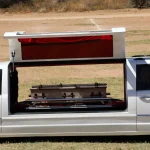
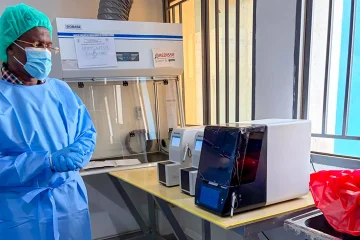
The bust was anything but routine. According to Home Affairs Minister Leon Schreiber, intelligence officials at the National Targeting Centre identified a suspicious truck travelling from Malawi through Zimbabwe long before it approached the border fence. When the vehicle arrived at Beit Bridge, BMA officials were already in position. The truck was subjected to the port’s sophisticated non-intrusive cargo scanner, which detected anomalies consistent with a concealed compartment.
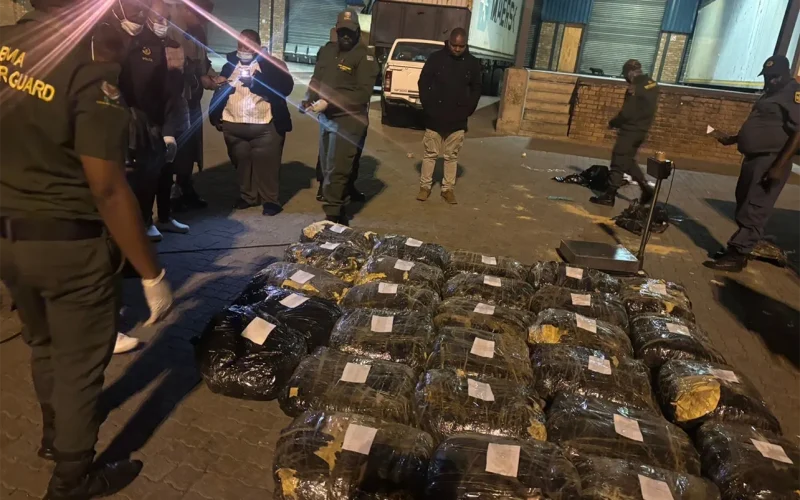
What followed was an eight-hour methodical dismantling of the vehicle. BMA Commissioner Dr Michael Masiapato, who visited the port the following day, described the concealment as industrial in scale. “This is a very serious, sophisticated enterprise,” Masiapato said. “This is not some chance takers who just take some things and throw into the truck, per se. They literally build it into the truck, and they literally actually seal it with very serious steel.” Officers ultimately recovered 28 unmarked black bags containing 713,000 grams — 713 kilograms — of methaqualone, also known on the street as “ABBA”, at an estimated street value of R998,200,000. The Hawks and K9 units were called to the scene to process the evidence and take over the investigation.
THE MINISTER SPEAKS
Minister Schreiber was emphatic in characterising the significance of the operation. In a detailed public statement, he set out precisely how the interception unfolded: “Yesterday, an intelligence-driven operation coordinated out of our National Targeting Centre identified a truck travelling through Zimbabwe to Beitbridge. Upon arrival, the BMA was ready and waiting for it. The truck was intercepted and examined through the sophisticated truck scanner on site, with a hidden compartment discovered. Working over 8 hours, the BMA patiently dismantled the truck until a substance was discovered that was confirmed to be methaqualone, also known as ABBA, commonly used in the manufacture of mandrax.”
Schreiber continued: “The Hawks and K9 units were called in, with 713,000 grams of the substance seized at an estimated value of R998,200,000. Just under R1 billion.”
Drawing out the broader implications, the minister said the seizure was proof that a strategic overhaul of South Africa’s border management architecture was producing tangible results: “This historic breakthrough in the fight against smuggling and drugs vividly demonstrates that the combination of intelligence-led investigations, digital transformation, and the commitment of the BMA is systematically rebuilding the rule of law at our borders.”
“This interception sends a strong message that South Africa’s borders are not a safe passage for organised criminal activities.”
BMA Commissioner Dr Michael Masiapato
THE ACCUSED
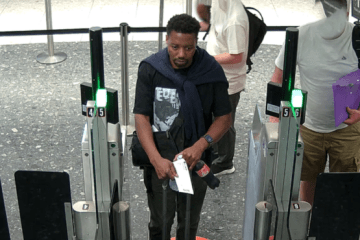
Three suspects — a Malawian man, a Malawian woman, and a Zambian man — appeared in the Musina Magistrates’ Court on Friday on charges of drug trafficking and contravention of South African law. Initial reports, including a statement by Minister Schreiber, indicated three Malawian nationals, but court proceedings confirmed the correct composition of the accused. Authorities have said it remains unclear where precisely in South Africa the consignment was destined, and investigators are working to establish whether the three are part of a wider transnational criminal network operating across the region.
The nature of the concealment — drugs welded behind steel panels in purpose-built compartments — has led investigators to conclude this was a professional, well-resourced operation rather than opportunistic smuggling. Commissioner Masiapato said the bust “bears the hallmarks of raw materials being transported for further drug manufacturing operations,” pointing to the likelihood that the methaqualone was not a final product but a precursor destined for a manufacturing facility inside South Africa.
A PATTERN EMERGING: FROM SWARTRUGGENS TO BEIT BRIDGE
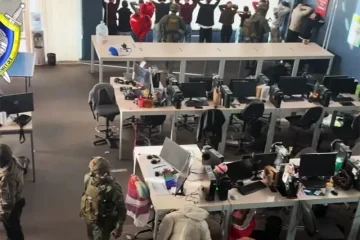
The Beit Bridge seizure does not stand alone. Barely two weeks earlier, on 13 May 2026, South African authorities uncovered what is believed to be one of the country’s largest clandestine methamphetamine manufacturing laboratories on a farm near Swartruggens in North West province. Eleven suspects were arrested in that operation — five Mexican nationals (Fabián Astorga, Jesús Alonso Medina Astorga, Luis Alberto Ramírez Ríos, José Andrés Medina, and Jacquelin López Madrid), two Mozambicans, a Zimbabwean, and three South Africans. Two farm owners subsequently handed themselves over to police, bringing the total accused to 13.
Nine of the 13 are in South Africa illegally. They face charges including drug manufacturing, illegal possession of precious metals, illegal possession of hazardous materials, and contravention of the Immigration Act. The case was postponed to 12 June 2026 for bail applications. Narcotics recovered at the Swartruggens site carried an estimated street value of R100 million.
The involvement of Mexican nationals in a South African drug manufacturing operation is itself a significant development. In the past two years, there have been at least four major busts of drug-manufacturing laboratories in South Africa involving Mexican nationals, raising concerns among law enforcement analysts that Mexican cartels are actively seeking to establish a manufacturing foothold in the southern African region — drawn, in part, by weaker enforcement capacity and access to regional drug markets.
“In the past two years, at least four major labs involving Mexican nationals have been busted in South Africa — pointing to cartel interest in establishing a southern African manufacturing base.”
WHAT IS METHAQUALONE?
Methaqualone is a sedative-hypnotic compound that forms the active ingredient in mandrax tablets — arguably the most widely abused illicit substance across southern Africa, particularly in Western Cape communities. The drug, which produces intense euphoric and sedative effects, has devastated working-class and township communities for decades. Methaqualone itself is classified as a Schedule 6 substance under South Africa’s Drugs and Drug Trafficking Act, making its possession, manufacture, and trafficking serious criminal offences.
The 713kg seized at Beit Bridge represents a vast quantity of the precursor. The African Mirror understands from law enforcement sources that even a fraction of that volume, once processed into tablets, is capable of flooding street markets in multiple provinces simultaneously.
BEIT BRIDGE: AFRICA’S BUSIEST — AND MOST EXPLOITED — CROSSING
Beit Bridge, straddling the Limpopo River on the South Africa-Zimbabwe boundary, is one of Africa’s busiest land crossings — and one of its most exploited. The sheer volume of traffic — thousands of trucks, buses, and private vehicles daily — has historically made comprehensive inspection extremely difficult, creating conditions that criminal networks have ruthlessly exploited for the movement of drugs, stolen goods, contraband fuel, and undocumented migrants.
The installation of truck scanning technology at the port, and the integration of the BMA’s National Targeting Centre into real-time intelligence operations, represents a structural shift in South Africa’s approach to border management — one that the Beit Bridge bust validates in dramatic fashion. The scanner alone is credited with triggering the initial alert that led to the eight-hour physical search.
Both Minister Schreiber and Commissioner Masiapato have pointed to the operation as evidence that digital transformation and intelligence-led enforcement — rather than simply increasing the number of guards — is the correct strategic direction for rebuilding institutional capacity at South Africa’s borders.
ANALYSIS: A CONTINENT UNDER PRESSURE
Taken together, the Beit Bridge methaqualone bust and the Swartruggens meth lab raid paint a disturbing picture of southern Africa as an increasingly contested space in the global drug trade. The regional narcotics landscape is no longer characterised merely by local dealers and small-scale couriers. The sophistication of concealment methods, the transnational composition of criminal networks, and the staggering financial value of the contraband point to organised crime enterprises with significant capital, logistical capacity, and cross-border intelligence of their own.
The Malawi-Zimbabwe-South Africa corridor used in the Beit Bridge operation is not new to law enforcement, but the scale of this particular shipment — the largest at any South African border post — suggests either growing boldness on the part of the syndicates or a miscalculation about the upgraded state of South Africa’s border intelligence capabilities.
For South Africa, which has struggled for years with the twin crises of porous borders and institutional capacity erosion, these busts offer a rare moment of operational vindication. The Hawks are now pursuing full investigations into both matters, and intelligence services across the region are likely tracking the networks upstream — back to source countries and international financiers. The key question investigators must answer is who ordered the shipment, and where in South Africa’s drug manufacturing economy it was destined to feed.