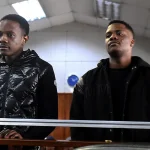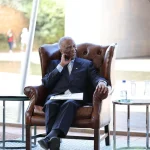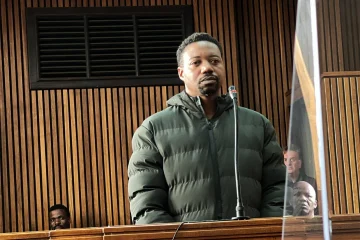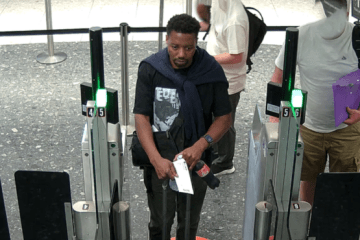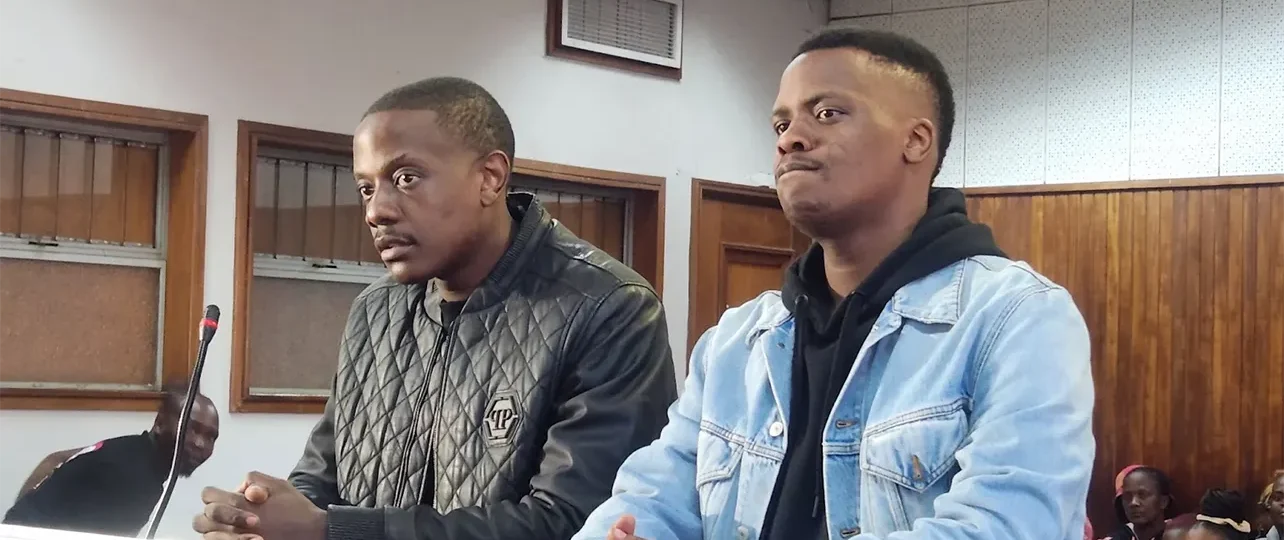

IT was meant to be another procedural skirmish in a case riddled with delays, power outages and legal manoeuvring. Instead, on Wednesday morning inside the Alexandra Magistrate’s Court in Johannesburg, the legal team representing Bellarmine Chatunga Mugabe – the youngest son of the late Zimbabwean strongman Robert Mugabe – walked into court and quietly folded.
There would be no bail application. Not now. Perhaps not ever. Advocate Laurance Hodes, who, alongside attorney Sinenhlanhla Mnguni, represents both Bellarmine and his co-accused, Tobias Mugabe Matonhodze, made the announcement that their instructions were not to proceed with the bail applications.
The reason is significant. The defence team has signalled that its clients intend to pursue a plea agreement with the National Prosecuting Authority – a move that, in the plain language of South African criminal law and plain logic, presupposes one thing: an admission of guilt.
The matter has been transferred to the Regional Court for plea negotiations under Section 105A of the Criminal Procedure Act, and the case returns on 17 March 2026. Both accused remain in custody.
THE CHARGES: SEVEN COUNTS, ONE VICTIM
The charge sheet against Bellarmine Mugabe and Matonhodze is formidable. They face seven counts: attempted murder, possession of an unlicensed firearm and ammunition, defeating the ends of justice, contravening the Immigration Act, theft, and pointing a firearm. The attempted murder charge is framed under the doctrine of common purpose – meaning the prosecution does not need to establish which of the two men pulled the trigger, only that both were complicit in what transpired.
What transpired, according to the NPA, was this: On 19 February 2026, an altercation erupted between the accused and a 23-year-old employee – described variously as a gardener — at the Mugabe family’s residence in Hyde Park, one of Johannesburg’s most exclusive suburbs. The victim, who was employed at the property, was allegedly assaulted inside the house. He attempted to flee. As he ran, he was shot in the back and collapsed outside the gate. One of the accused is then alleged to have taken a remote control from the victim, returned to the property, and shut the gate – effectively sealing the scene behind them.
The victim survived but remains in the hospital in critical condition. The firearm used has never been recovered. Prosecutors suspect the weapon was deliberately concealed – hence the charge of defeating the ends of justice.
Two additional charges – pointing a firearm and contravening the Immigration Act – stem from a separate incident dating back to 2023. That case was opened at Bramley Police Station, but was closed after authorities could not locate the suspect. It has now been resurrected as part of the consolidated charge sheet, and the State has also found that both accused are in South Africa illegally.
WHAT A PLEA AGREEMENT MEANS – AND WHAT IT DOESN’T
Under Section 105A of the Criminal Procedure Act 51 of 1977, a prosecutor – authorised in writing by the National Director of Public Prosecutions – and an accused who is legally represented may, before pleading, negotiate and enter into an agreement whereby the accused pleads guilty to a specified charge in exchange for a negotiated sentence. It is South Africa’s formal mechanism for what is colloquially called plea bargaining, codified into statute in 2001.
The implications are stark. By entering into Section 105A negotiations, Bellarmine Mugabe is effectively accepting that the evidentiary weight against him is sufficient to warrant a guilty plea. The agreement, once concluded between the accused and the state, is not self-executing – it must be placed before the court, which retains the power to question the accused and to satisfy itself that the admission is made freely, voluntarily, and in sound mind. The court may also hear representations from the victim before endorsing the agreed sentence. Only then does it acquire legal force.
Crucially, the court is not a rubber stamp. It may decline to ratify an agreed sentence if it considers the proposed punishment unjust – an important check against arrangements that might otherwise allow the well-resourced to purchase lenient outcomes.
The charges as they stand are serious. Attempted murder in Schedule 6 of the Criminal Procedure Act triggers a presumption against bail and, upon conviction, carries the prospect of custodial sentences measured in years rather than months. If a plea agreement is concluded, Mugabe would in all likelihood plead to a reduced or restructured charge set in exchange for a sentence shorter than what a successful prosecution at trial might yield. The exact parameters of any deal – which charges are reduced, which are withdrawn, and what sentence is agreed upon – remain confidential until the matter is placed before the court.
A FAMILY HISTORY OF IMPUNITY – AND ITS LIMITS
The Mugabe family’s entanglements with South African law are well-documented. In 2017, Bellarmine and his brother Robert Mugabe Jr were reportedly evicted from a Morningside apartment after an altercation that injured a security guard. The same year, Grace Mugabe – mother of Bellarmine and wife of the late president – allegedly assaulted a South African model in a Sandton hotel room and was controversially granted diplomatic immunity, allowing her to leave the country without facing justice. An arrest warrant was subsequently issued for her in 2018 after a court annulled that immunity.
Grace Mugabe, according to reports, has not returned to South Africa for fear of arrest. She is not expected to attend proceedings in her son’s case.
The pattern that emerges is one of a family that has, for years, navigated South Africa’s legal system with a confidence that bordered on contempt – bolstered by wealth, political connections and the residual weight of the Mugabe name in southern African affairs. For much of that time, the system accommodated them. This case represents something different.
Bellarmine’s arrest, his prolonged detention, the accumulation of charges and now the pivot toward a plea agreement suggest that the NPA – widely criticised in recent years for its handling of high-profile matters – is holding the line. The victim, a 23-year-old worker who was shot in the back while fleeing, was not a political figure, not a rival with resources. He was an employee. The symbolism of that – a man with no power, struck down at the gate of inherited privilege – has not been lost on observers of the case.
THE ROAD TO MARCH 17
The case now moves to the Regional Court for plea discussions. When it returns on 17 March 2026, one of several outcomes is possible: the negotiations may have concluded and a formal agreement placed before the court; the discussions may require more time, with a further postponement; or, in theory, the discussions may collapse entirely, and the matter could revert to a contested bail application and trial preparation.
The latter remains a possibility. Section 105A negotiations are without prejudice – if they break down, nothing said in the course of negotiations may be used against either party in a subsequent trial. The accused retains the right to contest the charges. But the decision to abandon bail – a concrete, immediate remedy – in favour of continued detention pending a plea deal is itself telling. It signals that the accused and their legal team believe the evidence against them is unlikely to improve, and that a negotiated outcome serves their interests better than a trial.
For the victim lying in a hospital bed in critical condition, the outcome of those negotiations will determine what justice looks like. For South Africa’s justice system, still rebuilding credibility after years of high-profile failures, this case offers something rarer than a verdict: an opportunity.
BACKGROUND: TIMELINE OF KEY EVENTS
19 Feb 2026 23-year-old employee shot in the back at Mugabe’s Hyde Park residence. Firearm not recovered.
23 Feb 2026 Bellarmine Mugabe (28) and Tobias Matonhodze (33) appear in Alexandra Magistrate’s Court. Bail postponed; State requests time to investigate.
3 Mar 2026 Bail hearing delayed again — power outage at court and outstanding prosecution documents cited.
5 Mar 2026 Further postponement due to continued electricity failure. Matter rescheduled for 11 March.
11 Mar 2026 Defence abandons bail application. Plea negotiations under Section 105A CPA confirmed. Matter transferred to the Regional Court.
17 Mar 2026 Next court date. Plea discussions expected to continue or conclude.