A surge in civilian atrocities across the eastern Democratic Republic of Congo has coincided with an intensifying assault on democratic freedoms throughout Central Africa, creating what human rights monitors describe as a deteriorating regional crisis demanding urgent international intervention.
The dual trends – escalating war crimes in Congo’s eastern provinces and systematic rights suppression across four countries – form the central finding of Human Rights Watch’s World Report 2026, released today, which documents what the organisation characterises as rampant abuses against civilian populations.
“People in Central African countries have faced increasing risks in the past year, whether under attack or forcibly displaced in eastern Congo, or facing suppression of basic rights elsewhere in the region,” said Lewis Mudge, Central Africa director at Human Rights Watch.
War Crimes Mount in Eastern Congo
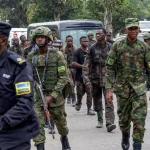
The conflict between the Rwanda-backed M23 armed group and Congolese government forces has generated what researchers describe as a pattern of systematic war crimes, with multiple armed actors implicated in atrocities against civilians.
M23 forces have committed killings and sexual violence documented as war crimes under international law. However, the Congolese army and its allied Wazalendo militias have also perpetrated war crimes, alongside other armed groups operating in the region—complicating attribution and accountability efforts.
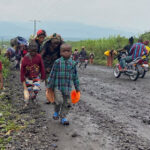
The violence has created massive displacement while placing civilian populations at heightened risk from all sides of the conflict.
Democratic Backsliding Accelerates
Beyond the battlefield, authorities in Rwanda, Burundi, Congo, and the Central African Republic have imposed what the report characterises as severe restrictions on civil and political rights, with particular intensity around electoral periods.
Elections in Burundi and the Central African Republic were marred by systematic irregularities. Opposition candidates faced barriers to participation, while Burundian voters reported intimidation and coercion at polling stations.
Media freedom has contracted sharply across all four countries. In Congo, both government authorities and M23 forces have targeted journalists, critics, and activists. A military court sentenced former President Joseph Kabila to death in absentia on what Human Rights Watch describes as politically motivated charges.
In Rwanda, opposition leader Victoire Ingabire was rearrested in connection with the ongoing prosecution of members of her political party.
Justice Mechanisms Advance
Against this backdrop, international accountability efforts have shown momentum. The International Criminal Court secured convictions of two anti-balaka militia leaders for war crimes and crimes against humanity committed in the Central African Republic.
France is currently trying Roger Lumbala, a former Congolese rebel leader and government minister, on charges of crimes against humanity for acts committed in Congo.
International Response Required
Human Rights Watch’s 529-page report, its 36th annual edition reviewing practices in over 100 countries, calls for coordinated international pressure to compel Central African governments to protect civilian populations and respect international law obligations.
Executive Director Philippe Bolopion framed the regional crisis within broader global trends, writing that “breaking the authoritarian wave sweeping the world is the challenge of a generation.” He called for rights-respecting democracies and civil society to forge strategic alliances defending fundamental freedoms—particularly as the human rights system faces what he termed “unprecedented threat” from major global powers, including the Trump administration.
The organisation argues that without sustained international engagement, Central African governments are unlikely to voluntarily uphold the rule of law or protect fundamental freedoms, including during armed conflicts. Accountability for grave crimes, researchers emphasised, requires concerted multilateral action.