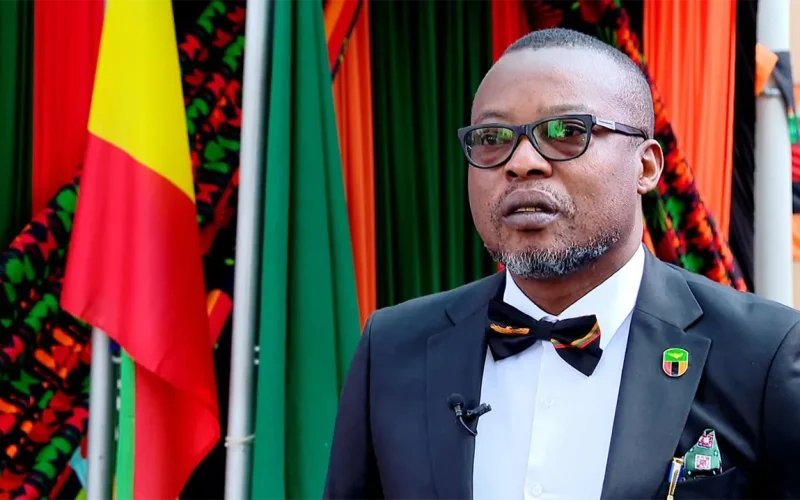
IN diplomatic corridors, the title of Deputy Ambassador carries weight, prestige, and – crucially – trust. It is a position earned, conferred by the head of state, and sustained by the belief that its holder will act with integrity in the name of the nation. Tom Michelo, Zambia’s Deputy Ambassador to Ethiopia, has spectacularly shattered that trust.
President Hakainde Hichilema has dismissed Michelo with immediate effect following his arrest by Zambia’s Drug Enforcement Commission (DEC) over allegations that he fraudulently obtained US$500,000 from a Chinese investor. The money, according to investigators, was paid to Michelo on the understanding that he would leverage his diplomatic position to facilitate high-level government meetings and smooth the investor’s path into Zambian business ventures. In plain terms: he is alleged to have sold his office.
A Scheme Built on the Badge
The anatomy of the alleged fraud is damning precisely because it exploited the architecture of diplomatic privilege. A foreign national, seeking entry into Zambia’s business landscape, placed US$500,000 in the hands of a man wearing the Zambian flag on his lapel — a man who presented himself as a gateway to the corridors of State House and the ministerial offices of Lusaka. Hi
This is not merely personal corruption. It is the weaponisation of public trust. Michelo is alleged to have used his diplomatic status — the letterhead, the title, the perceived proximity to power — as the instrument of a half-million-dollar con. Every door he claimed he could open was a door he had no legitimate right to monetise. Every promise of access was a betrayal of the mandate given to him by the citizens of Zambia.
Michelo, widely known in Lusaka political circles by the nickname ‘Tom Chocolate,’ is no obscure bureaucrat. He is a recognisable figure in Matero, one of Lusaka’s most populous and politically active constituencies, where he ran for parliament in 2021, finishing second to Patriotic Front incumbent Miles Sampa. He subsequently challenged that result in court. His political profile made his diplomatic appointment both a reward for loyalty and a calculated investment in the UPND’s grassroots machinery.
“He is alleged to have sold his office — using the badge of Zambia’s diplomatic corps as the instrument of a half-million-dollar fraud.”
The Process That Preceded Dismissal
The sequence of events leading to Michelo’s termination reveals a governance process that, at least procedurally, followed the expected course. President Hichilema first suspended Michelo to allow investigations to proceed — a prudent step that preserved the integrity of the inquiry without immediately acting on unconfirmed allegations. The DEC then made its arrest. Only after the case was formally established did the President act decisively, recalling Michelo from Addis Ababa and terminating his appointment with immediate effect.
This matters. In many African governments, a connected political operator facing such allegations might expect a quiet reshuffling, a sabbatical, or a period of protected silence. The fact that Hichilema allowed the DEC to move against one of his own appointees — a man with political debts owed to him in a crucial constituency — is consistent with the President’s repeated public insistence that he will not shield officials who break the law.
Whether that consistency holds across all levels of government, and whether the criminal prosecution now proceeds with the same rigour, will be the true measure of the administration’s commitment. The dismissal is the beginning, not the end, of this accountability test.
| KEY FACTS IN THE MICHELO CASE |
| • Tom Michelo served as Zambia’s Deputy Ambassador to Ethiopia |
| • He is alleged to have received US$500,000 from a Chinese investor |
| • The money was paid for promises of access to senior Zambian government officials |
| • The Drug Enforcement Commission (DEC) arrested Michelo this week |
| • President Hichilema had suspended him ahead of the arrest |
| • His appointment was terminated with immediate effect after the case was established |
| • Michelo finished second in the 2021 Matero parliamentary race; he is a UPND-aligned figure |
| • Criminal charges are expected to follow his arrest |
The Investor, the Investment Climate, and the Damage Done
For Zambia, the reputational fallout extends beyond the individual. The alleged victim is a Chinese national seeking legitimate business engagement with Africa’s fourth-largest copper producer. China is Zambia’s largest bilateral creditor, and Sino-Zambian investment relations have been a central, if contested, pillar of the country’s economic strategy across successive administrations.
To have a Zambian diplomat allegedly extort a Chinese investor — under the pretence of state facilitation — is a profound diplomatic embarrassment. It reinforces precisely the kind of narrative that deters legitimate foreign investment: that access to African governments must be purchased, and that those positioned to offer such access will exploit the asymmetry of information and influence for personal gain.
Beijing has invested significantly in its Africa strategy, and individual African nations are competing aggressively for Chinese capital in infrastructure, mining, and manufacturing. An incident of this nature does not merely damage Michelo; it damages the Zambian mission in Addis Ababa, the credibility of its diplomatic corps, and — at a moment when Lusaka is deepening trade and investment ties — the country’s standing as a reliable partner.
Diplomacy and the Duty That Cannot Be Sold
The Vienna Convention on Diplomatic Relations, the foundational instrument of modern diplomacy, extends privileges and immunities to diplomats precisely because their work requires freedom from the coercive pressures of host governments. It does not — and was never intended to — provide cover for the exploitation of private individuals seeking legitimate commercial engagement.
Michelo, if the allegations are proven, did not merely breach Zambian law. He violated the spirit of the international diplomatic compact: the understanding that those entrusted with the representation of their nation will honour that trust. His alleged conduct transforms a diplomatic posting into a predatory enterprise.
That he targeted a foreign investor — someone with fewer protective networks, less knowledge of local political terrain, and greater dependence on intermediaries — makes the alleged offence more, not less, egregious. The power asymmetry was built into the transaction.
“The dismissal is the beginning, not the end, of this accountability test. Whether criminal charges lead to conviction will define the real verdict.”
Elections, Accountability, and the Broader Context
Zambia is heading toward a general election cycle with President Hichilema’s government facing mounting scrutiny over its anti-corruption record. The Institute for Security Studies and independent analysts have noted that while the administration has made structural improvements — including the establishment of an Economic and Financial Crimes Court — few high-profile convictions of serving officials have been secured.
The Michelo case is therefore politically significant on two levels. First, it offers the administration a visible demonstration that it will act against its own appointees when the evidence demands it. Second, it raises the question that critics will press regardless of how the government performs: are these prosecutions selective, targeted at those who have become liabilities rather than reflecting a systemic commitment to clean governance?
President Hichilema has in his 2026 State of the Nation Address, claimed the largest-ever asset recovery from corruption in Zambia’s history. If the Michelo prosecution proceeds to a full conviction, it will add credibility to that narrative. If it stalls, or if Michelo quietly receives preferential treatment at the judicial stage, the dismissal will be exposed as theatre rather than genuine accountability.
What Comes Next
Michelo faces potential criminal charges under Zambian law — likely spanning fraud, abuse of authority, and possibly offences under the Anti-Corruption Act. The DEC’s involvement suggests money laundering-related dimensions may also be explored. The outcome of any criminal trial will be watched closely, not only in Matero, but across Zambia’s diplomatic community and in the offices of foreign investors monitoring the country’s governance trajectory.
For the diplomatic service itself, the case is a moment of reckoning. Zambia maintains missions across the African continent and beyond, with ambassadors and deputy ambassadors drawn from both the career diplomatic ranks and the pool of political appointees. The latter category, while a standard feature of African executive governance, carries inherent risk: political loyalty does not automatically translate into diplomatic integrity.
The question of vetting, oversight, and accountability mechanisms for Zambian diplomats posted abroad is now squarely on the national agenda. Tom Michelo’s dismissal in disgrace — his career in ruins, his liberty at risk, his political future extinguished — is a cautionary tale written in US$500,000 of betrayed trust. The only question that now remains is whether justice will follow the disgrace.
Editor’s Note: Tom Michelo has been arrested but has not been convicted of any offence. He is entitled to the presumption of innocence. The African Mirror will continue to report developments in this matter as the case proceeds.