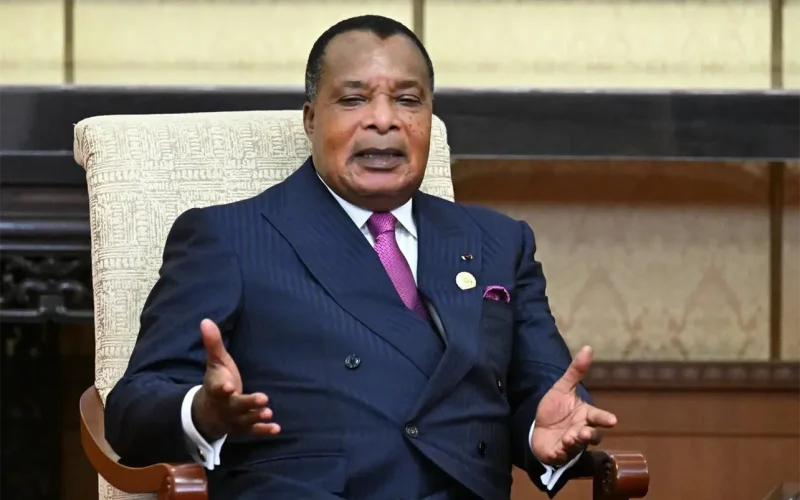
THE numbers were never in doubt. When the Republic of Congo’s state television announced on Tuesday that President Denis Sassou Nguesso had been re-elected with 94.82% of the vote, diplomats in Brazzaville barely glanced up from their desks. The outcome had been inscribed into the architecture of this election long before a single ballot was cast.
What commands attention is not the margin – it is the arithmetic of history. At 82, the former paratrooper who first seized power in 1979, lost it briefly in a 1992 multiparty election, and clawed it back through civil war in 1997, has now accumulated nearly 42 years at the apex of a small but strategically significant Central African oil state. In the gallery of the world’s most enduring heads of government, few contemporary leaders match the sheer duration of his tenure.
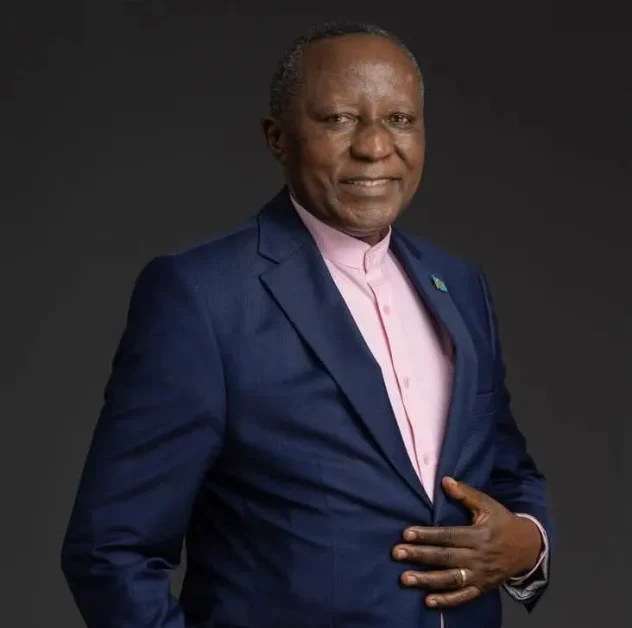
His ruling Congolese Labour Party managed every variable it could control. The main opposition declined to field candidates, citing a lack of transparency. Two of the most credible opposition figures – General Jean-Marie Michel Mokoko and André Okombi Salissa – have been behind bars for the better part of a decade, neutralised as political actors before the campaign could begin. The six challengers who did appear on the ballot were largely unknown quantities; the closest of them, retired customs inspector and former MP Mabio Mavoungou Zinga, won just 1.48% of the vote.
A DEMOCRACY IN SILHOUETTE
In the weeks preceding Sunday’s vote, the scaffolding of authoritarian management was visible to anyone paying attention. Human rights activists were arrested. Several opposition parties were suspended. Public gatherings fell under close surveillance, according to Congolese human rights activist Joe Washington Ebina, who documented a pattern of pre-election suppression.
On election day itself, voting stations across Brazzaville opened late. A nationwide internet blackout descended on the country – a tactic familiar across the continent as a tool for managing information flows during sensitive political moments. The state reported a turnout of 84.65%, a figure that sat awkwardly alongside eyewitness accounts of sparse or non-existent queues at polling stations in the capital.
Defeated candidates have five days to file a legal challenge. The Constitutional Court then has fifteen days to examine objections before publishing the final results. In a system where the judiciary has rarely surprised the executive, that process is unlikely to produce a different arithmetic.
THE LAST TERM – BY DESIGN OR DESIRE?
The most consequential political claim attached to this election is also the most contested: that this term will be Sassou Nguesso’s last. His inner circle has telegraphed as much, positioning the 2026 mandate as a transition period during which the ruling party will manage a controlled handover of authority.
The claim deserves scrutiny. In 2015, a constitutional revision quietly eliminated both term limits and the presidential age cap – changes that were themselves presented, at the time, as a necessary modernisation of governance. The precedent suggests that institutional constraints in the Republic of Congo have a tendency to bend when they become inconvenient. For a man who has wielded power for four decades, the notion of a self-imposed exit requires more than an assurance from state television.
And yet the question of succession is real, pressing, and unresolved. Sassou Nguesso is 82 years old. Even if his health holds, the ruling party cannot indefinitely defer the question of who governs after him. Within the Congolese Labour Party, there is no publicly anointed heir. His son, Denis Christel Sassou Nguesso, a former minister who has cultivated an international profile, is widely regarded as a candidate for succession – though his father has been conspicuously silent about endorsing him. Other party grandees are said to be positioning themselves, navigating the dangerous politics of a system built around a single man’s authority.
OIL, POVERTY AND THE WEIGHT OF LEGACY
The economy over which Sassou Nguesso has presided offers a portrait of squandered potential. The Republic of Congo is an oil producer – crude revenues have for decades provided the state with resources that might have transformed the lives of its roughly six million citizens. Instead, more than half the population lives in poverty, according to World Bank data. Reliable electricity, clean running water, and functional basic healthcare remain aspirational rather than guaranteed for most Congolese.
The macro picture has improved marginally in recent years. After a decade-long economic downturn, the country successfully completed a three-year IMF programme last year – a signal of fiscal stabilisation, if not structural transformation. But stabilisation is a thin legacy for 42 years in power. It offers little consolation to the majority of Congolese for whom the oil wealth that flows through Brazzaville has remained abstract.
Compounding the picture are persistent, serious allegations of corruption. Both French and American prosecutors have investigated assets held abroad by members of Sassou Nguesso’s immediate family – investigations that have drawn international attention even as they have produced no domestic political consequences.
THE BIGGER QUESTION: AFRICA’S GOVERNANCE RECKONING
Sassou Nguesso’s latest mandate sits within a broader, uncomfortable continental conversation. Across West and Central Africa, democratic institutions have faced sustained assault — from military juntas in Mali, Burkina Faso and Niger to the manipulation of constitutional frameworks by long-serving civilian presidents. The Republic of Congo’s election illustrates a model distinct from outright military seizure: slow, managed, institutionally clothed authoritarianism that retains the vocabulary of elections while hollowing out their substance.
The African Union and regional bodies have said little. The muted international response to Thursday’s result – beyond diplomatic boilerplate about stability – reflects both Congo’s geopolitical marginal status and a wider fatigue with demanding accountability from entrenched governments that remain nominally stable and diplomatically pliable.
Denis Sassou Nguesso has outlasted Cold War patrons, civil wars, oil booms and busts, and the democratic wave that briefly swept him from power in 1992. He has governed longer than most Congolese adults have been alive. Whether this is truly his final chapter – and whether the system he has constructed can produce a successor without convulsion – are the questions that will define the Republic of Congo for the next decade. The answer will be written not in election results, but in what happens when, eventually, the strongman is gone.