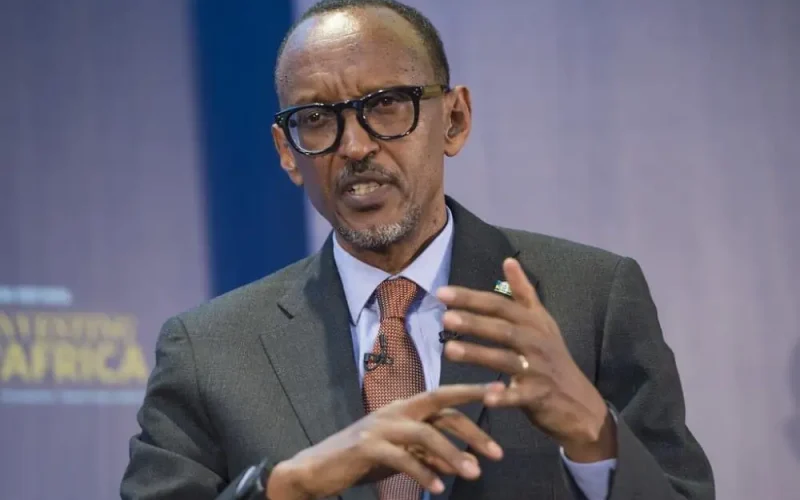
IN the span of eleven weeks, President Paul Kagame has achieved what seasoned diplomats said was structurally impossible: transforming a hard American sanctions designation into a strategic nuclear partnership with Washington – without conceding ground on the core question of Rwanda’s military presence in the Eastern Democratic Republic of the Congo.
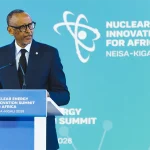
On Tuesday, 19 May 2026, Rwanda and the United States signed a Memorandum of Understanding on Strategic Civil Nuclear Cooperation, formally launching a framework for peaceful nuclear energy development between the two countries. In the same ceremony, held on the sidelines of the second Nuclear Energy Innovation Summit for Africa (NEISA 2026) at the Kigali Convention Centre, New Jersey-based Holtec International and the Rwanda Atomic Energy Board (RAEB) signed a comprehensive Development Agreement to assess the deployment of Holtec’s SMR-300 small modular reactors in Rwanda — with a potential installed capacity of up to five gigawatts.
The timing is the story. On 2 March 2026 – barely eleven weeks ago -ons on the Rwanda Defence Force (RDF) and four of its senior commanders, accusing them of providing direct operational support to the M23 rebel movement, a group jointly sanctioned by the US and United Nations, that has seized large swaths of mineral-rich eastern DRC, including the provincial capitals of Goma and Bukavu.
“Sanctioning the RDF is an important step but is unlikely to meaningfully deter the actors exploiting Congolese minerals.”
Frédéric Mousseau, Oakland Institute
HOW RELATIONS SOURED
The deterioration of the US-Rwanda relationship was a product of the gap between diplomatic ceremony and battlefield reality. In December 2024, President Trump presided over the signing of the Washington Accords for Peace and Prosperity at the renamed Donald J. Trump US Institute of Peace, bringing together DRC President Félix Tshisekedi and Kagame in what Trump predicted would be a “great miracle.” The accord committed both nations to a ceasefire, the withdrawal of Rwandan troops from Congolese territory, and a broader regional economic integration framework built around American access to the DRC’s vast critical mineral deposits.
Within days, M23 fighters – operating with logistical and military support the US State Department formally attributed to the RDF – captured Uvira, a strategic city on the shore of Lake Tanganyika near the Burundian border. The State Department publicly described the move as “a clear violation” of the accords Kagame had personally co-signed.
The March sanctions followed months of accumulating evidence documented by the UN, Human Rights Watch, and Western intelligence agencies that Rwandan forces were not merely backing M23 as a proxy but were actively engaged in combat operations inside Congolese territory, deploying GPS jamming systems, air defence equipment, and drones. US Treasury Secretary Scott Bessent declared at the time: “Treasury will use all tools at its disposal to ensure that the parties to the Washington Accords uphold their obligations.”
The RDF designation was sweeping in its implications — blocking US transactions with Rwanda’s military and raising the prospect of secondary sanctions exposure for institutions, including the European Union, that fund joint Rwandan military operations in Mozambique’s Cabo Delgado province. It was, on paper, one of the most consequential pieces of American pressure applied to Kigali in years.
THE SANCTIONS THAT DIDN’T BITE
Yet three months on, Kagame sits in Kigali hosting the continent’s premier nuclear energy summit and co-signing a strategic partnership with a US government official. Analysts who track the Great Lakes region see this not as a contradiction but as an illustration of how the Trump administration’s Africa policy is shaped more by investment opportunity than principled pressure.
Rwanda still receives just under $200 million annually in US bilateral aid — making it one of America’s most generously funded partners on the continent — while also benefiting from a World Bank portfolio worth $3.37 billion for a country of only 14 million people. The Oakland Institute, which has documented Rwanda’s mineral extraction operations in eastern DRC since the M23 seizure of Rubaya mine in 2024, estimates that the RDF and M23 earn approximately $800,000 monthly from the taxation of coltan production and trade alone. Rwanda’s gold exports hit a record $2 billion in 2025, much of it traced to mineral flows from Congolese territory.
The civil nuclear MOU, known in US diplomatic parlance as an NCMOU, is itself a tool developed during Trump’s first term, designed to expand strategic and commercial ties with partner countries — and to position American companies to capture emerging nuclear energy markets globally. Holtec International’s SMR-300, a pressurised water reactor with a generation capacity of approximately 300 megawatts, is not yet commercially deployed anywhere in the world. Rwanda becomes one of the first African countries to sign a formal site assessment and deployment agreement for the technology.
The nuclear deal does not suspend the sanctions on the RDF. It operates on a separate diplomatic track — one that privileges energy commerce over security conditionality.
KAGAME’S NUCLEAR PIVOT
Tuesday’s agreements are not Rwanda’s first foray into nuclear energy diplomacy. Kigali signed a nuclear cooperation agreement with Russia’s Rosatom in 2018. In 2023, Rwanda signed a memorandum with Canadian-German company Dual Fluid to develop a demonstration reactor on Rwandan soil. The NEISA summit itself — now in its second year — positions Rwanda as a convening hub for the continent’s nuclear ambitions, reinforcing Kagame’s long-standing strategy of converting geopolitical pressure into economic leverage.
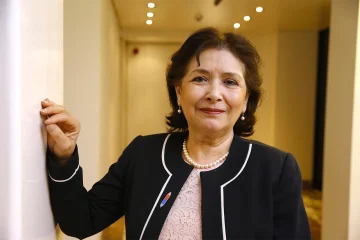
Rwanda’s Minister of State for Foreign Affairs, Dr. Usta Kaitesi, signed the MOU on behalf of Kigali, alongside Renee Sonderman, Acting Principal Deputy Assistant Secretary in the US State Department’s Bureau of Arms Control and Nonproliferation. US officials framed the agreement as part of a broader American effort to “expand and deepen civil nuclear partnerships” with African countries, with Sonderman stating Washington’s goal was to position American companies to export nuclear technology to “responsible partners globally.”
The description of Rwanda as a “responsible partner” — eight weeks after Treasury designated its military for actions it said included summary executions, forced recruitment, and the use of advanced weapons systems against civilian populations — is not lost on observers of US Africa policy.
PEACE PROCESS AT A CROSSROADS
The broader DRC-Rwanda peace process remains fractured. The fifth Joint Oversight Committee for the Peace Agreement, convened in Washington on 23 April 2026, reviewed progress since the March meetings but issued no declaration of compliance or concrete enforcement benchmarks. Rwandan troops have not completed their withdrawal from Congolese territory. The Democratic Forces for the Liberation of Rwanda (FDLR) — whose neutralisation was Rwanda’s stated precondition for withdrawal — has not been disbanded. Talks between M23 and the Congolese government continue, but their trajectory remains uncertain.
More than seven million people remain internally displaced across the DRC, constituting one of the world’s largest displacement crises. The humanitarian situation in eastern DRC — particularly in North and South Kivu — continues to deteriorate, with food insecurity affecting tens of millions and humanitarian access remaining severely constrained.
For the DRC government in Kinshasa, the nuclear deal will register as a troubling signal: that Washington’s coercive tools carry conditional expiry dates when American commercial interests — whether in Congolese minerals or Rwandan energy markets — enter the calculation. Congolese Foreign Minister Thérèse Kayikwamba Wagner was among the first to call on Washington to sanction Rwanda for non-compliance with the accords. That demand produced the March designations. The May nuclear deal suggests the strategic pendulum has swung back.
ANALYSIS: STRATEGIC DEXTERITY OR IMPUNITY REWARDED?
There are two ways to read the Kigali ceremony. The first is as evidence of Kagame’s exceptional diplomatic dexterity — his ability to simultaneously absorb pressure, maintain engagement, and leverage Rwanda’s strategic positioning as a stable, investment-friendly hub in an unstable region. The SMR-300 deal advances Rwanda’s Vision 2050 energy diversification agenda, potentially transforming the country’s chronic power deficit and its dependence on hydro-electric generation that is increasingly vulnerable to climate variability.
The second reading is harder to dismiss: that the United States, under a transactional administration for which mineral access and energy market share are primary African policy drivers, has effectively demonstrated that its sanctions carry a negotiated ceiling. The RDF designation has not been lifted. But it has been bracketed — overtaken by the logic of commercial partnership, nuclear diplomacy, and the Trump administration’s preference for deal-making over sustained enforcement.
What has not changed is the situation of the millions of Congolese civilians living in territory controlled by forces that the United States government itself has described as responsible for “summary executions, arbitrary arrests, torture, and indiscriminate attacks on civilians.”
Paul Kagame is many things. He is, demonstrably, a diplomat of rare skill. Whether that skill is being deployed in the service of peace in central Africa, or in the service of the impunity his critics have long argued he commands, is a question the nuclear signing ceremony in Kigali has done nothing to resolve.