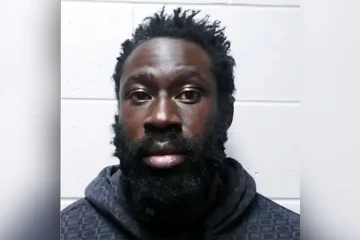
A Federal Capital Territory High Court has issued a bench warrant for the arrest of former Nigerian Minister of Humanitarian Affairs, Disaster Management and Social Development, Sadiya Umar Farouq, after she defied a court summons and failed to appear for her arraignment on 21 counts of financial fraud.
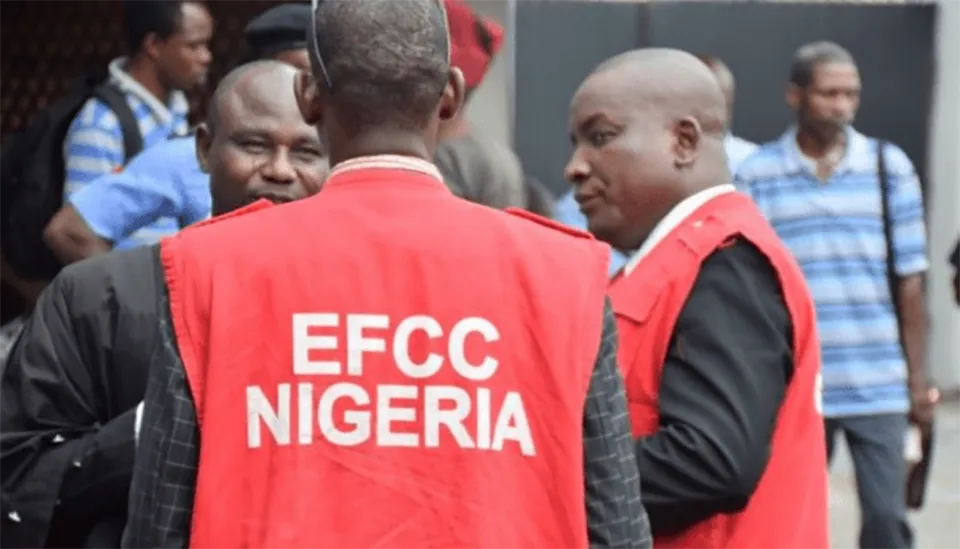
Justice Jude Onwuegbuzie of the FCT High Court issued the warrant after Farouq – once the public face of Nigeria’s flagship social safety net programmes – and her co-accused, Permanent Secretary Bashir Nura Alkali, failed to appear before the court. The Economic and Financial Crimes Commission (EFCC) had filed the 21-count charge as far back as December 15, 2025.
“Since that passport was released to her, she has not returned it to the Commission. We do not have the medical report from Saudi Arabia to this date.”
Rotimi Jacobs, SAN, EFCC Prosecution Counsel
A Missing Minister and a Missing Passport
The combined charges against the trio – Farouq, Alkali, and a third defendant, Sani Nafiu Mohammed – allege criminal breach of trust, abuse of office, fraudulent award of contracts, and the conversion of public funds amounting to $1,300,000 (approximately ₦2.1 billion at current rates) and ₦746,574,303. Only Mohammed appeared in court.
The first count of the charge alleges that Farouq and Alkali, between May 8, 2021, and September 22, 2022, fraudulently converted $1.3 million that was owed to the ministry as a refund by Visual ICT Limited – funds that had been overpaid under the National Social Safety Net Coordinating Office (NASSCO) for the validation of Rapid Response Register beneficiaries.
The charge invokes Section 315 of the Penal Code, which carries criminal penalties for breach of trust by a public official.
The Saudi Arabia Gambit
Senior Advocate of Nigeria (SAN) Rotimi Jacobs, lead counsel for the EFCC prosecution, told the court that Farouq had submitted her passport to the Commission while under investigation, but obtained its release in 2024 on the basis of a declared medical trip to Saudi Arabia.
“My lord, since that passport was released to her, she has not returned the passport to the Commission. We do not have the medical report in Saudi Arabia to date,” Jacobs told the court, adding that medical documents later submitted by Farouq’s legal team were all dated after the December 2025 charge filing – not before the approved Saudi Arabia travel.
Jacobs further revealed that the charge had been ready for months but that the prosecution was unable to arraign Farouq and Alkali on December 15 because they could not be produced. Their lawyers at the time reportedly gave assurances that the defendants would appear – assurances that were not honoured.
“The defendants have now been served, my lord. Only the third defendant has reported to the Commission when his surety was contacted,” Jacobs noted.
Court Rejects Illness Affidavit
Defence counsel Abdul Ibrahim, SAN, representing Farouq, appeared in court and sought to tender an affidavit of facts explaining his client’s absence on grounds of ill health. Justice Onwuegbuzie rejected the application outright.
The court’s refusal to accept the affidavit – and its decision to issue a warrant rather than adjourn – signals a hardening judicial posture toward defendants in high-profile corruption cases who deploy procedural delays to resist accountability.
The Weight of the Accusations
Sadiya Umar Farouq served as minister under President Muhammadu Buhari from 2019 to 2023, overseeing programmes that disbursed billions of naira in conditional cash transfers and social welfare benefits to millions of Nigerians. The allegations that money meant to be refunded to her own ministry was instead diverted represent a direct betrayal of the most vulnerable beneficiaries those funds were designed to protect.
The EFCC’s move to prosecute a former federal cabinet minister is emblematic of the Tinubu administration’s professed anti-corruption stance, though critics note that the pace of justice in high-profile cases involving members of Nigeria’s political elite remains painfully slow.
The case has been adjourned pending the execution of the bench warrant against Farouq and Alkali.