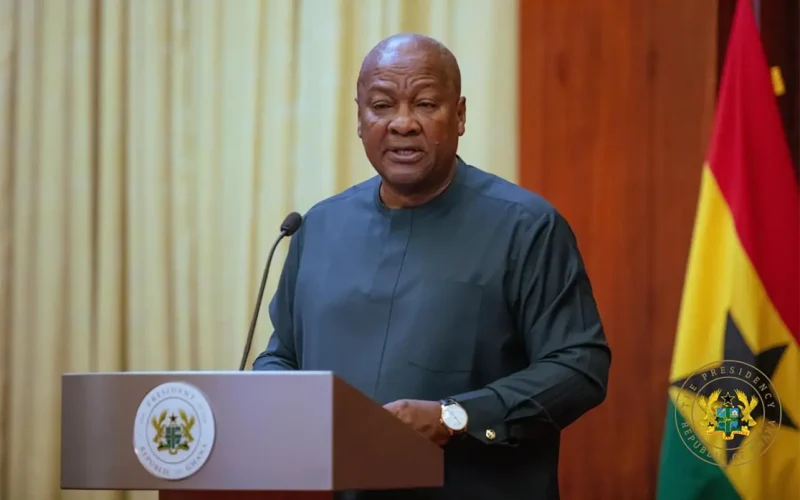
PRESIDENT John Dramani Mahama has announced the establishment of specialised financial courts to prosecute environmental criminals and those implicated in the Auditor General’s reports, marking a significant escalation in Ghana’s fight against the devastating illegal mining crisis known locally as galamsey.
The announcement follows a high-level meeting with Acting Chief Justice Paul Baffoe-Bonnie, Attorney General Dr Dominic Ayine, and Auditor General Johnson Akuamoah Asiedu at the presidency, signalling a coordinated government response to environmental degradation that threatens the nation’s ecological future.
The new courts will hold circuit sessions nationwide to prosecute offenders, while the Auditor General will exercise constitutional powers under Article 187(7)(b) to disallow illegal expenditures and surcharge responsible officials – a move that directly targets corruption fueling environmental destruction.
Scale of the Crisis
Ghana faces an environmental emergency driven primarily by illegal mining operations estimated to involve between 300,000 and 500,000 miners, concentrated in the Ashanti, Eastern, and Western Regions. The scale of destruction is staggering: by the late 1990s, approximately 15,000 hectares of forest had been destroyed, including critical reserves like the Offin Shelter Belt Forest.
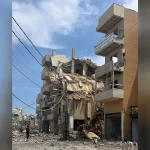
Illegal miners indiscriminately clear vegetation and abandon mined areas without reclamation, causing severe deforestation, topsoil destruction, and ecosystem collapse. The resulting environmental damage extends to water pollution, agricultural losses, increased erosion, and heightened risks of drought and climate change impacts.
Beyond Galamsey
While illegal mining remains the most visible threat, Ghana confronts multiple environmental crimes, including illegal logging and timber trading, unregulated fishing, wildlife trafficking, hazardous waste dumping, and proliferation of substandard products – all posing high to moderate threats to public health and ecological stability.
Enforcement Framework
The specialised courts will complement Ghana’s existing environmental protection infrastructure, which includes the Environmental Protection Agency, Ghana Standards Authority, Minerals Commission, and specialised Ghana Police Service units. Recent legislative updates, including the Environmental Protection Act 2025, have strengthened legal frameworks with enhanced penalties for environmental crimes.
The meeting, attended by Supreme Court Judge Justice Gabriel Pwamang, Judicial Secretary Musah Ahmed, Chief of Staff Julius Debrah, and other senior officials, underscores the administration’s commitment to multi-agency coordination in combating what officials describe as crimes threatening Ghana’s sustainable development and ecological balance.
The establishment of these courts represents one of the most significant institutional responses to environmental crime in Ghana’s history, though critics will watch closely to see whether the new judicial mechanism can overcome resource constraints and enforcement challenges that have previously hampered efforts to curb illegal mining and related environmental destruction.