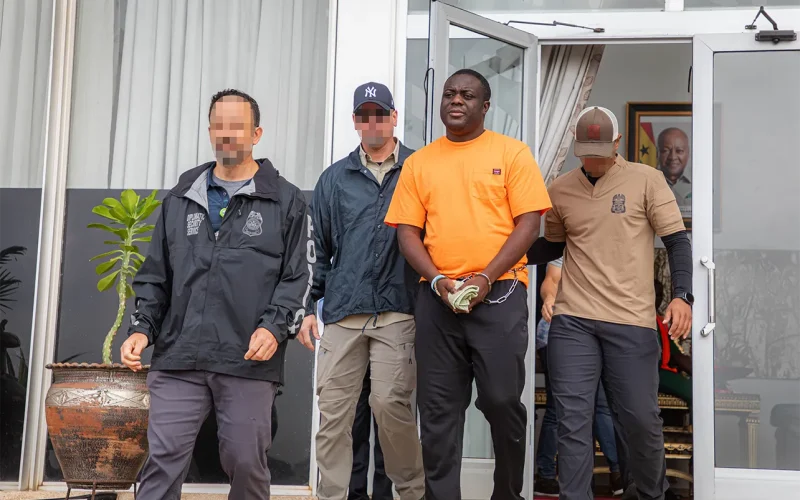
JOSEPH Kwadwo Badu Boateng, a Ghanaian national arrested in Accra and extradited to the United States, has pleaded guilty to conspiracy to commit wire fraud and agreed to repay approximately $4.4 million in restitution as he waits to learn how long he will spend in a U.S. prison.
Boateng – who used the nom de plume “Dada Joe Remix” – admitted in a federal plea agreement filed in Tucson that he and co‑conspirators ran a decade‑long romance and inheritance fraud targeting elderly Americans from 2013 through March 2023. Prosecutors say the group cultivated romantic contact through online dating sites and electronic messaging, then falsely claimed they had inherited gold and jewels and needed victims to pay taxes, fees or shipping costs to secure the assets.
The guilty plea follows Boateng’s arrest in Ghana on May 27, 2025, and his extradition to the U.S. in June 2025. He has remained in custody since his arrival. Sentencing is set for September 8, 2026, before U.S. District Judge Angela M. Martinez; the judge will determine the custodial term within federal sentencing guidelines.
Investigators say the scheme was organised and sustained, not the work of isolated scammers. The direct losses identified by prosecutors total about $4.4 million — the amount Boateng has agreed to repay under his plea deal. Restitution may help compensate victims financially, but recovery is often slow and incomplete once funds have been diverted through international channels.
The case demonstrates rising international cooperation against transnational fraud. The FBI Phoenix Division’s Sierra Vista office led the probe; the U.S. Attorney’s Office for the District of Arizona, Tucson, is prosecuting. Authorities credited assistance from the FBI Legal Attaché in Accra, Ghana’s Office of the Attorney General and Ministry of Justice, the Republic of Ghana’s Economic and Organised Crime Office, Ghana Police Service – INTERPOL, and the U.S. Department of Justice’s Office of International Affairs.
The case matters to African audiences for several interconnected reasons. First, the extradition and prosecution illustrate strengthening operational ties between U.S. and Ghanaian law‑enforcement agencies; that cooperation signals that national borders are increasingly ineffective shields for transnational fraudsters and that authorities on both sides are willing to coordinate to bring alleged perpetrators to account. Second, high‑profile prosecutions of nationals risk stigmatising wider diasporas and local communities, especially if coverage treats individual defendants as representative of entire countries; responsible reporting and careful messaging from officials are therefore essential to avoid amplifying prejudice against Ghanaians or West African communities more broadly. Third, and most urgently, romance and inheritance scams prey on older people’s loneliness and limited digital literacy, leaving many victims financially ruined and emotionally scarred; the Boateng plea underlines the need for targeted public education campaigns, improved digital‑literacy programs for seniors, and stronger victim‑support services across the continent.