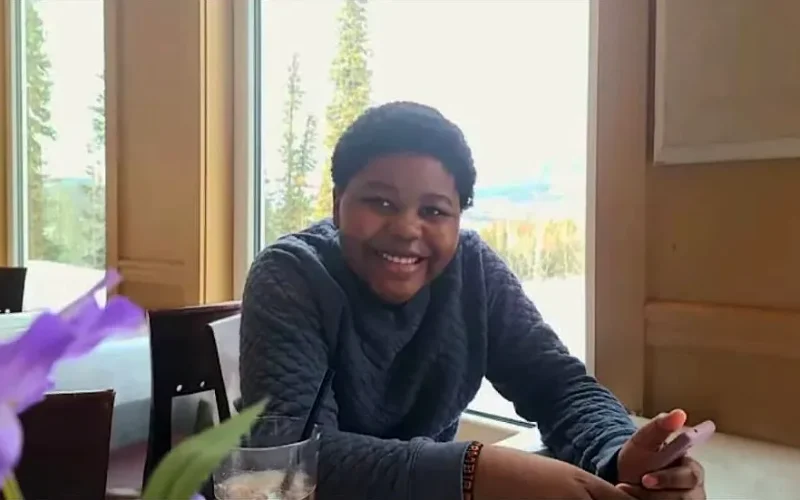
HE left with his parents, full of hope — a bright-eyed Zambian boy with soccer medals, a laptop, and a wooden toy truck he had crafted himself as a gentle hint that his father needed a tow hitch. He was twelve years old, embarking on a new life in Canada. Three years later, on Sunday, March 1, 2026, Abel Mwansa Jr. came home — in a casket draped with the quiet grief of two nations — to be buried in the red earth of Zambia’s Copperbelt.
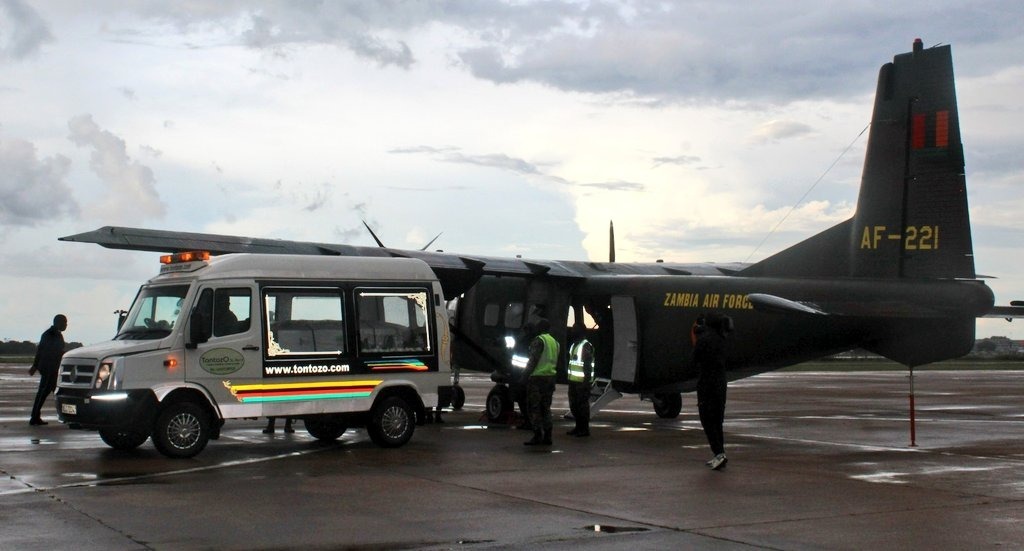
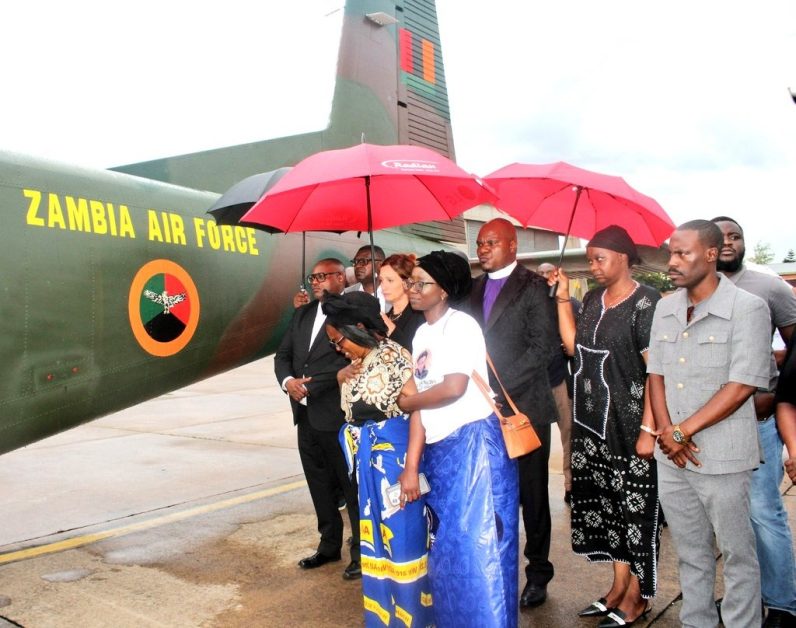
His remains touched down at Kenneth Kaunda International Airport in Lusaka before being flown north to Kitwe, where he is to be buried on Monday at Nkana East Memorial Park. The arrival was met by Zambia’s Minister of Foreign Affairs and International Cooperation, Mulambo Haimbe, Canada’s Chargé d’Affaires Corry Van Gaal, and a family shattered beyond what words can hold.
Abel was one of eight people killed on February 10, 2026, when 18-year-old Jesse Van Rootselaar opened fire at Tumbler Ridge Secondary School in a remote corner of British Columbia, Canada. Before arriving at the school, Van Rootselaar had already murdered her mother and young half-brother at the family home. She then killed five students, a teacher’s aide, and wounded 25 others before turning the weapon on herself. It was one of the deadliest school shootings in Canadian history — and it has left scars on two continents.
“My heart is at peace to have my son buried in my country, Zambia.” — Abel Mwansa Sr., father
Abel Mwansa Jr. arrived in Tumbler Ridge in 2023 from the Zambian mining town of Solwezi. He was nine years old. His father, Abel Mwansa Sr. — a pastor who had come to Canada on a temporary work permit — brought his family seeking a better life, better opportunities, better prospects for a boy who dreamed of being a scientist, an engineer, or perhaps a professional soccer player.
Before leaving Zambia, Abel had made a promise to his pastor and family friend Christopher Bwalya: his accent would not change. It was the kind of promise a child makes in the excitement and sadness of departure. It lasted precisely three months.
“That for me remains one of those very humorous moments,” Bwalya recalled with a chuckle, speaking to CBC Radio from Zambia, where a celebration of Abel’s life had been held days after the shooting. “He was a child that loved everybody, a child that was open, friendly to everybody he was found with. He was everybody’s child.”
Abel had flourished in Canada in the way children do — absorbing the language, the culture, the ice rinks. Among the belongings his father kept near him in the days after the shooting: a pair of ice skates, a collection of soccer medals, pottery, and the small wooden truck with the tow hitch. The skates were emblematic of the distance Abel had travelled — not just geographically, but in terms of the life he was building. Solwezi does not have ice rinks.
In Tumbler Ridge, he had become known as a big brother figure — protective, caring, never hesitating to look after his eight-month-old sibling or his eight-year-old sister. Just two days before he was killed, the family had celebrated his sister’s birthday.
“He can give you the best smile that you’ve ever seen. He had such a beautiful smile. I tried to make my son be deliberate about smiling.” — Abel Mwansa Sr.
A Father’s Unbearable Arithmetic
Abel Mwansa Sr. wanders between rooms in his home and instinctively expects to find his son still sleeping. The realisation that he will not come fresh each time. It is a particular cruelty of sudden grief — the body continues its routines while the mind lags behind, still populated by someone who is gone.
“I wake up and walk to the living room and kitchen. I’m thinking he’s still sleeping,” he told CTV News Chief Anchor Omar Sachedina in an interview from his home. His faith, he says, is holding him — but only barely. He speaks of periods of “breaking down and crying inside.”
He wanted the world to know that his son was not a statistic, not merely one of eight victims, not simply a name on a memorial. “I want my son to be remembered as a brave one,” he said. The framing is deliberate and dignified — a father refusing to allow his child to be defined only by the manner of his death.
Abel Sr. could have buried his son in Tumbler Ridge. Many offered support and comfort in the community. But he is in Canada on a temporary work permit, which means the future is uncertain. The thought of leaving his son’s grave behind in a country he might one day be required to leave was unbearable.
“Imagine I bury my son here, and then I leave,” he said quietly. “If I go back home, I think I will be feeling like a part of me has been left somewhere. My heart is at peace to have my son buried in my country, Zambia.”
In a rare and moving gesture of solidarity between bereaved fathers, Abel Mwansa Sr. visited BC Children’s Hospital in Vancouver, where 12-year-old Maya Gebala — shot in the head at the same school — lay unconscious but, against all expectation, still fighting. He met Maya’s father, David Gebala, in person. Two men from entirely different worlds, sitting together in a hospital waiting area, bound by the same day of horror.
“We encouraged one another,” Abel Sr. later said.
The Government of Zambia Steps In
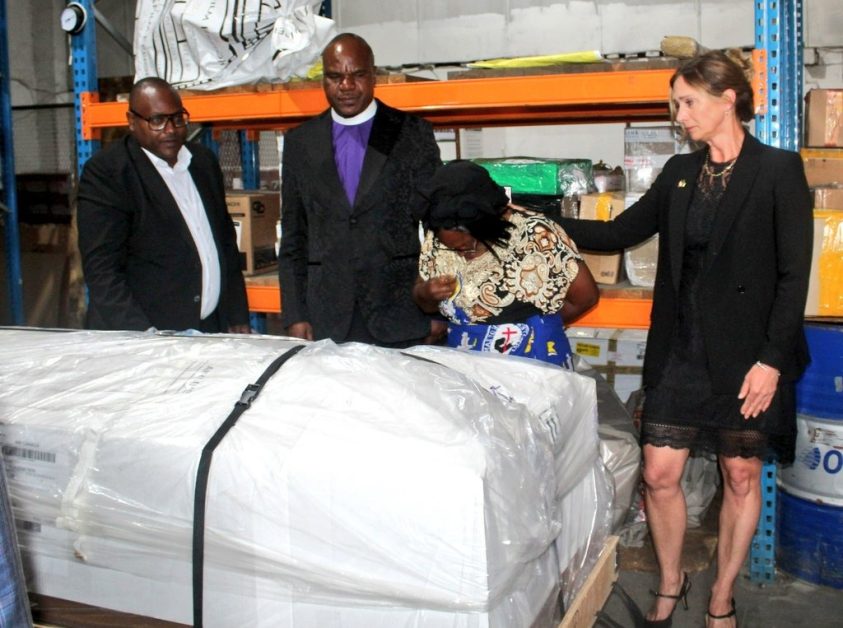
From the moment news of the shooting broke, the Zambian government moved quickly. Foreign Affairs Minister Mulambo Haimbe confirmed that Lusaka had worked closely with Canadian authorities to facilitate the dignified repatriation of Abel’s remains — including providing a government aircraft to transport the coffin from Lusaka to Kitwe on the Copperbelt, sparing the family the additional logistical and financial burden.
Speaking at Kenneth Kaunda International Airport on Sunday, Haimbe said: “On this solemn occasion, we commiserate with the family on this tragic loss. You can imagine the young life that has been lost and the devastation the family is going through.”
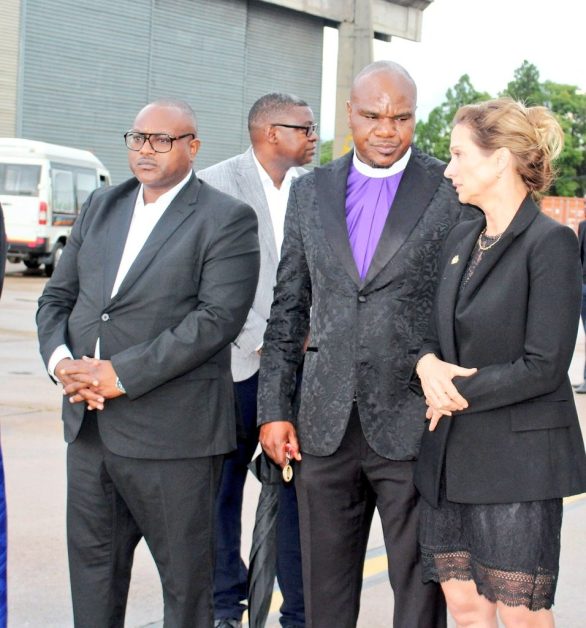
Canada’s Chargé d’Affaires Corry Van Gaal, representing Ottawa at the arrival ceremony, expressed her country’s sorrow. She described Abel as “such a joy in his class and a real hero,” and said Canada mourns alongside Zambia.
The African community across Canada had meanwhile rallied around the Mwansa family through a GoFundMe campaign that raised over US$66,500 — approximately 1.2 million Zambian Kwacha — to help the family send their son home with dignity.
“Pain in both countries.” — Pastor Christopher Bwalya, speaking of the grief shared between Zambia and Canada
Two Countries Grieve, One Community Begins to Rebuild
In the days following the massacre, an invisible thread stretched 14,000 kilometres between Tumbler Ridge, British Columbia, and Solwezi, Zambia. As candles were lit at memorials in the tiny Canadian mining town — attended by Prime Minister Mark Carney — candles burned too at the City of Grace Chapel in Solwezi, under exposed timber beams and a corrugated metal roof, as friends remembered Abel’s laughter, his kindness, and his occasional mischief.
One friend of his own age recalled that Abel was someone who “gave encouragement to everyone around him.”
Back in Tumbler Ridge, the community — population just over 2,000 — is attempting something almost impossibly difficult: to function, to grieve, and to inch toward healing simultaneously. Portable classrooms have been erected as an alternative to returning to the site of the massacre. Premier David Eby has pledged that no student will ever be compelled to set foot inside the original school building again.
The RCMP removed the yellow tape surrounding Tumbler Ridge Secondary School on February 15th, but the roads remain barricaded, guarded by private security. Trauma recovery sessions are being integrated into the tentative return to schooling — officials acknowledge that many students and teachers simply are not ready, and may not be for some time.
Among the survivors whose stories remain unresolved, 12-year-old Maya Gebala, shot in the head, remains hospitalised at BC Children’s Hospital in Vancouver with significant brain injury, though her family says she continues to defy medical expectations. Her father, David, met with Abel’s father during that painful hospital visit, two men grieving in entirely different registers — one burying a son, the other praying his daughter survives.
What Remains
Abel Mwansa Jr. was twelve years old. He had soccer medals, ice skates, a wooden truck, dreams of engineering and science and football, and a smile his father says was “the perfect medicine.” He had a sister who turned eight two days before he died. He had a baby sibling he doted on. He had a pastor in Zambia who remembers him quoting Genesis in the local Bemba dialect, and a community in Canada who watched him lose his accent and gain a new world.
He also had a father who held all of these things together in the days after the worst possible phone call, who visited another grieving father in a hospital, who thanked the people of Tumbler Ridge for their food and their presence, and who now carries his son’s remains home across an ocean and a continent so that Abel can rest in the earth where he began.
The burial is on Monday, March 2, at Nkana East Memorial Park, Kitwe, Zambia. Two governments will be represented. Hundreds of miles of grief will be in attendance.