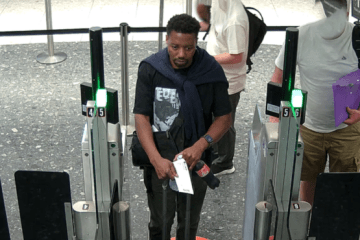
WHAT began as a single line in a US Treasury sanctions notice has erupted into the most serious governance and national security crisis of President William Ruto’s administration. A leaked government document, now circulating widely on Kenyan social media, contains the names of dozens of foreign nationals – among them associates of a genocide-accused Sudanese warlord, and a Zimbabwean businessman convicted of fraud – who were allegedly issued Kenyan passports on the direct orders of State House.
The scandal has fused two previously separate controversies into one combustible story: the sale of Kenya’s sovereign travel documents to sanctioned foreign actors, and the alleged positioning of a foreign election-technology operative inside Kenya’s power structure ahead of the 2027 general election. Together, they present a portrait of an immigration system systematically hollowed out to serve the political and commercial interests of those at the very top.
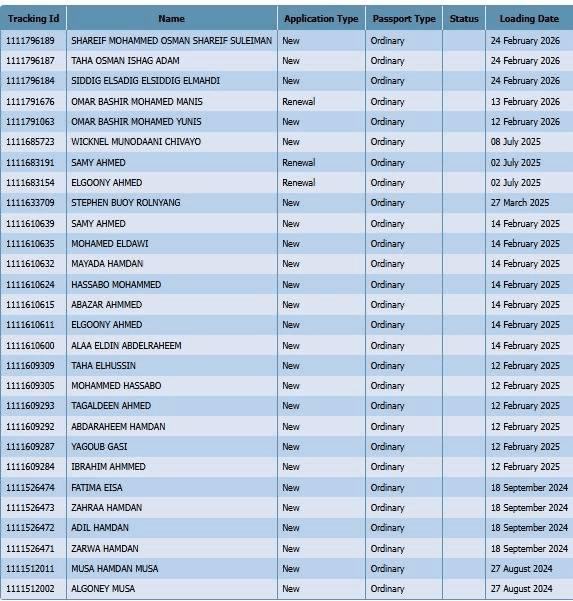
Activist Boniface Mwangi was the first public figure to name names. In a statement posted on February 26, he alleged that the passports were processed under special instructions and published what he said was the underlying government document. “Here is a list of foreigners whom Evelyn Cheluget, the Director General of Immigration Services, has issued Kenyan passports to travel with. The orders to issue the passports came directly from the State House,” Mwangi declared.
The list he published names: Shareif Mohammed Osman, Taha Osman Ishag Adam, Siddiq Elsadig Elsiddig Elmahdi, Omar Bashir Mohamed Manis, Omar Bashir Mohamed Yunis, Samy Ahmed, Elgony Ahmed, Mohamed Eldwai, Mayada Hamdan, Hassabo Mohamed, Abazar Ahmed, Alaa Eldin Abdelraheem, Taha Elhusin, Mohamed Hassabo, Tagaldeen Ahmed, Abdalraheem Hamdan, Yagoub Gasem, Ibrahim Ahmed, Fatima Eisa, Zahraa Hamdan, Adil Hamdan, Zarwa Hamdan, Musa Hamdan Musa, and Algoney Musa.
The preponderance of individuals bearing the surname Hamdan – a name directly linked to the RSF’s ruling Dagalo family – is not lost on analysts. The leaked document indicates that Mayada Hamdan applied for a new ordinary Kenyan passport on February 14, 2025, while Abdaraheem Hamdan made a similar application on February 12, 2025. The timing – months after Sudan’s civil war intensified and international sanctions against the RSF’s leadership tightened – suggests the applications were not routine.
The most internationally consequential name on the list is the last. Algoney Hamdan Dagalo Musa, known within RSF circles as a key logistics architect of the paramilitary’s war effort, was sanctioned by the US Treasury’s Office of Foreign Assets Control in October 2024 for leading efforts to supply weapons for the RSF’s campaign in Sudan. The European Union followed suit in January 2026. Yet Kenyan immigration records show he holds passport number AK1586127 — a full Kenyan travel document.
Immigration officials are alleged to have bypassed biometric safeguards, manipulated application data, and erased digital records to make these issuances possible. Children’s identities were reportedly used as decoys to obscure the paper trail. The net effect: a man formally designated by two of the world’s largest sanctions regimes was able to move across international borders using a Kenyan document, while his actual identity remained hidden from the border-control systems of dozens of countries that would otherwise have stopped him.
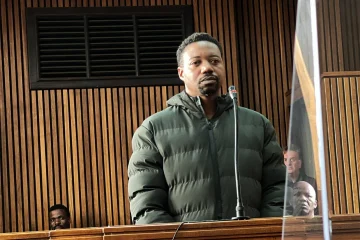
Mwangi singled out number six on the list: Zimbabwe’s Wicknel Chivayo. He alleged that Chivayo was “supposed to help the government steal the 2027 elections.”
The allegation is explosive, but it did not arrive without context. Chivayo has visited Kenya’s State House multiple times, and on January 11, he met President Ruto and Deputy President Kithure Kindiki at Sagana State Lodge, later sharing photographs online praising the pair. He also shared photographs of himself having lunch with First Lady Rachel Ruto. The State House has not explained the nature or purpose of these meetings.
Chivayo, who styles himself “Sir Wicknell,” has become a fixture at State House despite a criminal record that includes fraud convictions in Zimbabwe and what opposition leaders describe as a troubling pattern of involvement in disputed elections across southern Africa.
The united opposition coalition — comprising Rigathi Gachagua’s Democratic Congress Party, Martha Karua’s People’s Liberation Party, Kalonzo Musyoka’s Wiper, and Eugene Wamalwa’s Democratic Action Party Kenya — has seized on Chivayo’s State House visits as evidence of a broader conspiracy to manipulate the 2027 elections.
The Consumers Federation of Kenya (COFEK) has gone further, filing a constitutional petition seeking to bar Chivayo from accessing State House entirely, arguing that the continued presence of a foreign convicted fraudster within the highest echelons of Kenya’s presidency poses grave risks to national sovereignty and threatens the integrity of the 2027 general election.
How Were the Passports Processed?
Mwangi posed questions that have yet to receive official answers: “To apply for a Kenyan passport, you need a Kenyan identity card and an e-Citizen account, and you have to pay. Whose account was used for this illegal passport application? Did they use a zero token where no payment was made? Why were immigration officers told the applicants were Very Important Persons and instructed to issue express passports?”
These are not abstract concerns. Kenya’s e-Citizen platform was built precisely to digitise and audit the passport application chain, eliminating the discretionary access that had historically enabled corruption. If officials circumvented it — through a zero-token mechanism that leaves no financial record, or by using another person’s account to submit the applications — the integrity of the country’s entire digital identity infrastructure is compromised. Every other application processed through that same system becomes suspect.
The list circulating on social media allegedly includes individuals said to have been granted passports under special instructions, with reports claiming the passports were processed through the office of Evelyn Cheluget, Director General of Immigration Services, with orders purportedly coming from State House. The Directorate of Immigration Services and the State House have not responded to media inquiries.
The Reactions: Outrage, Warnings, and Silence
Public condemnation came swiftly. Former Chief Justice David Maraga cautioned that if the issuances were verified, they would represent a direct breach of Kenya’s constitutional framework. Former Attorney General and now opposition figure Justin Muturi had already been raising the alarm about Chivayo specifically. Muturi described Chivayo as “a convicted fraudster in the supply of election materials in South Africa, in Namibia,” and questioned why he routinely passed through Eldoret International Airport en route to meetings with the President.
Mwangi went further, declaring: “Selling Kenyan passports is evil, but selling our passports to criminals is pure demonic behaviour! Ruto must go!”
Notably, the reactions from official quarters have been conspicuous by their absence. The Foreign Affairs Principal Secretary, Korir Sing’oei, told the Daily Nation that questions about Chivayo’s State House visits were “outside the remit of my responsibility.” State House spokesman Hussein Mohamed did not respond to inquiries about why the President was associating with someone of Chivayo’s background. The Interior Ministry, which has oversight of the Immigration Department, has said nothing.
The DCI has not announced an investigation. Parliament has not been convened in emergency session. The institutional response, so far, has been silence — which critics say is itself a form of complicity.
The passport scandal did not materialise in a vacuum. It lands atop a pile of accumulated reputational damage arising from Kenya’s relationship with Sudan’s RSF. Nairobi hosted a major RSF-linked conference in February 2025 that resulted in Sudan recalling its ambassador. President Ruto flew to Juba on his presidential jet with Abdulrahim Dagalo — himself a sanctioned figure and Hemedti’s brother. Kenya was removed as the lead Sudan mediator by IGAD in 2023 following Khartoum’s objections. And Raila Odinga’s failed bid for the African Union Commission chairmanship was partly attributed, by regional analysts, to Kenya’s diminished standing on the continent.
Now the country’s passport system – the physical symbol of citizenship, identity, and sovereignty – stands at the centre of the story.
Mwangi further claimed that some of the listed individuals have been seen in proximity to President Ruto on various occasions. He urged the public to independently verify the names online and share their findings. The document continues to spread across Kenyan social media, with each share adding to the political pressure on an administration that has so far declined to engage.
The immediate legal and political landscape is clear enough. COFEK’s constitutional petition against Chivayo’s State House access is set to be heard imminently. The opposition has a ready-made issue with which to batter the government as 2027 approaches. International partners – the US Treasury, the EU, and the UN Sudan sanctions committee – now have fresh reason to scrutinise Kenya’s border-control reliability. And any country whose passport-control systems interact with Kenyan documents faces a practical question about whether those documents represent who they claim to.
What is less clear is whether anyone inside the Kenyan government will be held accountable — or whether this will follow the pattern of so many previous Kenyan scandals and quietly dissolve into institutional inertia, with the names on the list continuing to travel freely and Evelyn Cheluget continuing to run the immigration directorate.
The Artur brothers’ scandal of 2006, over which Cheluget presided and which produced no significant consequences, may be the most instructive precedent. Twenty years later, the Director General sits at the centre of a far larger crisis — and the silence from those who appointed her is, so far, deafening.