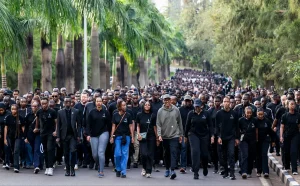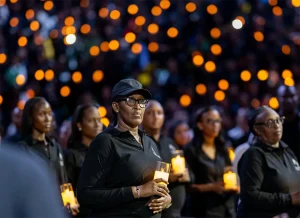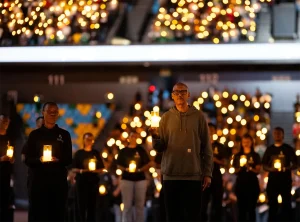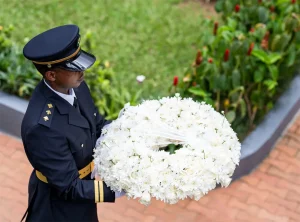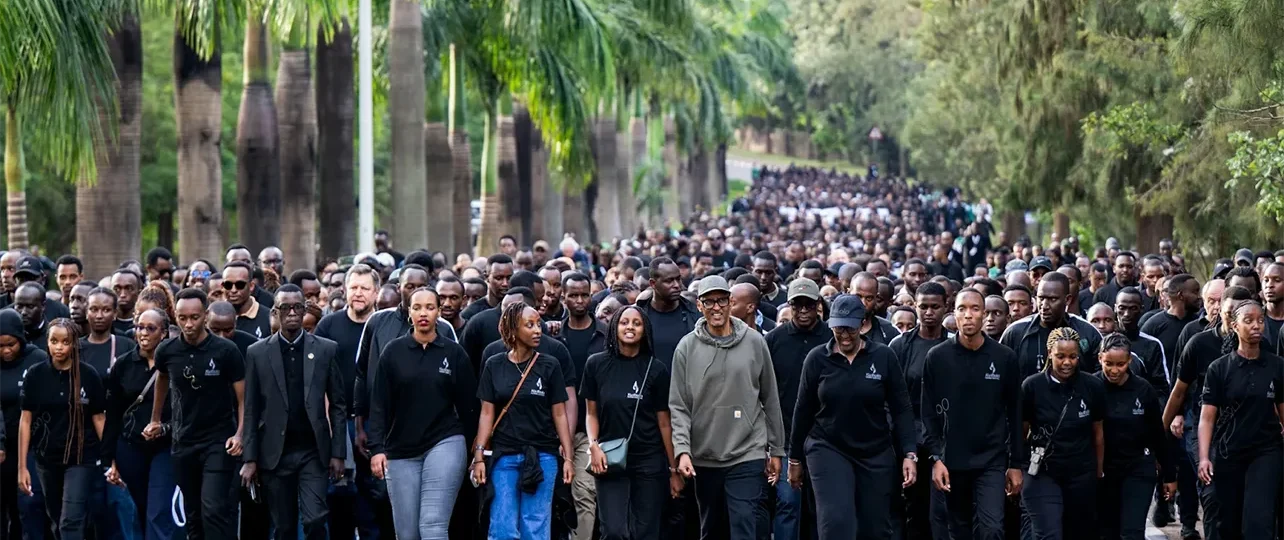

THEY came in their thousands, the young and the living, marching through the hills of Rwanda alongside their president and first lady, their feet tracing a path that their parents and grandparents nearly never survived to walk. On April 7, 2026, Rwanda marked Kwibuka 32 – the 32nd commemoration of the 1994 Genocide against the Tutsi — and the country did not bow in silence. It stood up and roared.
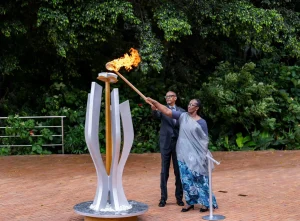
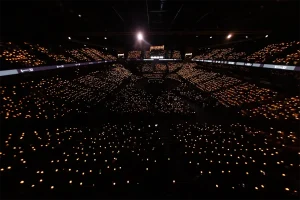
The Flame of Remembrance was lit. The testimonies were given. The tears fell. But woven through the grief was something harder and more enduring – a collective vow, spoken by a generation that never lived the horror but has been entrusted with its lessons: this will not happen again. Not because the world has become kinder, but because Rwanda has become stronger.
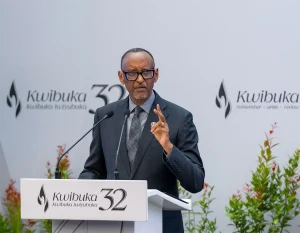
Kwibuka – which means ‘remember’ in Kinyarwanda — has become one of the most powerful annual rituals of national reckoning anywhere on the African continent. Each year, President Paul Kagame does not merely attend. He leads. He speaks. And in 2026, he spoke with the controlled fire of a man who has carried both the grief of what was lost and the fury of what was almost allowed to happen.
“We owe future generations of Rwandans more than survival. They deserve to inherit a secure, united, and bold country, and an integrated and confident Africa.”
President Paul Kagame | #Kwibuka32
His words struck at the heart of a continent-wide moment. The African Union commemorated Kwibuka 32 at its Addis Ababa headquarters. Ceremonies were held in cities across Africa, Europe, and North America. At the United Nations in New York, survivors shared testimony before an audience that included diplomats, civil society leaders, and officials who still carry the institutional shame of 1994, when the international community watched and hesitated as over a million people were slaughtered in a hundred days.
At the UN headquarters, Secretary-General António Guterres – represented by a senior official — called on member states to become parties to the Genocide Convention and implement it in full. The message was blunt: memory without action is not enough.
In Kigali, Kagame was even blunter.
“Our lives were worth nothing. That’s fine. For Rwandans, the lessons have been brutal, and have not been forgotten. If our lives do not happen to align with someone else’s interests, they are not worth saving. And so it had to be the Rwandan Patriotic Army that led the campaign against genocide, and ended it. Our deepest source of grief, was always that we could not arrive earlier.”
President Kagame | #Kwibuka32
The remark was both a historical accounting and a contemporary warning. Rwanda did not wait to be saved in 1994. It saved itself – at enormous cost, arriving too late for too many. Today, Kagame argues, the same self-reliance must be the foundation of Rwanda’s security posture, even as outside voices question its regional role.
He addressed that questioning directly, with characteristic precision. The culture and character of the Rwanda Defence Force, he said, was shaped in the crucible of those hundred days. It is not a force to be sanctioned into submission or insulted into retreat.
“No sanctions or insult from outside can ever tarnish the honour and integrity of Rwanda’s defence and security forces, who are among the finest that can be found anywhere.”
President Kagame | #Kwibuka32
The reference was unmistakable: Rwanda operates under continuing international scrutiny over its involvement in eastern Democratic Republic of Congo, where M23 rebels – allegedly backed by Kigali – have upended millions of lives. Kagame has consistently reframed the question: Rwanda acts in its region because genocide ideology did not disappear in 1994. It dispersed. It regrouped. It has been tolerated and, he argues, even encouraged by those who now lecture Rwanda about restraint.
“We cannot afford to repeat the mistakes of the past. Genocide ideology is still spreading in our region. Left unchecked, it has the power to take us all backwards again. There are those who claim that Rwanda exaggerates these concerns, or that we have ulterior motives. This is not only false — it exposes the deep cynicism that led to the tragedy we commemorate today.”
President Kagame | #Kwibuka32
On the sidelines of the Kwibuka 32 national activities, Kagame met with Professor Chaloka Beyani, the UN Under-Secretary-General and Special Adviser on the Prevention of Genocide. Their discussions focused on what the international community owes the world – not in retrospect, but in the present: the duty to identify and respond to early warning signs of genocide before the killing begins. It was a meeting laden with irony and urgency in equal measure, held on the same soil where the world once failed its most basic test.
Back in Kigali, survivor testimonies anchored the national ceremonies. Two voices heard internationally came from Marcel Mutsindashyaka, who was five years old when he lost his father, two brothers, his sister, and 27 extended family members, and from Serge Gasore, who was eight when his neighbours turned on his community, and who survived the massacre at Ntarama Catholic Church – a place that was supposed to offer sanctuary. Both men have rebuilt. Both men are fathers now. Both men carry the memory forward, not as paralysis, but as purpose.
Marcel, now a Fulbright Scholar and Yale World Fellow, warned that the mechanisms of genocide have not disappeared -they have migrated. The RTLM radio that incited the killings in 1994 now has millions of descendants in algorithm-driven social media platforms that can deliver hatred to a billion screens in seconds. Serge, founder of Rwanda Children, which serves more than 1,500 people daily, speaks internationally to ensure that his generation’s loss becomes the world’s lesson.
These are the inheritors of Kwibuka. These are the people Kagame marched alongside on 7 April 2026. And the president was unambiguous about what those marching steps represent.
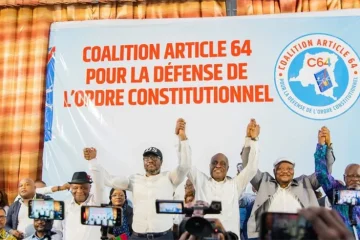
“After the genocide, Rwandans chose to rebuild our country, together. With that came a promise to never let the politics of genocide take root ever again. I tell you, genocide cannot happen here again. It won’t happen. Even with those noises you hear in the region, of people gathering from Europe, from wherever, meeting in Kinshasa, and bringing the son of Habyarimana, relatives, and others from wherever — all that is just noise. It cannot amount to anything of that kind again. I know every Rwandan, young or old, is as determined and is saying so, like I am saying now to you.”
President Kagame | #Kwibuka32
The reference to exiled Rwandan opposition figures regrouping in the DRC and Europe was deliberate and pointed. Kagame is not a man who hedges. He names what he sees, and what he sees is an attempt to rehabilitate génocidaire-adjacent politics behind the language of dissent and democracy.
But the most electrifying passage of his address — and arguably the most quoted line to emerge from any African leader’s remarks this year — was a meditation on mortality, dignity, and defiance that drew gasps and then roars from those gathered at the ceremony:
“You cannot kill a person twice. If you try, the person will kill you before you kill them. As we stand here before you, some people outside mock us and speak about us with contempt — but this whole country, this Rwanda you see before you, cannot die twice. Before you kill Rwanda, Rwanda will strike first. We cannot die twice. Whether it is us adults or our younger generation, no one will kill them twice. It is impossible. We will live the way people are supposed to live, the way everyone else lives. And inevitably, we will not ask anyone for permission to live.”
President Kagame | #Kwibuka32
It was a statement that will be studied for years — by scholars of genocide prevention, by security analysts trying to decipher Rwanda’s strategic calculus, and by the young Rwandans who marched that day and will carry it in their chests long after the flame is extinguished.
And yet Kagame also offered something gentler: an acknowledgement that the nation’s resilience is not the product of his government alone, but of every Rwandan who chose, in the darkest aftermath imaginable, to reach a hand across the divide.
“What sustains Rwanda today is the unity of Rwandans, and the conviction that like all people, we have the right to live in safety and dignity, and at peace with all our neighbours. Kwibuka carries profound meaning for our nation. It is how we confront and overcome the divisions that nearly destroyed us. We draw on the strength of survivors, who provide the reservoir of humanity that feeds our nation’s soul. To all survivors, know that you are not alone. We stand with you always.”
President Kagame | #Kwibuka32
Thirty-two years is not so long in the life of a nation. Rwanda is still within living memory of its catastrophe. The children marching alongside Kagame and First Lady Jeannette Kagame on April 7 were born into a country that had already decided to choose life. But they were born into a neighbourhood that has not finished its reckoning with the ideology that caused the genocide in the first place.
That is the burden and the charge that Kwibuka 32 placed on every pair of marching feet. Remember. Rebuild. But above all: remain ready. Because Rwanda has learned, at a cost no people should ever be made to pay, that readiness is the only language that those who would destroy you will ever respect.