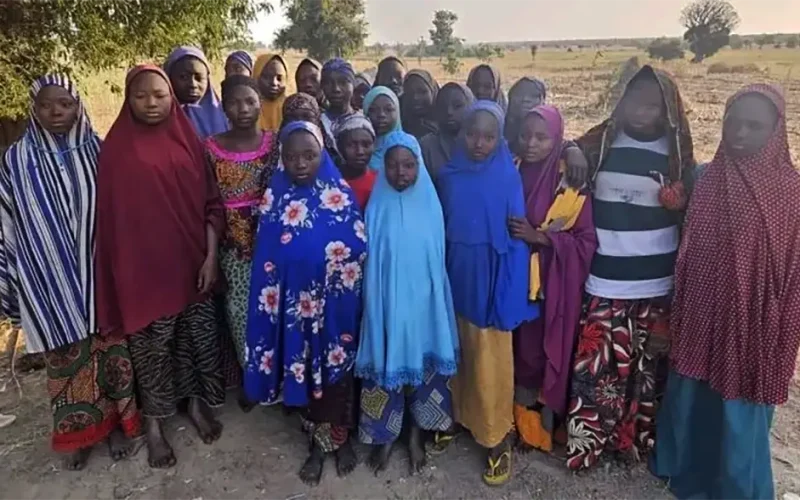
ALL 24 schoolgirls kidnapped from a secondary school in northwestern Nigeria have been rescued, President Bola Tinubu has announced, even as more than 250 students and teachers from another school remain in captivity following a wave of mass abductions that has gripped the nation.
The girls were freed eight days after gunmen struck the Government Girls Comprehensive Secondary School in Kebbi state’s Maga town at dawn on Nov. 17, moments after a military detachment left the premises. Twenty-five girls were initially taken, but one escaped the same day.
“I am relieved that all the 24 girls have been accounted for. Now, we must put as a matter of urgency more boots on the ground in the vulnerable areas to avert further incidents of kidnapping,” Tinubu said in a statement released by his office. “My government will offer all the assistance needed to achieve this.”
The president applauded security agents for securing the girls’ freedom but provided no details about the rescue operation or whether a ransom was paid. The girls remained in the custody of authorities on Tuesday and were being taken to the state capital of Birnin Kebbi, officials said.
Musa Rabi Magaji, principal of the primarily Muslim school, confirmed all the girls had been released but said he had no immediate information about their condition.
For parents like Abdulkarim Abdullahi, whose two daughters, aged 12 and 13, were among those abducted, the news brought overwhelming relief after days of anguish.
“I am excited to receive the news of their freedom. The past few days have been difficult for me and my family, especially their mother,” Abdullahi said in a telephone interview. “I will wait to see from the government says about their well-being, but I can’t wait to see them in good health.”
The Kebbi rescue came as Nigeria grapples with multiple ongoing kidnapping crises. On Friday, gunmen raided Saint Mary’s School in north-central Niger state, abducting more than 300 students and staff from the Catholic school in one of the largest mass kidnappings in recent years. While 50 students escaped over the weekend, 253 schoolchildren and 12 teachers remain captive.
President Tinubu tasked security forces to intensify efforts to rescue the remaining hostages, as pressure mounts on his government to stem the tide of abductions terrorising communities across the country.
The Kebbi attack triggered what officials described as “copycat kidnappings” in rapid succession. Last Tuesday, gunmen stormed the Christ Apostolic Church in Eruku, Kwara state, killing two people and abducting 38 worshippers. All 38 were freed on Sunday.
Then on Tuesday, just as the Kebbi girls were being rescued, police reported that gunmen had seized 10 people in the village of Isapa in Kwara state—only 12 miles from Eruku. Kwara state police spokesperson Adetoun Ejire-Adeyemi confirmed the latest attack, underscoring the persistent threat facing communities despite recent rescue operations.
No group has claimed responsibility for the recent abductions, but analysts and locals attribute the attacks to armed gangs known as bandits who target schools, travellers and remote villages for ransom. The gangs have used kidnapping as a way of dominating communities with little government and security presence.
Authorities say many of the bandits are former herders who took up arms against farming communities following clashes over strained resources.
School kidnappings have come to define insecurity in Africa’s most populous nation. Armed gangs often view schools as “strategic” targets to draw attention and maximise ransom payments. At least 1,500 students have been seized in Nigeria since the infamous kidnapping of the Chibok schoolgirls more than a decade ago, and many children were released only after ransoms were paid.
Arrests remain rare and ransom payments common in many of the hot spots across northern Nigeria, despite government pledges to crack down on the criminal networks.
The attacks have affected both Christian and Muslim communities, contradicting recent claims by some international observers that Christians are being specifically persecuted. The Kebbi school is primarily Muslim, while the Niger state school is Catholic, and the Kwara church attack targeted Christian worshippers.
As families of the freed Kebbi girls prepared for emotional reunions, hundreds of other parents remained in desperate wait for news of their children still held captive, uncertain when Nigeria’s security forces will deliver on the president’s promise to bring them home.