BURUNDI is confronting one of its most acute humanitarian crises in years, squeezed between two simultaneous population movements that are stretching its reception infrastructure to the breaking point – and an international funding response that has so far covered only a fraction of what is needed.
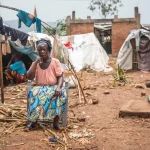
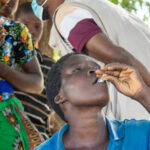
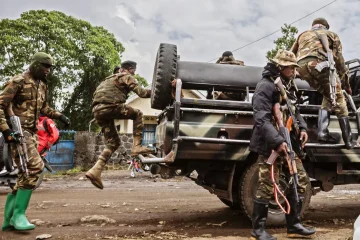
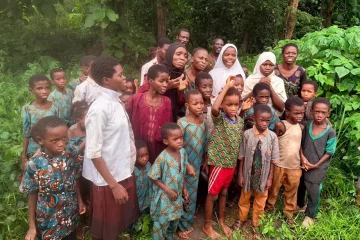
The numbers tell a stark story. In just three months, more than 90,000 Congolese refugees have flooded across the border as fighting intensifies in eastern DRC, the majority now packed into the Busuma refugee site, which is hosting over 66,000 people. Cholera circulates through the overcrowded settlement. Nearly 10,000 more remain stranded in transit centres, waiting for space in a site that is already overwhelmed. The infrastructure – water, medicine, shelter, protection services – was not built for this volume.
At the same time, Burundi is absorbing a parallel and accelerating wave from the opposite direction. More than 28,000 Burundian refugees have returned from Tanzania in the first two months of 2026 alone, with over 8,000 arriving in a single week. That pace is nearly three times the weekly target of 3,000 agreed at the November 2025 Tripartite Commission Meeting between Burundi, Tanzania, and UNHCR – a threshold that already assumed substantial operational capacity on the receiving end.
The accelerated returns from Tanzania carry their own troubling dimension. UNHCR has reported that refugee shelters in Tanzania have been demolished, pushing people into overcrowded departure centres before they have anywhere adequate to go. Some refugees have reportedly been subjected to mistreatment. The agency is pressing Dar es Salaam to ensure returns remain voluntary, safe, and dignified – diplomatic language that signals real concern about conditions on the ground.
The funding gap is the central vulnerability. Of the $35 million UNHCR says is required to deliver lifesaving assistance in Burundi this year, only 20 percent has been received. That leaves an $28 million shortfall against a crisis that is not waiting for donor conferences. Burundi already hosts more than 230,000 refugees in total, predominantly from the DRC, meaning the new influx is landing on a system that was already under chronic strain before the latest surge began.
What makes the situation analytically significant is the convergence of two distinct humanitarian dynamics – an acute emergency influx driven by active conflict in DRC, and a longer-term repatriation process from Tanzania that has now accelerated beyond the agreed framework. Either challenge alone would test a country like Burundi’s limited resources. Together, with funding at one-fifth of requirements, they represent a compounding risk that has the structure of a foreseeable catastrophe.
UNHCR’s framing – that isolated refugee sites are a short-term measure and that community-hosting approaches are the sustainable path – is correct in principle, but depends entirely on development funding that has not materialised. The gap between the agency’s policy vision and the operational reality on the ground is, at the moment, very wide.