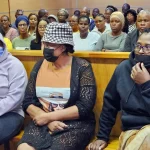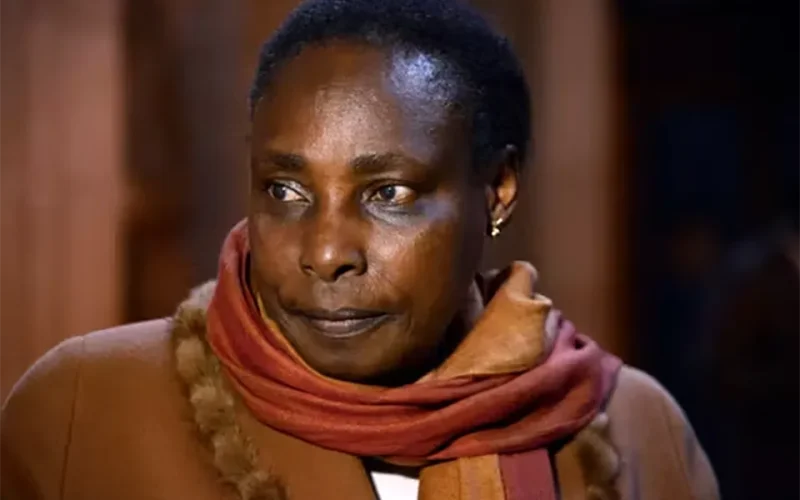
SHE is in her late eighties. She has lived for more than three decades in France, in comfort, far from the red soil of Rwanda. But this week, the long arm of justice reached across time and geography once more, as France’s Paris Court of Appeal ruled that criminal investigations against former Rwandan first lady Agathe Habyarimana must resume – this time for her alleged complicity in one of the most savage episodes of mass murder the modern world has witnessed.
The decision overturned a lower court ruling from last year that had dismissed charges against her on grounds of “insufficient evidence.” It is a ruling that will reverberate far beyond the elegant arrondissements of Paris. It echoes in Kigali, where the bones of nearly a million souls lie buried beneath memorials. It whispers through Nuremberg’s courtrooms and The Hague’s chambers. It speaks the same truth: justice has no statute of limitations when the crime is genocide.
“Justice has no retirement age. Neither does accountability. The dead do not forget, even when the living grow old and comfortable.”
The Woman at the Centre of the Storm
Agathe Habyarimana is no ordinary widow. As the wife of Juvénal Habyarimana — the Hutu president whose assassination on 6 April 1994 lit the fuse of one of history’s most compressed and brutal genocides — she was not merely a bystander to power. Plaintiffs and prosecutors allege she was power itself, operating through what was known as the Akazu: the “little house” or inner circle of Hutu extremists who planned, organised, and executed the mass murder of Tutsis and moderate Hutus.
She has been under investigation since 2008, making this a legal saga that has itself stretched nearly two decades. Her accusers allege she was more than a sympathiser — that she actively drew up lists of those to be killed, that she was the beating heart of the Akazu, that her fingerprints are on the architecture of the genocide itself. Her lawyers have dismissed the renewed investigation as “incomprehensible,” insisting there is no evidence to seriously support these claims.
The Paris Court of Appeal disagrees. And in disagreeing, it has sent an unmistakable message: the pursuit of justice will not be surrendered to the comfort of the accused, or to the passage of years.
KEY FACTS: THE PARIS RULING
▸ France’s Paris Court of Appeal on Wednesday ordered investigations to resume against Agathe Habyarimana
▸ A lower court dismissed charges in 2025, citing ‘insufficient evidence.’
▸ She has lived in France since being evacuated by French paratroopers in April 1994
▸ Under criminal investigation since 2008 — nearly 18 years of legal proceedings
▸ Plaintiffs allege she led the ‘Akazu,’ the inner circle of Hutu power responsible for organising the genocide
▸ Her defence lawyers have described the decision to reopen the case as ‘incomprehensible.’
One Hundred Days That Shook the World
To understand why the case of Agathe Habyarimana matters so profoundly, one must revisit the horror that unfolded in Rwanda in the spring of 1994 — a horror that unfolded with a speed and ferocity that stunned even a world conditioned to savagery.
On the evening of 6 April 1994, the plane carrying President Juvénal Habyarimana was shot down as it approached Kigali International Airport. Within hours — hours — Hutu extremist militias known as the Interahamwe (“those who attack together”) had set up roadblocks across the country. They had lists of names. They had machetes. They had a plan.
What followed over the next hundred days is almost beyond human comprehension. Between 800,000 and one million people — the vast majority Tutsi, but also moderate Hutu who opposed the killing — were murdered. Not in gas chambers or by industrialised death machinery. But face to face, neighbour killing neighbour, with machetes and clubs, with a personal savagery that the Nazi genocide, for all its industrial evil, did not always possess.
Churches became slaughterhouses. Schools became killing fields. The radio — particularly the notorious Radio Mille Collines — broadcast not music but murder: lists of names, instructions to kill, incitement masquerading as news. Women were systematically raped before being murdered. Children were not spared. The pace of killing, experts have noted, exceeded even the death rate of the Nazi Holocaust in its most mechanised phase.
“Between 800,000 and one million people were murdered in one hundred days. The machetes did not rest. Neither should justice.”
The international community, to its enduring shame, did not act. The United Nations force on the ground, UNAMIR, was ordered to stand down. Western governments evacuated their own citizens — sometimes literally stepping over Rwandan bodies to reach airport buses — and left. France, controversially, maintained close relations with the Habyarimana government before and during the genocide. The questions about French complicity have never been fully resolved — and they hang, like an accusation, over the fact that it was French paratroopers who evacuated Agathe Habyarimana to safety as the killing raged.
Rwanda’s Extraordinary Reckoning
What Rwanda has built from that catastrophe is, by any measure, one of the most remarkable acts of national reconstruction and justice-seeking in modern history.
In the immediate aftermath of the genocide, Rwanda faced a legal and moral impossibility: more than 100,000 suspects in overcrowded jails, a destroyed judiciary, and a traumatised population in which perpetrators and survivors lived as neighbours. The international community established the International Criminal Tribunal for Rwanda (ICTR), which functioned in Arusha, Tanzania, from 1995 to 2015 and prosecuted the major architects of the genocide.
But Rwanda also reached into its own cultural heritage. The gacaca courts — traditional community justice mechanisms, literally meaning “justice on the grass” — were adapted and deployed to process the millions of lower-level cases that the ICTR could never manage. More than 1.9 million cases were eventually heard through gacaca. It was imperfect, as all justice is imperfect. But it was extraordinary.
Rwanda has also pursued its suspects relentlessly across borders. The country has sought extraditions from Europe, North America, and across Africa. It has fought legal battles in British, Belgian, Dutch, Canadian, and French courts. It has watched, with mounting frustration, as Western legal systems have repeatedly found reasons not to extradite — concerns about fair trial standards, about the independence of the Rwandan judiciary, about conditions in Rwandan detention.
The irony is not lost on Kigali: the very nations whose inaction enabled the genocide are now the ones providing sanctuary to its alleged perpetrators — and citing legal principle as the reason they cannot be returned.
RWANDA’S JUSTICE FRAMEWORK: KEY MILESTONES
▸ 1994–2003: Over 100,000 genocide suspects held in Rwandan jails
▸ 1995–2015: The UN International Criminal Tribunal for Rwanda (ICTR) prosecuted senior perpetrators in Arusha, Tanzania
▸ 2001–2012: Gacaca community courts processed over 1.9 million cases across Rwanda
▸ 2007 onwards: Rwanda launches extradition requests to multiple Western nations, largely frustrated by European courts
▸ 2024: Rwanda continues to actively seek the extradition and prosecution of genocide suspects living abroad
▸ 2026: Paris Court of Appeal orders resumption of investigation against Agathe Habyarimana
The Nazi Parallel: Justice Across the Generations
The case of Agathe Habyarimana sits in a long and sobering tradition of post-genocide justice — one that stretches back to Nuremberg and continues to this day in courtrooms across Europe.
The world was reminded as recently as 2022 that justice for the Nazi genocide against Jews — the Holocaust — has no expiry date. Josef Schütz, convicted in Germany at the age of 101 for his role as an SS guard at a Nazi concentration camp, became one of the oldest people ever convicted of Nazi-era crimes. Irmgard Furchner was convicted in 2023 at the age of 97 for her role as a secretary at a concentration camp, charged with being an accessory to the murder of more than 10,000 people.
These are not aberrations. They are the product of a deliberate philosophical and legal commitment by Germany and other nations: that no matter how much time passes, no matter how frail the accused has become, the moral and legal obligation to confront mass atrocity does not diminish. The victims do not become less dead because their killers have grown old. The crime does not become less monstrous because the perpetrator can no longer stand without assistance.
The parallel with Agathe Habyarimana is striking. She, too, is elderly. She, too, has lived in relative comfort while the country she allegedly helped to destroy has rebuilt itself. She, too, has watched as the years passed and perhaps hoped that justice would tire before she did.
The Paris Court of Appeal’s decision suggests otherwise.
“Germany convicted a 101-year-old for Nazi crimes. A 97-year-old for complicity in murder. Justice does not observe birthdays.”
The Weight of France’s Role
No analysis of this case can ignore the uncomfortable question of France’s own relationship with the Rwandan genocide — a relationship that remains one of the most contested chapters in French post-colonial history.
France was the principal international backer of the Habyarimana government in the years leading up to the genocide. French soldiers trained the Rwandan army. French diplomats provided political cover. The relationship between Paris and Kigali’s Hutu power establishment was intimate and extensive.
When the genocide began, France’s initial response was to evacuate French citizens and, critically, key members of the Habyarimana government and their families — including Agathe Habyarimana herself. Operation Amaryllis, as it was known, has been a source of deep and enduring controversy. Critics contend that France knowingly extracted perpetrators and collaborators from Rwanda, effectively giving them safe harbour.
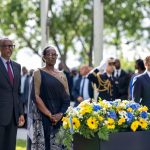
France has, in recent years, begun to grapple more honestly with this history. President Emmanuel Macron, in a landmark address in Kigali in 2021, acknowledged that France bore “a heavy and overwhelming responsibility” for the genocide — stopping short of a formal apology, but going further than any French leader before him. A French commission of inquiry concluded that France had been “blind” to the genocide’s preparation and had prioritised its relationship with the Habyarimana government over all other considerations.
Against this backdrop, the Paris Court of Appeal’s decision to reopen the case against Agathe Habyarimana carries a particular resonance. It is, in some measure, France choosing — however belatedly — to confront rather than conceal the consequences of its own historical choices.
A Nation Still Healing, Still Demanding
Rwanda in 2026 is a transformed country — in many ways, one of the most striking examples of national reconstruction and development on the African continent. Under President Paul Kagame, it has built modern infrastructure, achieved remarkable economic growth, made extraordinary advances in gender equality in governance, and established a level of public order and cleanliness that visitors routinely find astonishing.
But Rwanda has not forgotten. It cannot forget, because the evidence of what happened is everywhere — in the memorials at Nyamata, Ntarama, Murambi, where the bones of the murdered are preserved under glass and open to the sky; in the annual Kwibuka commemoration that marks each April with 100 days of mourning; in the survivors who still carry their machete scars and their shattered families into old age.
For Rwanda, the case of Agathe Habyarimana is not merely a legal matter. It is existential. If she was, as alleged, the head of the Akazu — if she drew up the lists of the condemned, if she helped plan the mechanism of mass murder — then she has spent more than three decades living in a European capital while the families of her alleged victims rebuilt their lives in the hills of Rwanda. The demand that she face justice is not vindictiveness. It is the minimum that accountability requires.
Rwanda’s government has long expressed frustration at the pace and commitment of Western justice systems when it comes to genocide cases. The country has repeatedly stated that it believes many suspected perpetrators continue to live comfortable lives in Europe, protected by legal technicalities that would not exist if the victims were European.
The Paris court’s decision, whatever its ultimate outcome, provides at least a partial answer to that frustration: the mechanism of justice, however slowly, continues to turn.
Justice That Transcends Age and Geography
The deeper significance of the Habyarimana case lies in what it says about the nature and reach of international justice — not merely as a legal institution, but as a moral commitment.
We live in an age when accountability is contested, when powerful actors routinely escape consequence, when the arc of justice seems to bend toward impunity rather than reckoning. The International Criminal Court struggles with selective enforcement. Powerful nations shield themselves from prosecution. War criminals die in their beds, surrounded by grandchildren who do not know what they did.
Against this backdrop, cases like Habyarimana’s matter not merely for what they might achieve in a courtroom — she may yet be acquitted, she may die before any trial concludes — but for what they assert. They assert that mass atrocity cannot be outlasted. They assert that the choice to kill, or to enable killing, or to organise killing, does not become less consequential with the passing of time. They assert that the international community retains the right — and the obligation — to pursue those who commit crimes against humanity, wherever they are, however old they have become.
From Nuremberg to The Hague to Arusha to a Paris courtroom in 2026, that assertion has been tested, frustrated, delayed, and imperfect. But it has not been abandoned.
Agathe Habyarimana is in her late eighties. She has waited more than thirty years for the machinery of justice to grind to a halt and leave her alone. This week, it did not.
The dead of Rwanda — stacked in churches, piled in schools, buried in mass graves across a hundred hills — are owed at least that much.