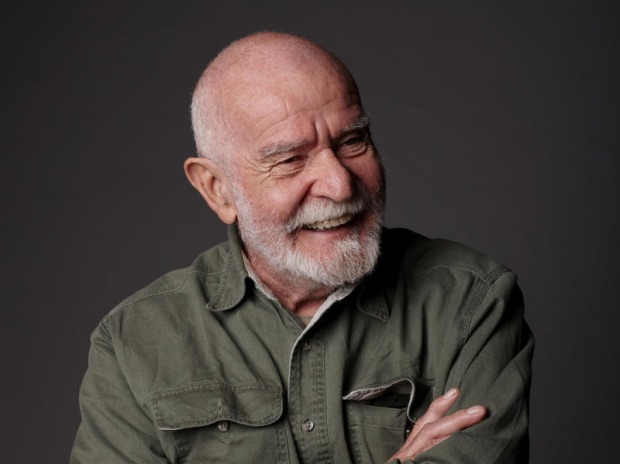
AS South Africa mourns the loss of the legendary playwright Athol Fugard, President Cyril Ramaphosa has paid a heartfelt tribute, describing him as “an extraordinary storyteller in extraordinary times, and the moral conscience of a generation”. Fugard’s passing on March 9, 2025, at the age of 92, marks the end of an era for a man whose works not only reflected the harsh realities of apartheid but also inspired a global audience to confront its injustices.
President Ramaphosa highlighted Fugard’s unique position as a white South African who refused to turn a blind eye to the injustices of his time. “Beyond the impressive body of work that he has left behind, Athol Fugard will be remembered for being an outlier amongst the millions of white South Africans who blithely turned a blind eye to the injustices being perpetrated in their name,” he noted. Fugard’s experiences working in the Native Commissioner’s Court in Johannesburg profoundly shaped his worldview and political consciousness, influencing his later work.
Fugard’s collaborations across racial lines were groundbreaking, especially during a period when such interactions were forbidden. His plays, including The Blood Knot, Master Harold and the Boys, and Sizwe Bansi is Dead, exposed the complexities of apartheid, while his novel Tsotsi was adapted into an Oscar-winning film in 2005. The play The Island, co-written with John Kani and Winston Ntshona, starkly portrayed the cruelty of apartheid on Robben Island, where Nelson Mandela was imprisoned.
In 1985, Fugard was celebrated by Time magazine as the greatest active playwright in the English-speaking world, using his platform to raise international awareness about the anti-apartheid struggle. South Africa honoured him with the National Order of Ikhamanga in Silver during his lifetime, and the Fugard Theatre in District Six, Cape Town, stands as a lasting tribute to his legacy.
On social media and in various tributes, Fugard is remembered for his profound impact on South African theatre and his ability to craft narratives that resonated globally. His commitment to storytelling and empathy allowed him to leap into the realities of others, making his work timeless and universally relatable. As President Ramaphosa noted, Fugard’s life and works have left an indelible footprint that will continue to inspire generations of creative professionals4.
In the words of President Ramaphosa, “The Fugard Theatre in District Six in Cape Town stands as a fitting tribute to a man whose life and works have left an indelible footprint, and that will continue to inspire generations of creative professionals for time to come”4. This sentiment echoes the widespread recognition of Fugard’s enduring legacy in South Africa and beyond.
Athol Fugard’s body of work includes numerous plays and novels that have had a profound impact on literature and theatre, particularly in the context of apartheid South Africa. Here are some of his most notable works:
Athol Fugard’s collaborations with black actors profoundly influenced his writing, particularly during the apartheid era. These collaborations not only shaped the content of his plays but also the method of storytelling and the themes he explored.
His work with actors such as John Kani and Winston Ntshona provided him with firsthand insights into life in the townships. Plays like Sizwe Banzi is Dead and The Island reflect these experiences, offering powerful critiques of apartheid’s dehumanizing effects.
Fugard’s collaborations blended Western theatrical traditions with African narrative styles, creating a unique hybrid form. This fusion was evident in works like The Island, where Fugard’s classical approach merged with the raw anger and storytelling traditions of his black collaborators.
Fugard often used improvisation and workshopping techniques with his actors. This approach allowed for the incorporation of personal experiences and spontaneous creativity, as seen in the development of The Island and other plays.
He relied heavily on his actors for inspiration and material. This actor-centric approach meant that the stories and themes of his plays were deeply rooted in the lived experiences of those performing them.
Collaborations with black actors allowed Fugard to explore themes of racial injustice and oppression more authentically. His plays became powerful tools for exposing apartheid’s brutality and challenging societal norms.
Through these collaborations, Fugard’s work emphasized human connection and empathy, often focusing on marginalized characters and their struggles. This approach helped to humanize the victims of apartheid and foster a sense of unity among diverse audiences.
Overall, Fugard’s collaborations with black actors enriched his writing by providing authentic perspectives on apartheid-era South Africa, fostering innovative storytelling methods, and emphasizing themes of social justice and human connection.
Notable Plays
- The Blood Knot (1961): This play explores the complex relationship between two brothers, one light-skinned and the other dark-skinned, highlighting racial tensions in South Africa. It was part of Fugard’s “Family Trilogy,” which also includes Hello and Goodbye (1965) and Boesman and Lena (1969)(12).
- Sizwe Banzi is Dead (1972): Developed with John Kani and Winston Ntshona, this play critiques the passed laws and the dehumanizing effects of apartheid on black South Africans(25).
- The Island (1972): Co-written with Kani and Ntshona, this play dramatizes life on Robben Island, where Nelson Mandela was imprisoned, exposing the harsh realities of apartheid(28).
- “Master Harold”…and the Boys (1982): This play explores themes of racism and personal identity through the relationship between a young white boy and his black servants(27).
- The Road to Mecca (1984): This play tells the story of an elderly recluse and her artistic project, reflecting on themes of isolation and creativity(27).
Notable Novels
- Tsotsi (1980): This novel was adapted into a film that won an Academy Award in 2005, highlighting the struggles of life in the townships during apartheid(24).
Other Works
- Cousins: A Memoir (1994): Fugard’s memoir, which explores his personal history and family dynamics1.
- Playland (1992) and Valley Song (1996): These plays reflect on post-apartheid South Africa and Fugard’s personal experiences1.
These works not only reflect Fugard’s mastery of storytelling but also his commitment to exposing the injustices of apartheid and exploring the complexities of human relationships in South Africa.