SOUTH Africa’s Special Investigating Unit has identified over 2.6 million irregularly issued traffic registration numbers, with 631,000 linked to illegal foreign nationals, 63 of whom fraudulently claimed more than R21 million from the Road Accident Fund.
The revelations emerged during a high-level awareness campaign against fraud and corruption in the border and immigration sector, where SIU Executive Director Advocate Andy Mothibi delivered a keynote address outlining the scale of corruption within the Department of Home Affairs and related entities.
The investigation has revealed systematic fraud involving foreign nationals who obtained traffic registration numbers without proper identification, with 63 individuals successfully claiming over R21 million in combined payments from the Road Accident Fund.
“The investigation team has received data from the Department of Home Affairs relating to over 2.6 million irregular Traffic Register Numbers, which were issued irregularly,” Mothibi said. The data indicate that traffic registration numbers were issued without acceptable identification being produced by applicants.
The SIU is currently awaiting confirmatory affidavits from the Department of Home Affairs to verify that the identified foreign nationals are not registered in any immigration systems. Once confirmed, the unit will request the Department of Transport to cancel the irregularly issued traffic registration numbers and place administrative blocks preventing their future use.
Visa and Permit Fraud Uncovered
Operating under Presidential Proclamation 154 of 2024, the SIU’s investigations into visa and permit application processes have identified numerous visas and permits issued on fraudulent documents, as well as syndicates colluding with Department of Home Affairs officials to issue irregular documentation.
In one striking case, Mothibi revealed how a senior official and Chief Financial Officer in the Northwest Province exploited the system. The official had obtained multiple fraudulent visas and, on the basis of these fraudulent documents, was appointed as a CFO within a government department or corporation, during which time the individual acquired various assets, including luxury motor vehicles and opened bank accounts with South African financial institutions.
The matter was referred to the National Prosecuting Authority for criminal prosecution and to the employing government department, with disciplinary referrals made to the Department of Home Affairs for implicated officials, including a senior legal official who was subsequently dismissed following an internal disciplinary process.
Investigation Outcomes
To date, the SIU’s investigations have yielded substantial results: 274 criminal referrals, 2 disciplinary referrals, and 100 administrative referrals. Additional referrals for further investigation have been submitted to the Northwest Drug Command and the Department of Transport.
Multi-Stakeholder Approach
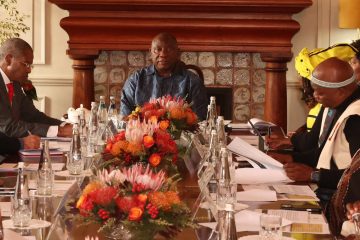
The Border and Immigration Anti-Corruption Forum was formally launched by the Minister of the Department of Home Affairs on 25 March 2025, under the chairpersonship of the SIU, to foster multi-stakeholder collaboration to combat fraud and corruption in the sector.
The forum includes law enforcement agencies, civil society, organised labour, and public and private sector representatives.
“Corruption manifests in all spheres of society and occurs in different sectors and industries,” Mothibi warned. Corruption, having permeated various sectors, poses a threat to national security, undermines the rule of law and institutions vital to ensure the centrality of the state as a protector and promoter of citizens’ rights.
The SIU executive director emphasised that while the country has made progress in fighting corruption, the reactive approach must be augmented with proactive measures. The unit has developed a National Corruption Risk and Prevention Framework, now at an advanced stage after consultations with provinces, government clusters, and various sectors.
Fraud and corruption undermine democracy and negatively impact service delivery, human and socio-economic development, job creation and public trust in government, as well as investor confidence in the country.