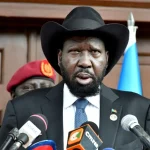
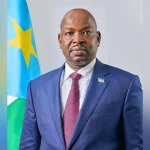
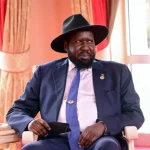
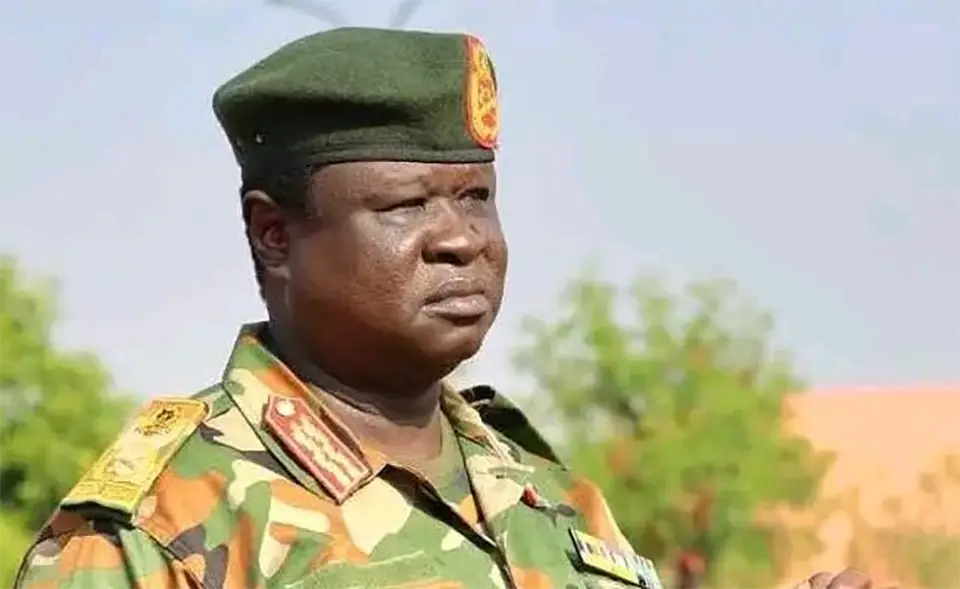
IN a move that has become grimly characteristic of South Sudan’s political dysfunction, President Salva Kiir has once again reshuffled his military command—this time reinstating the very general he dismissed just three months ago. The decision to replace Chief of Defence Forces Dau Aturjong with Paul Nang Majok, whom Kiir had sacked in July, epitomises the dizzying instability that has paralysed the world’s youngest nation and made the prospect of lasting peace increasingly remote.
This latest military merry-go-round is far more than an administrative footnote. It represents the fundamental crisis at the heart of South Sudan’s tortured existence: a country lurching from one constitutional and political emergency to another, unable to establish the institutional stability necessary for genuine reconciliation or sustainable governance.
Fourteen years after independence, South Sudan remains trapped in what can only be described as a permanent transition. President Kiir, now 74, has presided over a government officially labelled “transitional” since 2011—a designation that has become a euphemism for constitutional paralysis. Elections, the basic mechanism of democratic renewal, have been postponed twice, leaving the country in a state of suspended political animation.
The patterns of instability have become predictable in their unpredictability. Military commanders are appointed and dismissed with bewildering frequency. Government positions rotate like a game of musical chairs designed less for governance than for the management of competing power centres. Each reshuffle temporarily satisfies one faction while alienating another, creating a perpetual cycle of grievance and realignment that precludes any sustained focus on the nation’s catastrophic challenges.
Analysts interpret these constant shake-ups as Kiir’s strategy for consolidating power while attempting to balance various ethnic and political factions. But this approach, whatever its tactical merits for presidential survival, has proven strategically disastrous for the nation. Institutions cannot develop institutional memory or capacity when leadership changes every few months. Military command structures cannot implement coherent strategies when commanders are dismissed mid-operation. Peace processes cannot gain traction when the very officials negotiating them may be gone before agreements can be implemented.
The Machar Factor: Peace Agreement or Political Theatre?
The treatment of First Vice President Riek Machar throws into sharp relief the hollowness of South Sudan’s peace architecture. Machar, Kiir’s main rival during the devastating 2013-2018 civil war that killed an estimated 400,000 people, now stands charged with treason, murder, and crimes against humanity. The government placed him under house arrest in March, accusing him of supporting militia activities, and began his trial last month.
The 2018 peace and power-sharing agreement that ended the civil war was supposed to represent a new chapter for South Sudan—a framework for transitioning from armed conflict to political competition. Instead, it has become clear that the agreement was less a genuine settlement than a temporary ceasefire between implacable enemies. When Machar’s detention was announced, it reignited immediate fears of renewed civil war and prompted accusations that the government had fundamentally violated the peace accord.
Whether Machar is guilty of the charges against him is almost beside the point. The fact that the country’s second-ranking official—installed as part of a peace agreement—can be charged with treason while still nominally holding office reveals the complete breakdown of any meaningful constitutional order. It demonstrates that power-sharing arrangements exist only as long as they serve the interests of those with guns, and can be abandoned the moment political calculus dictates.
The Cost of Instability: A Nation Bleeding Out
While South Sudan’s leaders play their deadly games of political chess, the country’s population endures catastrophic suffering. The nation remains one of the poorest on earth despite significant oil resources. Basic services are virtually non-existent across vast swathes of territory. Millions have been displaced by repeated cycles of violence. Hunger stalks the countryside.
The connection between political instability and human suffering is direct and devastating. Development cannot occur in a context of constant upheaval. International donors and aid organisations cannot plan long-term programs when government counterparts change every few months. Economic investment is impossible when property rights and contract enforcement depend entirely on the whims of whoever currently holds power. Peace dividends cannot materialise when peace itself remains forever provisional.
A recent United Nations investigation accused South Sudanese leaders of “systematic looting” of the nation’s wealth for personal gain—a damning assessment that explains both the motivation for constant political reshuffling and its consequences. When state institutions exist primarily as vehicles for elite enrichment rather than public service, instability becomes not a problem to be solved but a feature to be managed. The constant circulation of positions allows different factions to take turns at the feeding trough, while ensuring no one accumulates enough stable power to challenge the system itself.
The Succession Question Nobody Dare Answer
Beneath the surface turbulence lies an even more dangerous undercurrent: the question of presidential succession. At 74, Kiir’s mortality is no longer an abstract consideration but a looming reality. Yet South Sudan has no established, peaceful mechanism for leadership transition. The constant reshuffling of military and government positions reflects not just ethnic balancing but manoeuvring by various factions positioning themselves for a post-Kiir landscape.
This dynamic adds a ticking-clock urgency to South Sudan’s instability. The longer the country goes without establishing genuine constitutional procedures for leadership change, the more likely that such change, when it inevitably comes, will be violent and destabilising. The current pattern of constant reshuffles can be seen as a high-stakes game of preventing any single faction from gaining a decisive advantage before the succession question must be answered.
A Vicious Circle with No Exit
South Sudan finds itself trapped in a vicious circle from which there appears no easy escape. Political instability prevents the development of functional institutions. The absence of functional institutions makes violence and personal rule the default mechanisms of power. Reliance on violence and personal rule generates constant instability. And so the cycle continues, grinding the hopes of millions into the dust of the Nile basin.
Breaking this cycle would require precisely what seems most impossible: a sustained period of political stability during which institutions could develop capacity, peace dividends could materialise, and the population could begin to see governance as something other than organised predation. But achieving such stability would require the current leadership to accept constraints on their own power and genuine power-sharing arrangements—the very things their entire political strategy is designed to prevent.
The reinstatement of General Majok after just three months is thus more than a curious administrative decision. It is a symbol of everything that keeps South Sudan trapped in its current hell: the prioritisation of elite political management over institutional development, the treatment of military command as a patronage tool rather than a professional position, the absence of any stable framework for governance, and the fundamental inability of current leadership to imagine a political system not centred on their personal survival.
Until these patterns change—until stability becomes more valuable than constant reshuffling, until institutions matter more than individuals, until the nation’s future takes precedence over elite enrichment—South Sudan will continue its tragic lurch from crisis to crisis. And lasting peace, the dream that animated independence and that the people so desperately need, will remain as distant as ever.