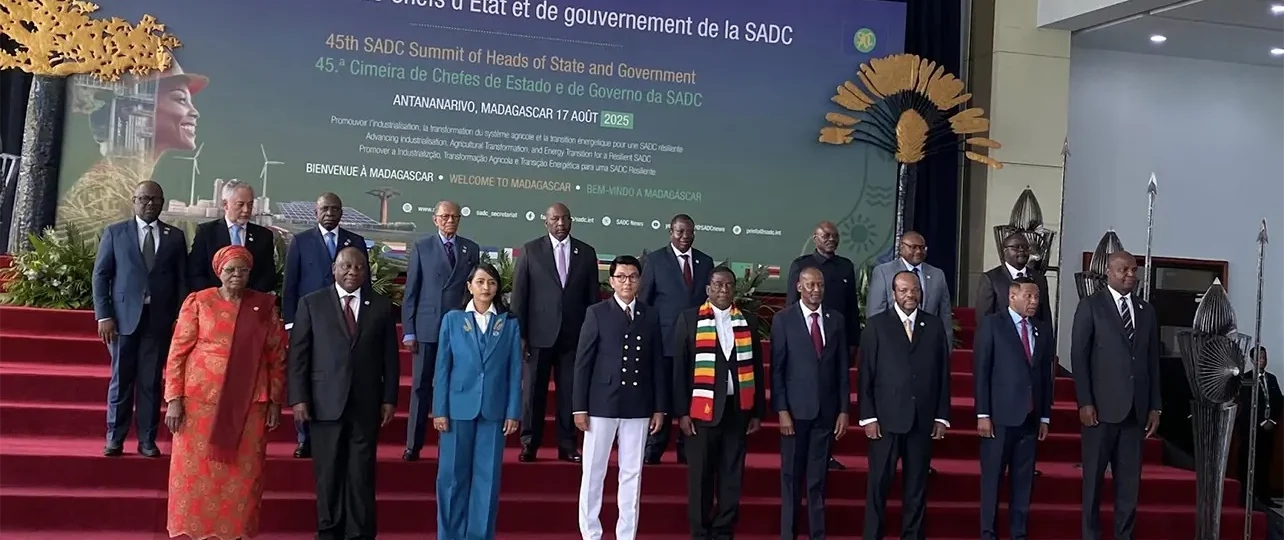

SOUTHERN African Development Community (SADC) leaders issued a strong call for an immediate ceasefire in Gaza and the release of all hostages, as they wrapped up their 45th ordinary summit with sweeping decisions on regional security, economic development and political reforms.
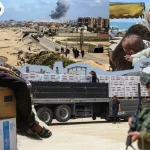
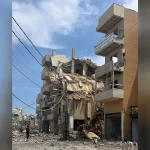
The 16-nation bloc expressed deep concern over “ongoing attacks on civilians in Palestine (Gaza) which have resulted in the loss of lives, destruction of property, and worsening humanitarian conditions,” demanding an immediate halt to hostilities and the commencement of talks for a lasting solution to the conflict.
The Gaza declaration emerged as one of several major geopolitical positions taken by the heads of state meeting in Madagascar’s capital, including renewed solidarity with Western Sahara’s quest for self-determination and a signing of a memorandum of understanding with the Sahrawi Arab Democratic Republic.
Leadership Transitions and Regional Security
Madagascar President Andry Rajoelina assumed the rotating SADC chairmanship from Zimbabwe’s President Emmerson Mnangagwa, with South Africa’s Cyril Ramaphosa named as incoming chair. The summit also saw Malawi’s President Lazarus Chakwera elected to head the organization’s organ on politics, defense and security cooperation.
Leaders paid tribute to fallen regional figures including Namibia’s founding president Sam Nujoma and former Zambian president Edgar Lungu, while honoring SADC peacekeepers who died serving in the Democratic Republic of Congo mission.
The summit strongly defended its controversial deployment of the SADC Mission in DRC (SAMIDRC), condemning what it termed “misinformation” about the operation and reiterating that the deployment complied with regional and international principles to support member states against “external aggression.”

Economic Integration and Development Focus
Under the theme “Advancing Industrialisation, Agricultural Transformation, and Energy Transition for a Resilient SADC,” leaders approved ambitious plans to accelerate regional economic integration.
Key decisions included fast-tracking development of the North-South Economic Corridor and advancing the SADC Maritime Corridor Strategy to enhance trade and connectivity across the region of 350 million people.
The summit directed the establishment of a SADC Regional Development Fund as an independent entity to mobilize long-term investment for regional programs and enhance economic resilience.
Leaders also amended the SADC Protocol on Finance and Investment, particularly strengthening anti-money laundering provisions, while urging member states to sign and ratify outstanding legal instruments to strengthen regional frameworks.
Agricultural and Health Priorities
With food security concerns mounting across the region, leaders emphasized agriculture’s critical role and called for increased investment in climate-smart farming, irrigation systems, and post-harvest efficiency.
The summit urged stronger measures against transboundary animal diseases, particularly foot-and-mouth disease, through enhanced surveillance and response mechanisms.
On public health, leaders committed to implementing outcomes from June’s African cholera summit, including establishing presidential task forces and expanding water, sanitation and hygiene infrastructure.

Democratic Progress Celebrated
The summit commended recent peaceful elections in Botswana, Mauritius, Mozambique and Namibia, welcoming newly elected leaders, including Botswana’s President Duma Boko, Namibia’s President Netumbo Nandi-Ndaitwah, and Mozambique’s President Daniel Chapo.
In a significant political development, leaders removed Lesotho from the organisation’s security watch list following the kingdom’s passage of constitutional amendments marking “near-finalisation of the national reforms process.”
The summit noted upcoming elections in Malawi (September), Seychelles and Tanzania (October), wishing these member states successful democratic processes.
Energy and Gender Priorities
Building on Tanzania’s hosting of the Mission 300 African Energy Summit in January, leaders directed the secretariat to work with the World Bank and African Development Bank to support member states in developing National Energy Compacts by year-end.
The summit emphasised women’s participation in political processes and called for strengthened data collection on gender-based violence while increasing funding for initiatives addressing its root causes.
SADC Executive Secretary Elias Magosi was reappointed for a second four-year term to lead the organisation’s secretariat based in Botswana.
The decisions taken in Antananarivo signal SADC’s growing assertiveness in international affairs while pursuing deeper economic integration among member states spanning from the Democratic Republic of Congo in the north to South Africa in the south.