THE mountainous kingdom of Lesotho sits entirely surrounded by South Africa, a small nation of just over two million people that US President Donald Trump couldn’t locate on a map. In the halls of power in Washington, this tiny African nation – whose total economy is smaller than that of many American cities – had barely registered in foreign policy discussions.
Until now.
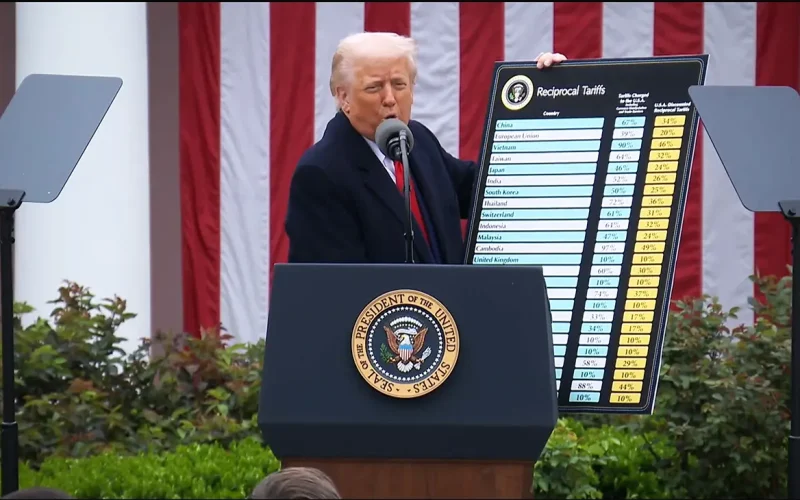
Trump stood at the White House podium, pointing to a chart of nations he claimed had been “pillaging” America. Among the corporate giants of China, the technological powerhouses of Japan, and the economic bloc of the European Union was an unexpected name: Lesotho. The landlocked kingdom now faced punishing tariffs of 50% – second only to China in severity.
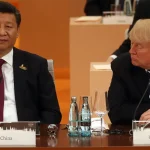
“Our taxpayers have been ripped off for more than 50 years, but it is not going to happen any more,” Trump declared, as he signed what he called America’s “declaration of economic independence.”
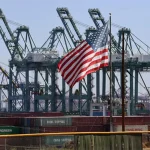
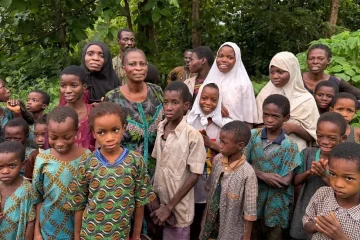
For the workers in Lesotho’s garment factories, where American denim brands like Levi’s and Wrangler have been manufactured for years, the announcement landed like a thunderbolt. The nation sends over $237 million in goods to America annually while importing just $2.8 million in return – creating what Trump called an unacceptable trade imbalance.
What the announcement didn’t acknowledge was that Lesotho’s textile industry blossomed precisely because of American policy – the African Growth and Opportunity Act (AGOA), signed into law by President Bill Clinton in 2000 to help African nations develop economically. The program that was designed to lift Africans out of poverty was now being portrayed as an exploitation of American generosity.
For Lesotho, the stakes couldn’t be higher. Trade with America accounts for more than 10% of its entire economy. The factories that dot its landscape represent more than just employment – they represent a lifeline in a country with limited resources and few economic alternatives.
But Lesotho wasn’t alone in the president’s crosshairs. Across the African continent, nations that had long viewed America as a reliable trading partner suddenly found themselves labelled as “cheaters” and “worst offenders.”
Madagascar, whose vanilla exports and developing textile industry had been bright spots in its struggling economy, now faced a staggering 47% tariff. Mauritius, the island nation that had worked diligently to transform itself from an agricultural economy to a diversified one including textiles and financial services, was hit with 40% duties.
Botswana, whose careful management of diamond resources had made it a model of stability, was assigned a 37% tariff. South Africa, the continent’s most industrialized economy and a key strategic partner, now faced 30% tariffs, with Trump darkly alluding to “bad things happening” there.
Even Nigeria, Africa’s most populous nation and largest economy, didn’t escape unscathed, facing a 14% tax on its exports to America.
The tariffs represented a stunning reversal for US-Africa relations. For decades, American policy had generally encouraged trade with African nations, recognizing that economic development served both humanitarian goals and America’s strategic interests. Programs like AGOA were designed to create mutually beneficial relationships.
Now, in one sweeping announcement, those relationships were redefined. Countries that had structured significant portions of their economies around exporting to America—often at America’s own encouragement—were suddenly cast as exploiters who had been taking advantage of American generosity.
For Lesotho, the consequences would be immediate and severe. The factories that employed thousands might soon stand empty. The communities that had grown around them would lose their economic foundation. And the nation itself, already struggling with poverty and limited resources, would face an uncertain future.
As news of the tariffs spread across Africa, the reaction was one of disbelief and concern. South Africa’s presidency condemned the move as “punitive” and harmful to “shared prosperity.” Other nations began hastily calculating the damage to their economies and considering possible responses.
In the White House, the president described April 5 – when the baseline 10% tariffs would take effect – as “liberation day” for Americans. For Lesotho and its African neighbours, however, it marked the beginning of a new and troubling chapter in their relationship with the world’s largest economy.
Donald Trump's import tariffs have shocked world leaders, sent stock markets reeling and are threatening to upend trade around the globe. Here is a graphic showing the various levies that the US president is imposing on countries, from Canada to Vietnam pic.twitter.com/St9afZ66jK
— AFP News Agency (@AFP) April 3, 2025