THE marble floors of Mozambique’s Ministry of Finance once echoed with the confident footsteps of Manuel Chang, a man who held his nation’s purse strings and, with them, the dreams of millions. But today, at 68, his footsteps fall on the cold concrete of a Brooklyn federal prison, where the former finance minister contemplates how $7 million in bribes cost him not just his freedom, but his legacy.
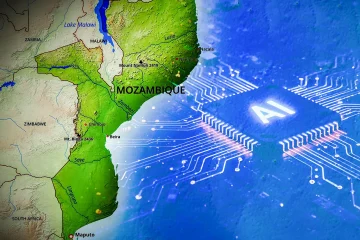
In the bustling ports of Mozambique, the rusting hulls of unfinished maritime projects stand as monuments to betrayal. They were meant to be symbols of progress: a coastal protection fleet, a tuna fishing armada, and modern monitoring systems that would help lift one of the world’s poorest nations toward prosperity. Instead, they became hollow shells, their promise emptied by greed.
Chang’s fall began in the corridors of power in 2013, where he wielded his pen like a weapon. With each signature guaranteeing massive loans from Credit Suisse and other banks, he wasn’t just signing documents – he was signing away his country’s future. The $2 billion in loans, backed by the full faith of Mozambique’s government, were supposed to transform the nation’s maritime sector. But beneath the surface of legitimate-looking contracts lurked a dark undertow of corruption.
The scheme was elegant in its deception. Working with Privinvest Group, a UAE shipbuilding company, Chang orchestrated a dance of documents and declarations that convinced investors to pour money into three companies: Proindicus, EMATUM, and MAM. On paper, they were the vehicles of Mozambique’s maritime renaissance. In reality, they were vessels for vast corruption.
More than $200 million vanished into a labyrinth of bribes and kickbacks. While children in Mozambique’s rural villages studied by candlelight for lack of electricity, while farmers prayed for irrigation systems that never came, $7 million found its way into Chang’s personal accounts – thirty pieces of silver for modern times.
When justice finally caught up with Chang, he fought it like a drowning man fights the tide. He sought refuge in South African jails, preferring their confines to facing American justice. But the long arm of the law proved longer than his evasions. In a Brooklyn courtroom, far from the warm waters of the Indian Ocean where Mozambique’s ghost ships now drift, a jury saw through the complex web of lies and money laundering.
The verdict was clear: guilty of conspiracy to commit wire fraud and conspiracy to commit money laundering. Each count carries up to 20 years, though Chang’s sentence fell to 8 years – perhaps a merciful term for a 68-year-old man, but an eternity for someone who once commanded his nation’s wealth.
Today, as Mozambique struggles to repay over $700 million in defaulted loans, its people bear the weight of Chang’s betrayal. Every missed payment, every defaulted loan, represents schools unbuilt, hospitals unequipped, roads unpaved. The maritime projects that promised so much delivered only debt and disappointment, while investors worldwide counted their losses.
Chang’s story ends not with the bang of triumph he once envisioned, but with the quiet whisper of shame. In his prison cell, he has time to contemplate how the same signature that once guaranteed billions now signs commissary requests, and how the man who once financed a nation now counts days instead of dollars.
It’s a stark reminder that corruption’s true cost isn’t measured in stolen millions, but in stolen dreams – the dreams of a nation’s poorest citizens who deserved better from those entrusted with their future.