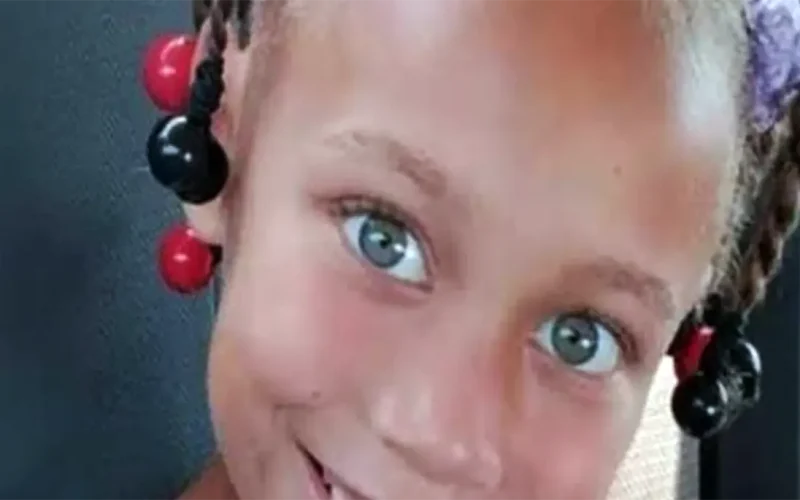
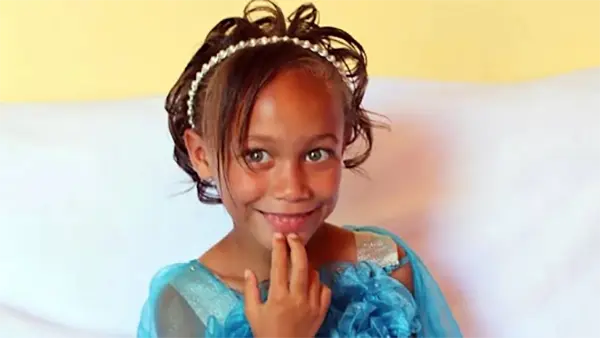
HER turquoise eyes seem to look right through you from the photographs- bright, innocent, filled with the wonder that should define childhood. Joshlin Smith’s fair complexion glows with the kind of pure radiance that makes strangers stop and smile. At just six years old, she possessed a beauty that should have been her mother’s greatest treasure. Instead, it became the very reason for her disappearance.
Those same striking features that should have brought joy to family gatherings and school photos became, in the twisted logic of human trafficking, a commodity. A price tag. Eight hundred pounds for a child whose worth was immeasurable.
When a Mother Becomes the Monster
The story that has gripped South Africa reads like a nightmare that no parent should ever have to contemplate. Racquel ‘Kelly’ Smith, 35, didn’t lose her daughter to a stranger in the night or a moment of inattention at a crowded mall. She sold her. Deliberately. Coldly. To a traditional healer who had specifically sought out a child with “light eyes and skin.”
In February 2024, outside their home in Saldanha Bay near Cape Town, little Joshlin vanished. What initially appeared to be every parent’s worst fear – a missing child – soon revealed itself to be something far more sinister. The person responsible for protecting Joshlin had become her predator.
The trial that followed would expose a web of neglect, addiction, and ultimately, betrayal that cuts to the core of what we believe about maternal love. Smith, along with her boyfriend, Jacquen Appollis and friend Steveno van Rhyn, stood in the dock as the nation watched, hoping against hope that somewhere in their testimony would be the answer to one burning question: Where is Joshlin?
A Community’s Desperate Search
Like the disappearance of Madeleine McCann in Portugal, Joshlin’s case has become more than a criminal investigation- it has become a national obsession. Search parties have combed the Western Cape. Social media campaigns have shared her photograph thousands of times. Volunteers have given up weekends, holidays, and sleep to look for a little girl they’ve never met but whose face has become burned into their collective consciousness.
The similarities to the McCann case are haunting: a beautiful child, a desperate search, and a nation united in hope and heartbreak. But there’s a crucial difference that makes Joshlin’s story even more devastating – this wasn’t a crime of opportunity by a stranger. This was a mother’s calculated decision to trade her child’s life for money.
Justice for #JoshlinSmith: Jacquen Appollis, Steveno van Rhyn, and Kelly Smith leaving the holding cells of the circuit court at Saldanha Multi-Purpose Centre. They are headed to prison, where they are going to serve their life sentences. pic.twitter.com/PWJETih3DB
— NPASouthAfrica (@NPA_Prosecutes) May 29, 2025
The Unthinkable Confession
The details that emerged during the six-week trial painted a picture of systematic abuse and neglect. Smith’s friend and neighbour, Lourentia Lombaard, testified about a conversation that will forever haunt those who heard it. Smith had confessed to doing “something silly” – selling her daughter to a sangoma, a traditional healer.
Lombaard watched as Smith packed Joshlin’s clothes into a black bag. She saw her climb into a white car with the child and a woman believed to be the sangoma. She witnessed what may have been the last time anyone who loved Joshlin would see her alive.
Even more chilling was the testimony from one of Joshlin’s teachers, who recalled Smith saying during the search efforts that the child was already “on a ship, inside a container” on the way to West Africa. The casual cruelty of these words – spoken by a mother about her own child- defies comprehension.
A Life of Neglect
The court heard how Joshlin’s short life had been marked by instability and neglect. Smith, battling drug addiction since she was 15, had been high during her daughter’s birth and took five months to even register the child’s existence. The grandmother who now cares for Joshlin’s older sibling had kicked Smith out of her home after she threatened to stab her own son.
Yet there were glimpses of hope in Joshlin’s story. Family friends had tried to adopt her, giving her weekends of stability and trips that probably felt like fairy tales compared to her daily reality. A teacher spoke of a bright child who deserved so much more than the hand she’d been dealt.
The Silence That Screams
Perhaps the most frustrating aspect of this case is what wasn’t said. Smith, Appollis, and van Rhyn refused to testify during their trial. They called no witnesses in their defence. They offered no explanation, no remorse, no information about where Joshlin might be.
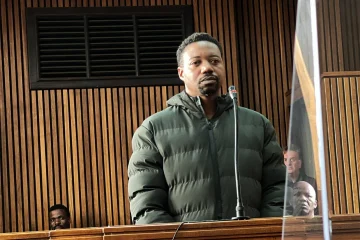
When Judge Nathan Erasmus sentenced all three to life imprisonment for human trafficking and additional years for kidnapping, they showed no emotion. No tears. No acknowledgement of the destruction they had caused. The courtroom wept, but the perpetrators remained stone-faced.
Smith’s own mother, Amanda Smith-Daniels, made a heartbreaking plea: “Bring my grandchild back or tell me where she is.” But her daughter’s silence was deafening. “How do you sleep and live with yourself?” she asked the woman who had once been her child, now a stranger capable of the unthinkable.
A Traditional Practice Perverted
The involvement of a sangoma – a traditional healer respected in South African culture – adds another layer of complexity to this tragedy. Sangomas are recognised under South African law and play an important role in many communities, serving as bridges between the living and ancestral spirits.
The woman believed to be the sangoma in this case was arrested but later released due to a lack of evidence. Her involvement, if proven, would represent a perversion of traditional healing practices, turning sacred rituals into a cover for human trafficking.
The Search Continues
Western Cape Police Commissioner Thembisile Patekile’s words echo the sentiment of a nation: “At this stage, we do not have a child. Our ultimate goal is to find the child. We still want to find that child alive.”
In March 2024, children’s clothing was found near Joshlin’s home, reportedly spattered with blood. A knife was discovered alongside it. These grim discoveries have been sent for forensic examination, but they raise more questions than answers.
The community continues to search. Volunteers organise expeditions into remote areas. Social media campaigns keep Joshlin’s face in the public consciousness.
The Questions That Remain
What drives a mother to sell her child? How does addiction and desperation corrupt the most fundamental human bond? And most importantly – where is Joshlin Smith?
These questions haunt South Africa as the nation grapples with a case that challenges every assumption about maternal love and protection. Unlike other high-profile missing children cases where parents become advocates and searchers, Joshlin’s own mother has become the obstacle to finding her.
The turquoise eyes that once looked up at Smith with trust and love now stare out from missing person posters across the country. That flawless fair complexion, once a mother’s pride, became a trafficker’s target. The innocence that should have been protected became a commodity to be sold.
A Nation’s Promise
South Africa has made Joshlin Smith its daughter. Where her biological mother failed, an entire country has stepped up to continue the search. The case has sparked conversations about child protection, addiction services, and the vulnerability of children in unstable homes.
Community groups have formed specifically to search for Joshlin. Schools have implemented new safety protocols. Parents hold their own children a little tighter, unable to fathom how someone could make the choice that Smith made.
The parallels to the Madeleine McCann case are unmistakable – a beautiful child, international attention, a search that has become a cultural touchstone. But Joshlin’s story carries an additional weight: the knowledge that the person who should have protected her most was the one who put her in danger.
#YNews: #JoshlinSmith's grandmother, Rita Jon, says it is disheartening that the little girl's mother refuses to tell the truth about the child's whereabouts.#KellySmith's and her co-accused have been found guilty of trafficking and kidnapping the 6-year-old. pic.twitter.com/ATlGxa2m0E
— Y (@Yfm) May 2, 2025
Hope Against Hope
As Smith begins her life sentence, the search for Joshlin continues. Police say more arrests may be coming. Forensic evidence is being analysed. Tips are being followed up. The investigation remains active, driven by the slim but precious hope that somewhere, somehow, Joshlin Smith is still alive.
Her photographs continue to circulate on social media, shared by people who have never met her but refuse to let her be forgotten. Those turquoise eyes have become a symbol of innocence lost and a nation’s determination to bring one of its children home.
In a country that has seen too much tragedy, Joshlin Smith’s story stands out for its particular cruelty. But it also stands out for the response it has generated—a collective refusal to give up, to stop searching, to let one little girl disappear without a trace.
Until Joshlin comes home, South Africa will not rest. Her face will continue to appear on posters, in news reports, and in the dreams of volunteers who spend their weekends combing remote areas with the hope that today might be the day they find her.
The beautiful child with turquoise eyes and fair complexion deserved better from the woman who brought her into this world. But she has found something remarkable in the strangers who refuse to stop looking for her—a love that transcends biology, a determination that defies despair, and a hope that refuses to die.
Somewhere, those turquoise eyes might still be looking back at the world with wonder. And as long as that possibility exists, the search will continue.