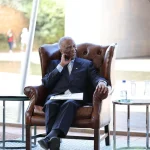
AS the US and Israel-led war against Iran persists, the President of the Republic of Angola, João Lourenço, has warned that the same motives behind colonialism in the past are what drive any superpower today to carry out military interventions, as happened in the US invasion of Iraq.
Speaking during the 11th Summit of Heads of State and Government of the Organisation of African, Caribbean and Pacific States (OACPS), Lourenço argued that in today’s world, using a wide range of arguments but with the same objective to control the planet’s main energy sources, oil, gas, and critical and strategic minerals military interventions are being carried out anywhere in the world.
“The world has turned into a jungle, where any superpower invokes a right that does not exist in international law, the right to a preemptive strike based solely on the assumption that someone is preparing to attack and destroy me,” said the Angolan head of state.
He added: “We, the peoples of Africa, the Caribbean and the Pacific, having endured centuries of bitter experience, know that the same motives that underpinned colonialism, the control and plundering of our wealth, unfortunately persist today, in the 21st century.”
Lourenço challenged the 79 OACPS member countries from around the world to ensure they have an active voice and an active role in resolving the most pressing global issues and push for their perspectives to be taken into account in the search for solutions to the serious problems that increasingly threaten global security and peace.
“We have decided to move away from the old model of aid-based partnership and laid the groundwork for a strategic partnership between regions sharing global responsibility and common goals, to consistently uphold the fundamental principle of a more balanced and dynamic multilateral approach by which the world should be governed, to prevent the conflicts raging almost everywhere,” Lourenço said.
The summit was held in Malabo, Equatorial Guinea. Angola concluded its three-year term as president of the organisation, handing over to the host country.
During the summit held under the motto “A Transformed and Renewed OACPS in a Changing World,” Angola took stock of its leadership of the organisation, “marked by reforms that provide the institution with a solid foundation for future challenges.”
In February, the Chairperson of the African Union Commission, Mahmoud Ali Youssouf, warned that a US and Israeli-led war against the Islamic Republic of Iran could lead to an intensification of hostilities in the Middle East.
Youssouf called for restraint, urgent de-escalation, and sustained dialogue, stressing that all parties must act fully in accordance with international law and the United Nations Charter to safeguard international peace and security.
He warned that further escalation threatens to worsen global instability, with serious implications for energy markets, food security, and economic resilience, particularly in Africa, where conflict and economic pressures remain acute.
US President Donald Trump on Thursday said that his military has nearly completed its goals in the Iran war.
In a televised national address, Trump vowed to strike Iran “extremely hard” over the next two to three weeks and finish the job “very fast.
At the same time, Trump challenged countries that receive oil through the Strait of Hormuz to show courage and seize the key waterway, which was effectively closed by Iranian attacks since the conflict began.
Last week, a Reuters/Ipsos poll showed that two-thirds of Americans want the US to end the war quickly, even if it means not achieving Trump’s goals. In the survey, 60% of respondents disapproved of the military strikes on Iran, while 35% approved.