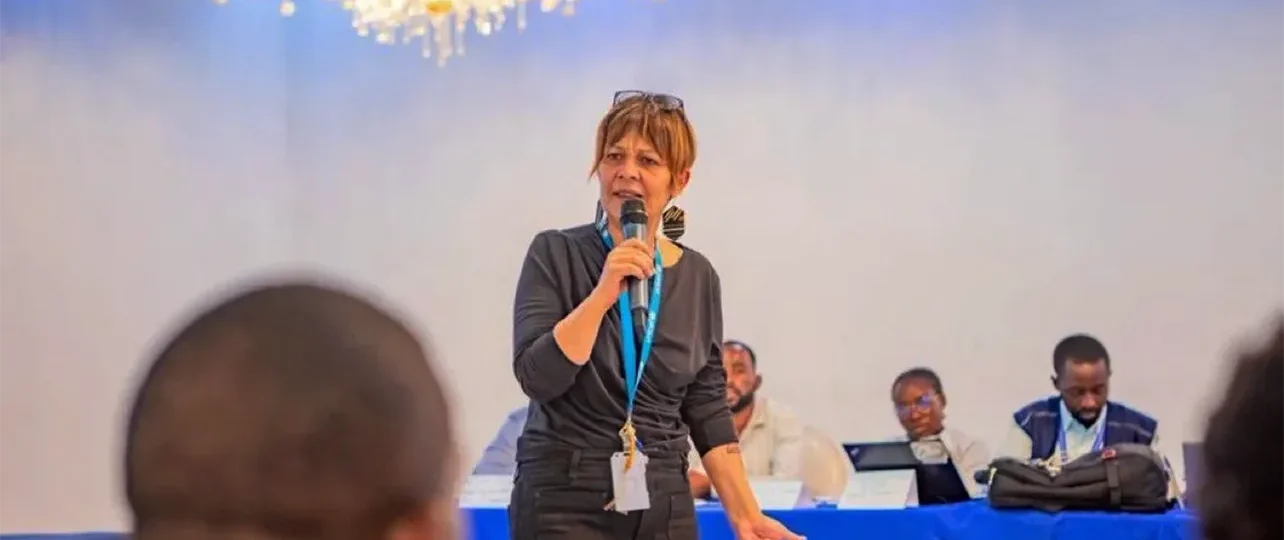

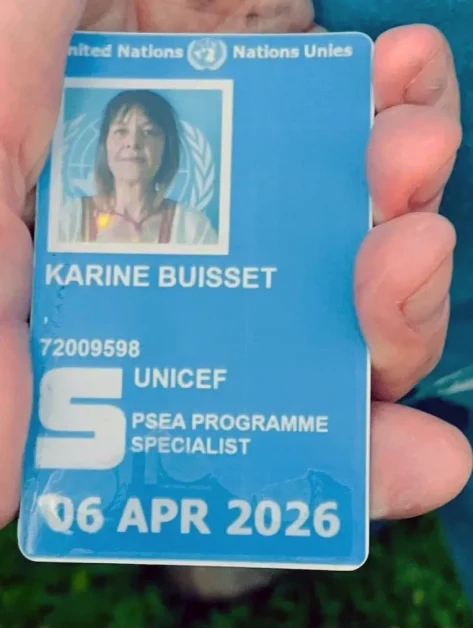
SHE was asleep in a two-storey expatriate residence in central Goma when the drone found her. At approximately 4:00 a.m., a strike attributed to the Armed Forces of the Democratic Republic of the Congo (FARDC), operated with the assistance of foreign mercenaries, tore through the building. Karine Buisset, a French national and UNICEF employee who had given her working life to protecting children in one of the world’s most dangerous conflict zones, died at the scene.
She was not a combatant. She was not near the frontline. She was in a leafy neighbourhood – the kind that draws expatriates and aid workers for its relative quiet, barely 50 metres from a residence associated with former Congolese President Joseph Kabila. The strike reduced the house to rubble in the pre-dawn dark, blowing a hole in the roof, scattering debris across the courtyard, and peppering the façade with shrapnel.
“A French humanitarian from UNICEF has been killed in Goma,” French President Emmanuel Macron announced on X on Wednesday morning. “I call for respect for humanitarian law and for the personnel who are on the ground and who are committed to saving lives.”
The words were measured and diplomatic. The reality on the ground was not.
“This act of aggression constitutes an intolerable provocation targeting a densely populated urban area and deliberately endangering thousands of innocent civilians.”
Lawrence Kanyuka, M23 Spokesperson
THE STRIKE
The attack on Goma came in two waves. The first struck the Himbi area at 4:00 a.m.; a second followed twelve minutes later. Buisset was in the apartment of Christine Guinot, UNICEF’s head of security in the DRC, who was not home at the time. She did not survive the night.
M23 spokesperson Lawrence Kanyuka confirmed the drone strike hit a residential building in the centre of the city, attributing the attack to the Congolese government. AFC/M23 Vice President Bertrand Bisimwa said the drones struck residential areas far from active frontlines — a claim consistent with witness testimony. A nearby aid worker told AFP he heard the sound of a drone before a loud explosion blew a hole in the roof of the building.
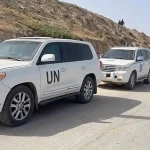
Multiple sites were reportedly struck. M23 said at least three people were killed, though independent verification of that figure remained difficult in the immediate aftermath. Residents confirmed seeing at least one body. A second UN staff member was among the dead; a third casualty had not been identified at the time of publication. UNICEF officials arrived at the scene shortly after dawn to assess the damage.
Bisimwa further alleged that the drones deployed in the strikes were supplied to Kinshasa by China – a claim that, if confirmed, would draw a permanent UN Security Council member into direct culpability for the killing of a UN worker.
MERCENARIES IN THE SKY
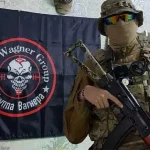
The DRC government’s use of drone warfare in its eastern provinces is not new – but its character has changed. FARDC has increasingly outsourced aerial strike operations to foreign mercenaries, including white mercenary contractors whose presence has been documented by human rights observers and regional analysts. The deployment of mercenary drone operators in a theatre populated by millions of displaced civilians and hundreds of humanitarian workers represents a profound escalation of risk – and accountability.
The targeting of civilian residential infrastructure in rebel-held Goma raises urgent questions. Who authorised the strikes? Who flew the drone? Who identified the target – and did they know a UNICEF worker was inside? These questions may go unanswered in the absence of an independent international investigation, which the DRC government has given no indication it would welcome.
Kinshasa did not respond to requests for comment in the hours after the strike.
A LIFE IN SERVICE
Karine Buisset chose to be in Goma. She was not an accidental presence in a conflict zone – she was a deliberate one. Colleagues described her as a dedicated humanitarian working on child protection programmes in eastern DRC, a region where M23 and other armed groups have for years recruited, abducted and deployed child soldiers, and where sexual violence against children remains endemic.
The work of a UNICEF child protection officer in North Kivu is unglamorous and relentless. It means navigating bureaucracies, negotiating access with armed groups, documenting violations for accountability processes that rarely materialise, and sitting with families whose children have been taken or killed. It means staying when leaving would be easier.
Buisset stayed. And Goma, in the end, consumed her.
A WAR WITHOUT CEASEFIRE
Goma fell to M23, backed by Rwanda, in January 2025. It was a lightning offensive that shocked the region, and in the months that followed, M23 extended its control across swathes of mineral-rich North and South Kivu. The Congolese government, fighting to retake its eastern provinces, has since prosecuted a campaign characterised by drone strikes, artillery barrages and irregular forces.
A peace deal brokered in Qatar and a separate accord signed between the DRC and Rwanda in Washington on December 4, 2025, had been expected to arrest the violence. They have not. The day before Wednesday’s deadly strike, FARDC said it had shot down two Rwandan-operated drones that entered Congolese airspace in South Kivu, a measure of how thoroughly the fragile truce has fractured.
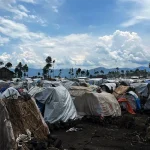
The conflict has driven at least seven million people from their homes. Aid delivery across the Kivus has been severely disrupted. Humanitarians operate under daily threat. And now one of their own has been killed – not by a stray shell in the fog of battle, but by a precision weapon guided from somewhere, by someone, with consequences that were entirely foreseeable.
THE QUESTION OF ACCOUNTABILITY
The killing of a UN worker by a state’s military forces – or mercenaries operating on that state’s behalf – is not merely a tragedy. Under international humanitarian law, it is potentially a war crime. Wilful killing of protected persons, including humanitarian workers, constitutes a grave breach of the Geneva Conventions. The involvement of foreign mercenaries, rather than insulating Kinshasa from legal exposure, may compound it.
The United States, which sanctioned Rwanda’s military and four senior officers on March 2 for supporting M23, has yet to comment on the Wednesday strike. The UN Security Council, paralysed by the geopolitical entanglements of its permanent members, has repeatedly failed to enforce accountability in the DRC. China’s alleged role in supplying the drones used in Wednesday’s attack, if substantiated, would render that paralysis yet more grotesque.
Macron’s call for respect for humanitarian law, however sincere, is not a mechanism. It is a statement. What the law demands, and what Karine Buisset’s death compels, is investigation, attribution, and consequence.
Her UNICEF colleagues gathered at the damaged house on Wednesday morning. They stood in the rubble of a building that was supposed to be safe, in a city that was supposed to be protected, in a war that was supposed to have paused. They mourned one of their own, a woman who had come to eastern Congo to protect its most vulnerable, and who died there because the most powerful actors in this conflict have decided that nothing, and no one, is off limits.