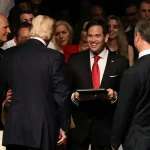
THE United States will impose visa restrictions on individuals accused of directing or supporting violence against Christians in Nigeria and other countries, Secretary of State Marco Rubio announced Tuesday.
The new policy, implemented under Section 212(a)(3)(C) of the Immigration and Nationality Act, authorises the State Department to deny visas to those who have “directed, authorised, significantly supported, participated in, or carried out violations of religious freedom,” according to Rubio’s statement. The restrictions may also extend to immediate family members of those targeted.
Rubio cited “mass killings and violence against Christians by radical Islamic terrorists, Fulani ethnic militias, and other violent actors in Nigeria and beyond” as the impetus for the action.
The announcement follows threats from President Donald Trump, who stated the “United States cannot stand by while such atrocities are happening in Nigeria, and numerous other countries.” While the policy will initially focus on Nigeria, the State Department said it could be applied to any government or individual engaged in religious freedom violations.
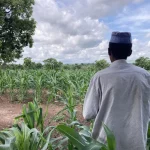
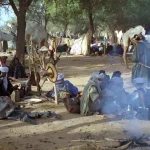
The move comes amid longstanding tensions over religious and ethnic violence in Nigeria, particularly in the country’s Middle Belt region, where clashes between predominantly Christian farming communities and largely Muslim herding groups have killed thousands in recent years. The causes of the violence are complex, involving competition over land and resources, though religious tensions have also played a role.
Nigerian President Bola Tinubu has not yet issued an official response to the U.S. announcement. However, in previous statements, Tinubu has rejected claims by Trump that Christians in his country.
The State Department did not immediately provide details on how many individuals might be affected or specify criteria for determining responsibility for religious freedom violations.