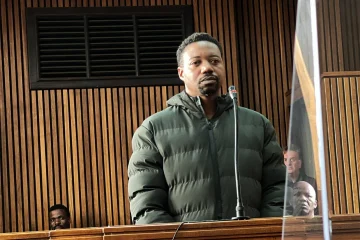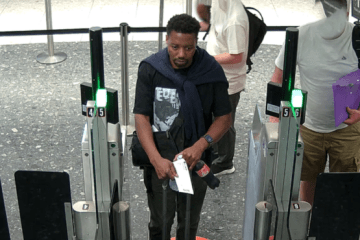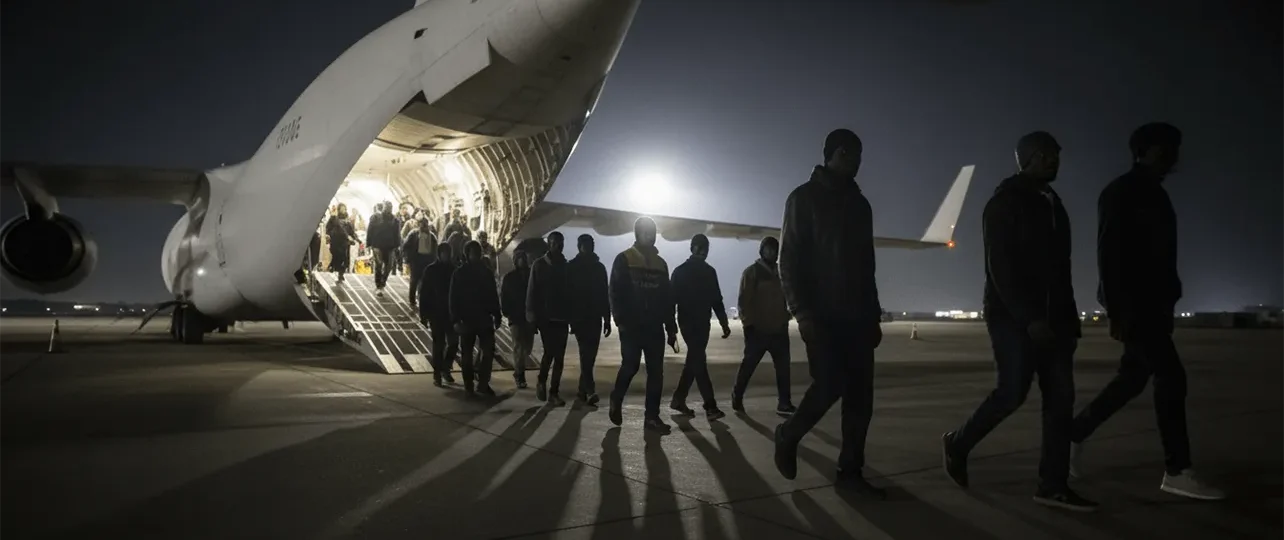

THE United States has quietly deported 17 non-Cameroonian nationals to Cameroon under a covert bilateral agreement, where authorities immediately detained them without legal basis, and journalists who attempted to interview them were themselves arrested and abused, according to Human Rights Watch.
The deportees – nationals of Angola, the Democratic Republic of Congo, Ethiopia, Ghana, Kenya, Morocco, Senegal, Sierra Leone, and Zimbabwe – were transferred to Cameroon in January and February in what amounts to a third-country deportation scheme that experts say circumvents both U.S. court orders and binding international law.
Among those deported were asylum seekers and at least one stateless person. Several held court-ordered protections against removal to their home countries, granted by U.S. immigration judges who found they faced credible risks of persecution or torture. The Trump administration sidestepped those rulings by routing them through Cameroon instead – a country that Human Rights Watch has repeatedly flagged as unsafe for returned migrants.
The legal exposure is significant. Sending individuals to a country where they face risks of persecution or torture constitutes refoulement, which is prohibited under the 1951 Refugee Convention, the Convention Against Torture, and customary international law – all of which the United States has ratified.
An Unsafe Destination
Cameroon’s record makes the choice of destination particularly difficult to defend. The country is engulfed in an ongoing armed conflict in its Anglophone regions, where both government security forces and separatist armed groups have committed documented atrocities, including extrajudicial killings, sexual violence, and torture in detention facilities. The government has simultaneously waged a sustained crackdown on political opposition and independent media.
Human Rights Watch documented in 2022 how Cameroonian asylum seekers previously deported by the U.S. experienced serious harm upon return — a record that makes Washington’s decision to send third-country nationals there all the more striking.
Despite being a signatory to the 1951 Refugee Convention and having domestic refugee legislation in place, Cameroonian authorities have offered the deportees no meaningful protection. A lawyer assisting several of them said representatives from United Nations agencies visited and discussed the possibility of local asylum claims, but the deportees reported feeling pressured to return to their countries of origin instead – countries many had court orders protecting them from being sent back to.
Two individuals have already returned to their countries of origin. Fifteen others remain detained in Yaoundé, the Cameroonian capital, with no clear legal pathway to release or onward protection.
A Pattern, Not an Anomaly
The Cameroon case is not isolated. It fits within a broader Trump administration strategy of negotiating third-country deportation agreements – arrangements in which individuals are removed not to their home countries but to nations willing to accept them, often under opaque terms and with few if any safeguards. Rights organisations have consistently documented abuses arising from similar arrangements.
What distinguishes the Cameroon deal is its apparent secrecy and the brazenness of its conflict with standing U.S. court orders. The administration has not publicly acknowledged the agreement, and it remains unclear what assurances, if any, were sought from Cameroonian authorities regarding the treatment of deportees.
The response from the Cameroonian government has done little to provide reassurance: rather than facilitating access or ensuring protection, authorities detained journalists who attempted to reach the deportees.
Mounting Pressure
Human Rights Watch is calling on the Cameroonian government to release the remaining detainees immediately, guarantee their protection against refoulement, and arrange for their return to the United States. It is also calling on the U.S. Congress and federal courts to demand the return of those deported and to block further third-country deportation agreements that lack legally binding protections.
Whether those calls gain traction depends in part on the courts. Several deportees retain potential legal avenues given their court-ordered protections, and advocacy groups are expected to pursue emergency relief. But with the individuals already abroad and held in a country with limited rule of law guarantees, the practical path to remedy is narrow.
What is not narrow is the legal and moral accountability at stake. If the facts are as documented, the United States deported people it was legally prohibited from deporting, to a country it had reason to know was unsafe, under a deal it chose not to disclose. That is not an administrative oversight. It is a policy choice – and one with consequences that are now playing out in a detention facility in Yaoundé.