UGANDA has banned live broadcasts of protests and “unlawful processions”, as international human rights groups documented a systematic crackdown on opposition supporters involving torture, arbitrary arrests, and deadly force ahead of the January 15 presidential election.
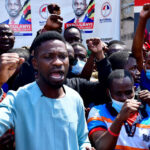
The move by President Yoweri Museveni’s government comes as Amnesty International released evidence of security forces unleashing tear gas, pepper spray, and live ammunition on peaceful campaign rallies supporting opposition candidate Robert Kyagulanyi — the pop star known as Bobi Wine — who is challenging the 81-year-old leader’s four-decade grip on power.
The Ministry of Information, Communication and Technology justified the broadcast ban by claiming live coverage “can escalate tensions and spread panic,” while also prohibiting content it deems “inciting, hateful or violent.” Authorities routinely characterise anti-government demonstrations as riots.
But eyewitnesses and victims paint a starkly different picture of peaceful gatherings met with overwhelming state violence.
Death and Torture at Campaign Rallies
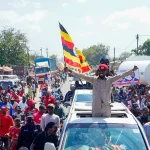
At a November 24 rally in Kawempe, police fired tear gas and pepper spray as Wine arrived, triggering a stampede that sent dozens of people tumbling into a nearby ditch. Officers wielded rifle butts to shove people into trucks, beat them with batons and wires, and deployed dogs to intimidate the crowd, according to witnesses interviewed by Amnesty International.
Four days later at a railway grounds rally in Iganga, military forces blocked exit routes with trucks before opening fire on attendees trying to leave. Miseach Okello, 35, died in circumstances suggesting unlawful use of force. Armed officers prevented his family from witnessing the postmortem and never provided a death certificate or cause of death — an apparent attempt to destroy evidence, the family told Amnesty.
“Nobody should die simply for exercising their rights to freedom of association and peaceful assembly,” said Tigere Chagutah, Amnesty International’s Regional Director for East and Southern Africa.
Systematic Torture and Mass Arrests
More than 400 people have been arrested across Uganda for attending rallies or perceived support of Wine’s National Unity Platform party, according to the NUP and independent civil society groups.
Former detainees described brutal treatment in custody. Peter, arrested on his way home from work, lost a tooth and suffered a broken arm, confirmed by medical records reviewed by Amnesty. He was held for three days at Mulago police station without access to family.
Maria, arrested at the Kawempe rally, recounted being tasered, separated from others, and beaten with batons. “One officer’s baton broke, and he asked his colleague to give him another baton,” she said. “Then they asked me ‘Do you still support Bobi Wine?’ I said yes. Then they continued to beat me.”
Police have justified their actions by claiming opposition supporters vandalised vehicles and threw stones. But eyewitnesses at both rallies told Amnesty the crowds were peaceful and carried only Ugandan flags.
International law requires police to exhaust non-violent means before using force, and prohibits firearms for crowd dispersal under any circumstances.
Pattern of Electoral Violence
The current crackdown follows a bloody precedent. More than 50 people died in security force operations against Wine supporters before the 2021 election, which the opposition candidate accused Museveni of stealing — charges the president denied.
Museveni, who seized power in 1986 after a five-year rebellion, is Africa’s third-longest serving head of state. Critics and rights groups have long documented his government’s use of torture and intimidation against opponents, allegations he consistently denies.
Another major opposition figure, Kizza Besigye, has been imprisoned for over a year on treason charges he denies.
Security forces have also imposed movement restrictions without legal justification, blocking roads and diverting opposition convoys onto longer routes to prevent Wine from reaching campaign venues across multiple districts. Video verified by Amnesty shows military vehicles blocking an opposition candidate in Nwoya on November 6.
“The authorities have launched a brutal campaign of repression against the opposition and its supporters, making it extremely difficult for them to exercise their rights to freedom of association and peaceful assembly,” Chagutah said. “Ugandan authorities must commit to respecting, protecting, promoting and ensuring full respect for human rights before, during and after the elections.”
Government and police spokespeople did not immediately respond to requests for comment on Amnesty’s findings.
With the 43-year-old Wine mounting his latest challenge to Museveni’s rule, the broadcast ban appears designed to prevent documentation of state violence as Uganda heads toward another contested election.