THE sun had barely kissed the horizon on that fateful Sunday morning when Hauwa Abdullahi gathered her wares – bags of millet, yams, and dried fish – preparing for what should have been just another market day. Like countless other traders across Nigeria’s sprawling river networks, she depended on the ancient waterways that snake through the continent’s most populous nation, carrying dreams, commerce, and families from village to village.
But the rivers that give life can just as easily take it away.
As the overcrowded boat pushed off from the muddy banks of Sokoto State, fifty souls pressed together in a vessel meant for far fewer. Among them were mothers clutching their earnings from the previous week’s sales, young men hauling sacks of grain, and elderly traders whose weathered hands had navigated these waters for decades. They were bound for Goronyo market – a bustling commercial hub where the rhythm of Nigeria’s informal economy beats strongest.
The boat captain, his face etched with the confidence that comes from years of ferrying passengers across these familiar waters, steered into the current. Around him, passengers chatted in Hausa and Fulani, their voices mixing with the gentle lapping of water against the hull. Children dozed against their mothers’ shoulders while traders calculated the profits they hoped to make at market.
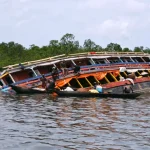
Then, in an instant that would shatter forty families, the boat struck something lurking beneath the surface – a submerged tree, swollen rivers having claimed another victim of the rainy season’s fury. The vessel lurched violently, then tilted, then surrendered to the hungry waters that had been waiting.
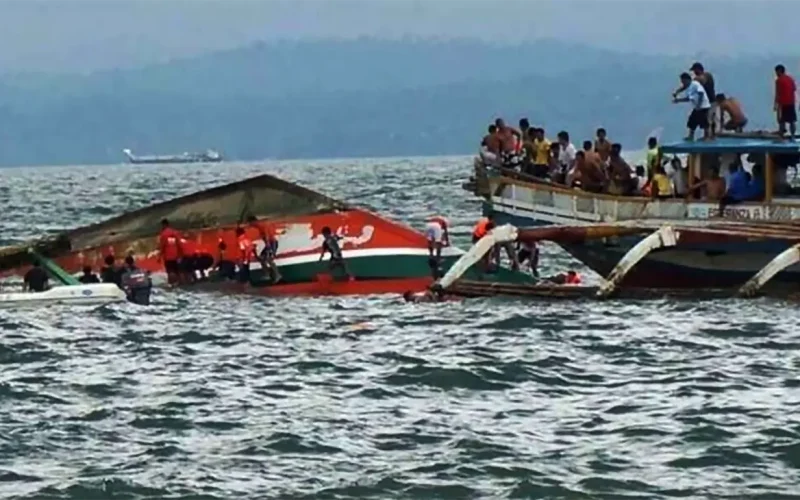
Screams pierced the morning air as the boat capsized, spilling its human cargo into the muddy river. Some passengers, weighed down by their goods and unable to swim, disappeared beneath the surface within moments. Others thrashed desperately, calling out names of loved ones as the current pulled them apart.
From the riverbank, horrified witnesses watched the tragedy unfold – another dark chapter in Nigeria’s long history of maritime disasters. Within hours, emergency responders from the National Emergency Management Agency (NEMA) arrived, their boats cutting through the water in desperate search patterns. Divers plunged into the murky depths while families gathered along the shore, their eyes scanning the surface for any sign of their missing loved ones.
By evening, only ten passengers had been pulled from the water alive. Forty others remained missing, their fate uncertain as darkness fell over the search area.
This latest tragedy echoes through Nigeria’s waterways like a mournful song that has been sung too many times before. Just weeks earlier, Niger State had witnessed a similar catastrophe when thirteen lives were lost and dozens went missing in another overcrowded boat accident. Before that, Kebbi State mourned over fifty souls lost to the same preventable causes – overloading, poor maintenance, and the seasonal dangers of swollen rivers.
For Nigeria’s 220 million people, water is both a blessing and a curse. The mighty Niger River and its tributaries have sustained civilisations for millennia, carrying trade goods, connecting communities, and providing sustenance to millions. In the creeks of the Niger Delta, fishing villages depend entirely on these waterways for survival. In the north, rivers serve as vital transportation corridors where roads are poor or nonexistent.
Yet these same waters have become graveyards. Between 2006 and 2015 alone, 180 boat accidents claimed 1,607 lives – a devastating toll that speaks to systemic failures in safety oversight and infrastructure investment. Most boats lack basic safety equipment like life jackets, fire extinguishers, or even proper communication devices. Overcrowding is routine, with operators packing passengers like cargo to maximise profits on each journey.
The boats themselves tell a story of neglect – ageing vessels with engines that sputter and hulls that leak, held together by prayers and makeshift repairs. Many lack proper licensing or safety inspections, operating in a regulatory grey area where enforcement is sporadic at best. During the rainy season, when rivers swell and navigation becomes treacherous, the risks multiply exponentially.
As rescue teams continue their desperate search in Sokoto’s murky waters, families maintain their vigil on the riverbank. Amina Usman, whose husband was among the missing traders, sits motionless, her hijab pulled tight against the evening breeze. Her children huddle beside her, too young to fully comprehend that their father may never return from what was supposed to be a routine trip to market.
“Every time they leave for market, we pray they come back safely,” whispers Zainab Mohammed, a local trader whose brother was rescued but whose cousin remains missing. “The water gives us life, but it also takes our people. How long must we live in fear?”
The tragedy has reignited calls for comprehensive reform of Nigeria’s maritime transport sector. Activists and officials alike demand stricter enforcement of safety protocols, mandatory life jacket provisions, vessel capacity limits, and regular inspections. The government has established a Special Committee on Prevention of Boat Mishaps, promising comprehensive reviews and reforms.
But for families still waiting by the water’s edge, policy discussions feel distant and hollow. They need their loved ones back, need assurance that future market trips won’t end in tragedy, need to know that Nigeria’s waters can once again become pathways to prosperity rather than routes to sorrow.
As night falls over Sokoto State, the search lights continue to sweep across the dark water, each beam carrying the hopes of families who refuse to give up. Tomorrow, rescue teams will resume their efforts, diving into the depths where forty souls may rest, victims of a tragedy that was both sudden and entirely preventable.
The waters that have sustained Nigeria for centuries continue their eternal flow, carrying within their depths the stories of those lost and the prayers of those who remain. Until meaningful change comes to these vital waterways, communities across Nigeria will continue to live with the terrible knowledge that every journey could be the last, that every goodbye at the riverbank might be forever.
In the distance, the call to prayer echoes across the water, a haunting reminder that in this nation where faith runs as deep as the rivers themselves, hope and heartbreak flow together in the same currents that have shaped Nigeria’s destiny for generations untold.