Southern Africa, long considered a bastion of political stability, is witnessing a seismic shift in its political landscape. The once-dominant liberation movements and long-ruling parties that have governed the region since independence are now facing unprecedented challenges, with voters demanding more accountability, service delivery, and a break from the past.
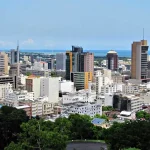
In Mauritius, the most recent example of this regional shift, the ruling Militant Socialist Movement (MSM) faced a decisive defeat at the polls, marking another instance where long-established political dominance has given way to change. The opposition alliance’s victory reflects the broader regional trend of voters seeking new political direction.
In Namibia, the ruling South West Africa People’s Organisation (Swapo) party, which has been in firm control since the country’s independence in 1990, is facing a difficult test in the upcoming November 2024 elections. The party’s support has been on a steady decline, with its two-thirds majority in parliament lost in the 2019 elections. President Hage Geingob’s re-election in 2019 also marked the party’s worst result yet, with just 56% of the vote.
The shifting political sands in Namibia are reflected in the emergence of new players, such as the Independent Patriots for Change (IPC) led by Panduleni Itula, a former Swapo member. Itula, running as an independent candidate, managed to garner a remarkable 30% of the vote in the 2019 presidential election, a clear sign of the growing disenchantment with the ruling party.
The political landscape is further complicated by the fact that the November 2024 elections may not result in a clear-cut victory for Swapo, raising the possibility of a second-round runoff between the two candidates with the most votes. This scenario would be a historic first for Namibia, testing the country’s constitutional democracy and rule of law.
The political turmoil in Namibia is not an isolated case in the region. Neighbouring South Africa has also witnessed a significant shift in its political landscape, with the African National Congress (ANC) losing its long-held dominance. In the 2024 general election, the ANC’s support dipped below 50% for the first time since the end of apartheid, a stark reminder of the growing disillusionment with the party.
Similarly, in Botswana, the Botswana Democratic Party (BDP), which had ruled the country since independence in 1966, lost its majority in the 2024 general election. This marked the first time in the country’s history that the BDP failed to secure an outright majority, underscoring the desire for change among the electorate.
These seismic shifts in the political landscape of Southern Africa come at a time when the region has been largely characterised by political stability. In Namibia, the peaceful transition following the death of President Geingob earlier this year was a testament to the country’s democratic maturity. In Botswana, the peaceful handover of power by the BDP to the Umbrella of the Democratic Congress, led by President Duma Boko, is a reflection of the maturity of democracy.
However, the road ahead is not without challenges. The opposition parties in the region, while gaining ground, are still grappling with internal conflicts, factionalism, and a “perennial struggle for power,” as noted by Rui Tyitende, a political scientist at the University of Namibia, writing in The Conversation.
The upcoming elections in Namibia will be a crucial test for the region’s democratic institutions. The citizens of these countries are demanding more than just the nostalgia of the liberation struggle or the comfort of longtime incumbents; they are seeking tangible progress, improved service delivery, and a political culture that puts their interests first.
As the winds of change sweep across Southern Africa, from Mauritius in the east to Namibia in the west, the region’s political landscape is undergoing a transformation that will have far-reaching implications. The future of these countries will be shaped by their ability to navigate this new political reality, where the once-dominant parties must adapt and reinvent themselves to remain relevant in the eyes of their constituents.