IN an unprecedented move just weeks before kick-off, the United States, Canada, and Mexico have unveiled a hardline, tri-lateral cordon sanitaire – banning entry to virtually all travelers from Ebola-hit Central Africa. For the Democratic Republic of Congo (DRC), returning to the World Cup after 52 years, the victory has turned to ashes as its own fans are deemed a biosecurity risk.
In a stark admission that the global health crisis has spiraled beyond containment, the three host nations of the 2026 FIFA World Cup announced a coordinated travel ban, targeting African nations grappling with the deadly Bundibugyo Ebola strain.
The joint statement, released by the U.S. Department of State, prioritizes “the health and safety of every person in the region” over the inclusive spirit of the tournament. Yet, behind the diplomatic language lies a brutal reality for fans from the DRC, Uganda, and South Sudan: they are no longer welcome.
While the United States, Canada, and Mexico erect a fortress against the virus, the DRC national team – the Leopards – is scrambling to salvage a historic moment that is disintegrating in real-time.
The measures, finalised on May 28, represent the most severe border restrictions since the height of the COVID-19 pandemic, but with a more aggressive edge due to the absence of a vaccine for the current strain.
The United States has implemented a near-total prohibition. Non-citizens and lawful permanent residents (Green Card holders) who have been in the DRC, Uganda, or South Sudan within the past 21 days are barred from entry. The U.S. embassy in Kinshasa has suspended all visa services, effectively trapping would-be travelers.
Canada, taking a similarly hard line, has issued a 90-day ban on residents from the three affected nations. Even Canadian citizens returning home are not spared; they face a mandatory 21-day quarantine under the watch of the Public Health Agency.
Mexico, rounding out the triad, has enforced strict health screenings and a 21-day isolation period for any arrivals from the DRC.
For the average fan in Kinshasa or Goma, the dream is over. With tickets costing up to seven times more than the 2022 Qatar World Cup due to FIFA’s dynamic pricing, thousands of Congolese who paid a fortune to see their heroes face Portugal, Colombia, and Uzbekistan now face financial ruin.
‘Punished for Ebola’: DRC’s Heartbreak
Veron Mosengo-Omba, president of the DRC Football Federation (Fecofa), has issued a desperate plea to FIFA. He is asking for full ticket refunds for supporters who saved for a lifetime to watch the Leopards, only to be locked out by Washington.
“They are punished because they cannot get into see the World Cup to support their team,” Mosengo-Omba told the BBC. “We don’t want our supporters who love football, who love the World Cup, to lose everything” .
The irony is cruel. The Leopards qualified for the first time since 1974 – when the country was known as Zaire – marking a rebirth for a nation often defined by conflict. But the joy has been usurped by a biological enemy.
In a desperate bid to comply with U.S. rules, the team has already exiled itself. A planned pre-tournament training camp in Kinshasa was canceled. The squad, composed almost entirely of players based in Europe, is currently isolated in Belgium, sweating out a 21-day buffer to ensure they can physically enter the United States for their matches in Houston and Atlanta.
‘The World Doesn’t Need to Be Afraid’
Despite the panic-driven policy in North America, the DRC argues the response is a case of mass hysteria fueled by ignorance.
“Some people are thinking Ebola is genetic; it’s a contamination. It’s ignorance about this disease,” Mosengo-Omba said, noting that the DRC is vast and the outbreak is isolated to rural Ituri province. “The country in the world that knows how to fight this disease is DRC… The world doesn’t need to be afraid”.
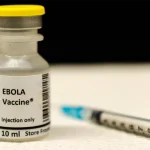
However, global health officials disagree. The World Health Organization (WHO) recently upgraded the risk assessment to “very high” at the national level. Because the outbreak is the rare Bundibugyo strain—for which there is no approved vaccine—the usual containment rules have been thrown out the window.
U.S. Secretary of State Marco Rubio has adopted a zero-tolerance posture, vowing that no Ebola will enter the U.S., going so far as to negotiate with Kenya to build quarantine camps for Americans trapped in the region.
What This Means for African Fans
The announcement by the three host governments signals a harsh geopolitical reality for the Global South. While European and South American fans will travel freely, the “welcome to North America” sign excludes those from the affected zones entirely.
For the average African traveler, the analysis is grim:
1. Impossible Entry: Unless you are a U.S. citizen who can prove 21 days outside the restricted zone, you will be turned back at the airport.
2. No Exceptions for Football: The C.D.C. has not granted exemptions for ticket-holding fans.
3. Financial Devastation: As Fecofa argues, FIFA’s ticketing system is designed to resell or transfer, not refund. Unless Zurich intervenes, fans will eat the cost of a canceled pilgrimage.