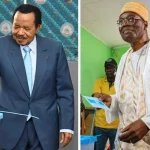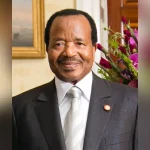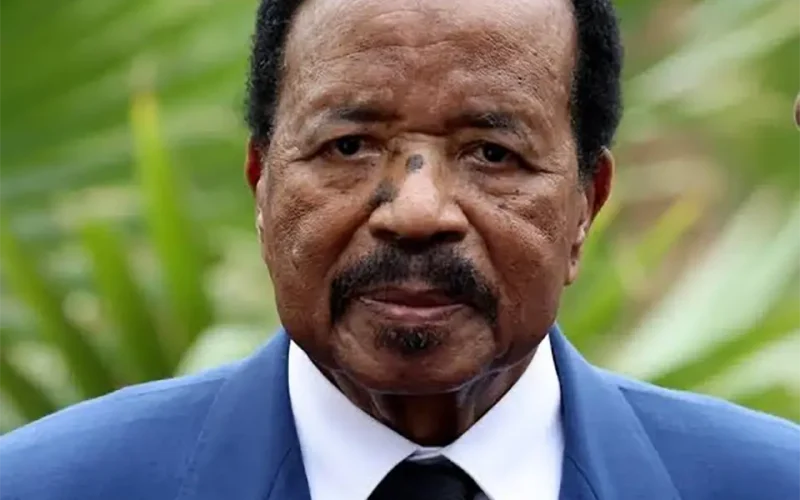
PAUL Biya, the 92-year-old president of Cameroon and the world’s oldest serving head of state, secured an eighth consecutive term Monday with 53.66% of the vote, plunging the Central African nation into turmoil as his main opponent reported gunfire directed at civilians outside his home.
Within hours of the Constitutional Council announcing Biya’s victory, opposition challenger Issa Tchiroma Bakary wrote on Facebook that his supporters gathered outside his residence in the northern city of Garoua were under fire. Reuters could not independently verify the claim, and the government did not immediately respond to requests for comment.
The announcement caps a tumultuous week that has seen violent clashes between security forces and opposition protesters across the oil- and cocoa-producing nation, mass detentions of opposition figures, and mounting allegations of electoral fraud that the government has flatly rejected.
“Hereby declared elected President of the Republic, having obtained the majority of the votes cast, the candidate, Biya, Paul,” Constitutional Council President Clement Atangana intoned Monday, formalizing what partial results had already suggested—that the world’s longest-serving ruler would extend his 43-year grip on power potentially until he is nearly 100 years old.
The victory, while decisive on paper, has ignited a powder keg of opposition rage. Tchiroma, a former government spokesperson and employment minister in his late 70s who broke with Biya earlier this year, had declared himself the winner last week and vowed not to accept any other result.
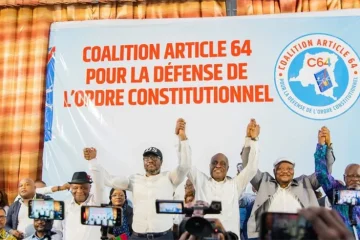
His campaign had electrified opposition circles, drawing massive crowds and securing endorsements from a coalition of opposition parties and civic groups who saw in the veteran insider-turned-rebel a chance to finally dislodge the aging autocrat who has ruled Cameroon since 1982—longer than many of his citizens have been alive.
But the numbers told a different story. Biya’s 53.66% represented a comfortable, if diminished, margin of victory—down from the 71% he claimed in 2018 but more than sufficient to avoid a runoff in a system he has meticulously crafted to ensure his perpetual dominance.
The president, who scrapped constitutional term limits in 2008 and rarely appears in public or even in his own country, spending much of his time in European hotels, has perfected the art of winning elections without visible campaigning. His seventh reelection was no exception—an almost spectral presence who governed from afar while his opponents barnstormed cities and villages.
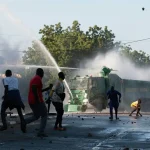
Yet opposition supporters, emboldened by Tchiroma’s energetic campaign and convinced that victory had been stolen, have taken to the streets in defiance. Over the past week, protests have erupted in Garoua, Bafoussam, Dschang, Kousserie, and Douala, met with tear gas and what the government has characterized as necessary force to maintain order.
Authorities have detained approximately 30 politicians and activists linked to Tchiroma’s campaign, including prominent figures like MANIDEM party leader Anicet Ekane and Union for Change’s Djeukam Tchameni. Interior Minister Paul Atanga Nji has described the opposition’s activities as an “insurrectional movement,” with some detainees facing charges before military tribunals.
The government’s hardline response reflects the stakes of this election. At 92, Biya is not merely seeking another term—he is attempting to cement a legacy that spans six decades of Cameroonian independence, during which the country has known only two presidents. His predecessor, Ahmadou Ahidjo, resigned in 1982, handing power to Biya in what remains the nation’s only peaceful transfer of authority.
Now, with a new seven-year term secured, Biya could remain in office until 2032, when he would be 99 years old—a prospect that both awes and appalls in equal measure. Critics argue that his extended rule has stifled economic development, entrenched corruption, and left Cameroon struggling with separatist violence in English-speaking regions and Boko Haram incursions in the north.
But for Biya’s supporters in the ruling Cameroon People’s Democratic Movement, his victory represents continuity and stability in a volatile region. They celebrate not change, but the absence of it—the known quantity of an aging leader over the uncertainty of succession.
As night fell Monday over Cameroon, that uncertainty manifested not in succession but in streets thick with tension. Tchiroma’s allegations of gunfire in Garoua, whether confirmed or not, captured the moment’s volatility—a nation split between those celebrating the octogenarian’s triumph and those convinced that democracy itself had been gunned down in the process.
The Constitutional Council has spoken. The people, it seems, are answering back—though whether their voices will be heard over the sound of tear gas canisters and alleged gunfire remains the question that will define Biya’s eighth term before it has even begun.
At 92, Paul Biya has won again. But in victory, he may have inherited a country more fractured than at any point in his four-decade reign—a final term that could test whether Africa’s oldest ruler can govern a nation that increasingly questions whether he should.