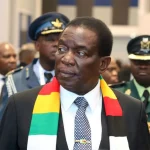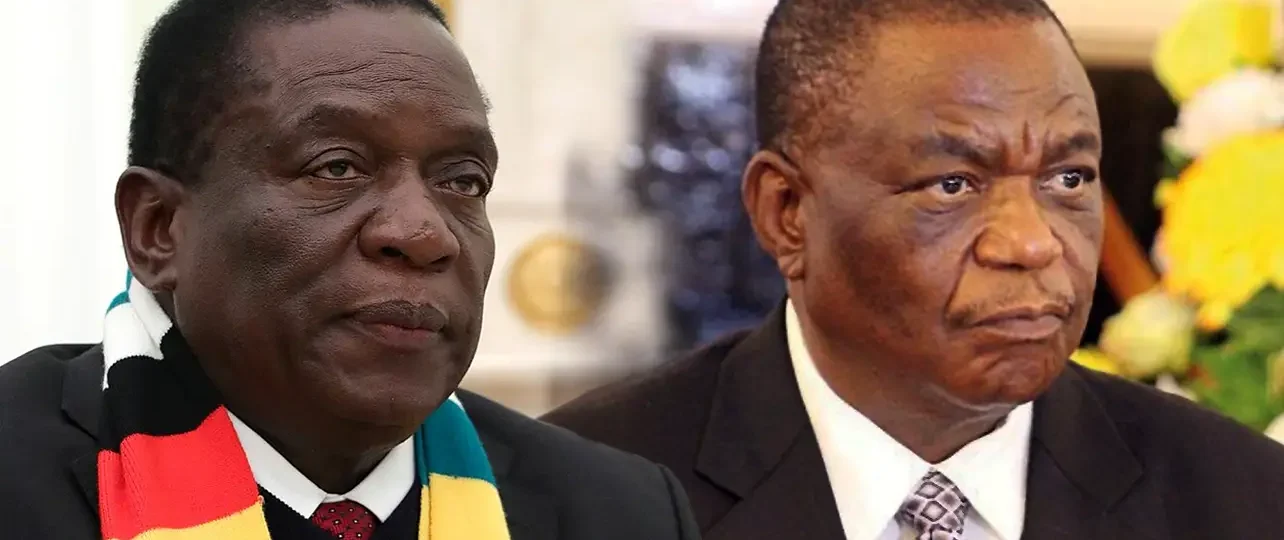

IN a dramatic escalation of Zimbabwe’s simmering leadership crisis, President Emmerson Mnangagwa and Vice President Constantino Chiwenga – the two generals who jointly orchestrated the 2017 coup against Robert Mugabe – have turned their guns on each other in an explosive confrontation that lays bare the fractures at the heart of Zanu PF.
The extraordinary clash, which erupted during a tense politburo meeting this week, represents the most serious threat yet to Zimbabwe’s political stability as the nation approaches a critical juncture in its troubled democratic journey.
The Dossier That Shook the Party
It began on September 17, when Chiwenga, the retired military commander who led the tanks into Harare seven years ago, walked into a politburo meeting and delivered a devastating 17-page indictment of the man he helped install in power.
The document read like a manifesto of betrayal. Chiwenga accused Mnangagwa of presiding over “corruption, capture and betrayal” of everything the 2017 coup—euphemistically dubbed “Operation Restore Legacy”—was supposed to achieve.
“Comrade President, we undertook Operation Restore Legacy with a sacred mandate: to reclaim our nation from the jaws of corruption and to restore the dignity, prosperity, and sovereignty of Zimbabwe,” Chiwenga wrote in an opening that invoked their shared revolutionary past before launching into a withering critique of the present.
The vice president named names. Businessman Kudakwashe Tagwirei, flamboyant dealmaker Wicknell Chivhayo, gold magnate Scott Sakupwanya, and entrepreneur Delish Nguwaya—all close Mnangagwa allies—were accused of “stealing more than US$3.2 billion of government funds” and “corrupting party structures.”
“These criminals have brazenly looted our state coffers with impunity,” Chiwenga charged. “We cannot fold our hands and watch these criminals corrupt and bribe our structures and destroy our party.”
He demanded their immediate arrest. “The time for silence and inaction is over,” he declared.
The President Strikes Back
Mnangagwa’s response, delivered through Justice Minister Ziyambi Ziyambi at Tuesday’s politburo meeting, was equally scorching.
The president’s camp branded Chiwenga’s dossier “fundamentally flawed, treasonous, and lacking appreciation of party procedures and the national constitution.” The word “treasonous” appeared repeatedly—a loaded term in Zimbabwe’s political lexicon, carrying echoes of detention, prosecution, and potential elimination.
“At its core, the document advocates for the unlawful removal of a constitutionally elected President,” Ziyambi wrote. “Any attempt to destabilise or subvert a constitutionally elected government is treasonous.”
Then came the counterattack, surgical and personal.
Ziyambi accused Chiwenga of trying to monopolise credit for the 2017 coup, claiming sole ownership of an operation that involved thousands. “Zimbabweans from all walks of life rose and participated,” the response stated. “Let us acknowledge the collective effort and desist from claiming heroism for work done by many.”
In a particularly cutting revelation, the president’s team disclosed that Tagwirei—one of the very businessmen Chiwenga wanted arrested—had actually bankrolled the 2017 military operation, providing five million litres of fuel, food, and other provisions at the then-army commander’s own request.
“Furthermore, he put in one million litres of fuel and US$1.6 million to the party,” the document revealed, effectively telling Chiwenga: your revolution was funded by the same “criminals” you now condemn.
The 2030 Agenda: Succession Crisis Looms
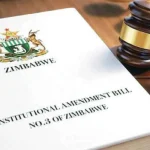
At the heart of the conflict lies a fundamental question: who will rule Zimbabwe after 2028, when Mnangagwa’s constitutionally mandated term ends?
Chiwenga has openly opposed what he called the “so-called 2030 Agenda,” viewing it as Mnangagwa’s attempt to extend his rule beyond constitutional limits. “We are repeating the ills that led us to November 2017,” the vice president warned, drawing a direct parallel to Mugabe’s refusal to step aside.
Mnangagwa’s response was unequivocal: the 2030 Agenda was Resolution Number One of the 2024 Zanu PF National People’s Conference and therefore entirely legitimate. “The president is a constitutionalist who has not deviated from the constitution at any time,” Ziyambi insisted.
The message was clear: Mnangagwa has party backing for his political trajectory, and Chiwenga’s opposition amounts to insubordination.
Personal Attacks and Public Humiliation
The clash descended into personal territory. Mnangagwa’s camp accused Chiwenga of being “bitter,” “in denial,” and exhibiting behaviour that was “immature and intrusive.”
“A good leader is a good follower,” Ziyambi wrote pointedly. “The author has shown he is not a good follower and therefore cannot be a leader.”
The response even accused Chiwenga of hypocrisy, noting that members of the praesidium—” including the author himself”—regularly host political meetings at their private farms, yet no one questions these gatherings.
During the politburo meeting itself, the attacks continued. National chair Oppah Muchinguri reportedly told Chiwenga that while they all fought in the liberation war, their paths diverged at independence when he chose the military while others entered government. There was, she said, “nothing special about coming from the barracks.”
Legal secretary Patrick Chinamasa reminded the former defence chief that “the president owns all land,” a pointed rebuke to Chiwenga’s criticism of land reform implementation.
A Chilling Silence
When it was Chiwenga’s turn to respond, his words were brief and loaded with meaning.
“I’ve listened to all your presentations and I’m convinced that all of you support zvigananda,” he reportedly said, using a Shona term that roughly translates to “thugs” or “criminals.” “It’s okay. I acknowledge it.”
Then silence descended on the room—the kind of silence that speaks volumes in Zimbabwe’s dangerous political theatre.
What This Means for Zimbabwe
The public rupture between Mnangagwa and Chiwenga represents more than a personal feud. It exposes the fundamental instability of Zimbabwe’s post-coup political settlement and raises urgent questions about the country’s future.
Both men command significant followings within Zanu PF and the security establishment. Chiwenga’s dossier was reportedly backed by several retired generals and members of the Women’s League—suggesting he retains considerable military and grassroots support. Meanwhile, Mnangagwa’s control of party structures ensured his counter-document was adopted without debate.
The timing is particularly ominous. As Zanu PF gathers this week for its annual conference in Mutare, the party is more divided than at any point since 2017. The confrontation has set the stage for what insiders are calling an “explosive showdown.”
Neither Mnangagwa nor Chiwenga have commented publicly, maintaining the pretence of unity even as the foundations crumble. But everyone in Zimbabwe’s political circles understands what’s at stake.
The two generals who removed Mugabe together are now locked in their own succession battle. One removed a president who wouldn’t leave. The other now faces a president who may not want to go.
History, as Zimbabweans know too well, has a way of repeating itself—often violently.