IF you blinked during the TotalEnergies CAF Africa Cup of Nations group stage finale, you missed approximately seventeen plot twists, one gravity-defying bicycle kick, and enough late drama to fill a Netflix series. Welcome to African football, where the script is written in invisible ink and VAR has trust issues.
Morocco 3-0 Zambia: El Kaabi channels his inner acrobat
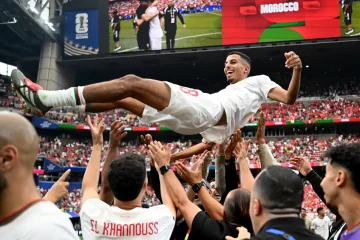
Let’s start with the hosts, shall we? Morocco weren’t about to let a little thing like “pressure” ruin their evening in front of a partisan crowd that would have personally escorted them to the knockout stages if necessary. The Atlas Lions devoured Zambia 3-0 with the kind of ruthless efficiency that suggested they’d been watching too many nature documentaries about actual lions.
Ayoub El Kaabi—whose name will be sung in Moroccan cafés for weeks—decided nine minutes was quite long enough to wait before opening the scoring. Azzedine Ounahi, apparently operating as some sort of creative puppet master, floated a corner to the far post where El Kaabi rose like a man who’d forgotten gravity was a thing. One header later, and Zambia’s goalkeeper Toaster Nsabata Mwanza (yes, Toaster – no, we’re not making that up) was fishing the ball out of his net.
By the 27th minute, Brahim Diaz had doubled the lead with a finish so composed you’d think he was filling out a tax return rather than scoring in a crucial AFCON match. Ounahi, apparently unable to stop creating chances, slipped another perfect pass through, and Diaz calmly slotted home while Zambian defenders stood around looking like they’d lost their car keys.
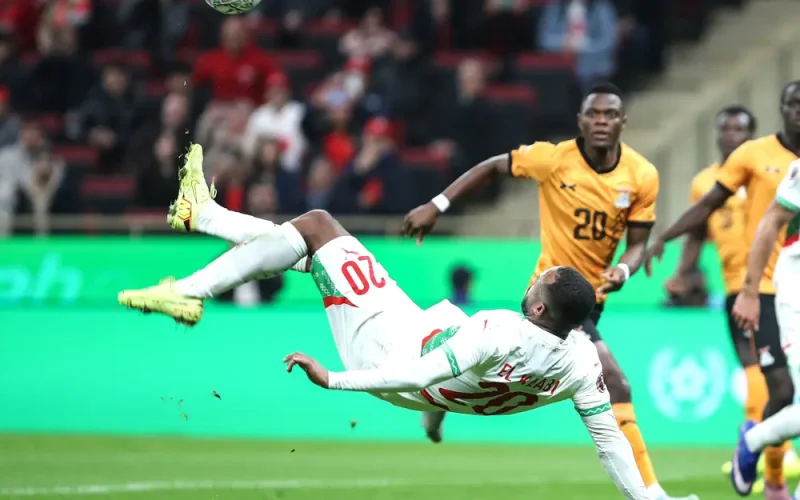
But the pièce de résistance? Oh, that came in the 53rd minute when El Kaabi produced a bicycle kick so spectacular that even the VAR officials probably watched the replay three times just for fun. Initially flagged offside – because of course it was – technology intervened to confirm what everyone with functioning eyeballs already knew: the goal was legitimate, El Kaabi had his brace, and Morocco were partying like it was 1999.
“We finished top of our group,” El Kaabi said afterwards, somehow managing to sound humble about scoring a goal that will live on highlight reels until the sun explodes. “Now a new competition begins, where there is no room for error.”
Zambia’s coach Moses Sichone was rather less chipper. “We gave them too much respect,” he admitted, which is coach-speak for “my players looked like they’d seen a ghost wearing Morocco’s number nine.” He praised his team’s improved second-half showing, conveniently forgetting that by then they were already 3-0 down and Morocco had started playing keep-away like they were at a training session.
Morocco’s Walid Regragui, meanwhile, delivered the kind of measured post-match interview that suggested he’d been expecting this all along. “We played well and had a solid plan,” he noted, as if orchestrating a 3-0 demolition was just another Monday evening. “We are the home team so we must always play our games as a final.” Translation: mess with us at your peril.
Mali 0-0 Comoros: The art of surviving with 10 men
Over in Casablanca, Mali and Comoros engaged in what can only be described as a tactical chess match played by people who’d forgotten how the pieces move. The final score – 0-0- tells you everything and nothing about 90 minutes of football that had all the creative flair of a tax audit.
Mali needed just a point to progress, and by George, they were going to get exactly that and not a goal more. Comoros, bless them, actually tried to win the thing, with Meziani Maoulida finding space behind the Malian defense only to hesitate like a man trying to remember if he’d turned off the stove before leaving the house.
Mali’s best chance fell to Lassine Sinayoko, whose thunderous effort was magnificently saved by the Comorian goalkeeper in a moment that briefly suggested goals might actually be a thing that could happen in this match. Spoiler alert: they weren’t.
The drama—and there’s always drama—arrived in the 88th minute when Amadou Haidara was shown a straight red card for a challenge that presumably offended several laws of physics and one or two human rights conventions. Down to ten men and clinging to their goalless draw like a life raft, Mali somehow held on through a frantic finale that saw Comoros throw everything forward except the corner flags.
The result? Mali through to the knockouts with three draws from three matches—the footballing equivalent of passing an exam by correctly spelling your name three times. Comoros, despite their spirited display, packed their bags and headed home, presumably wondering what they’d done to anger the football gods.
Angola 0-0 Egypt: When Fredy’s farewell became a tearjerker
Down in Agadir, Angola and Egypt played out another goalless draw, though this one came with considerably more attacking intent and a subplot involving a 35-year-old midfielder playing his final international match on his birthday. If that doesn’t tug at your heartstrings, you might want to check you actually have a heart.
Fredy – Angola’s veteran playmaker and apparent one-man attacking force – spent ninety minutes trying to drag his team over the line through sheer willpower. He struck the woodwork with a curling free-kick in the 53rd minute, drove forward from midfield like a man possessed, and generally terrorized Egypt’s defense with the kind of performance that suggested he’d quite like to go out on a winning note.
Angola were the better side, creating chances with the regularity of a Swiss train schedule. Kialonda Gaspar, Chico Banza, and substitute M’Bala Nzola all came agonizingly close, with Nzola’s late effort brushing the post in a moment that probably caused several thousand Angolan hearts to stop simultaneously.
Egypt, meanwhile, defended like their lives depended on it – which, given the ferocity of Angola’s attacks, might not have been far from the truth. Their game plan appeared to consist of “don’t concede” and “let goalkeeper Shobeir deal with everything,” which, credit where it’s due, actually worked.
The post-match interviews were, frankly, heartbreaking. Fredy, named Man of the Match, struggled to celebrate his award. “It’s difficult to talk about this because it’s not what we wanted,” he said, his voice heavy with emotion. “This is my last match for the national team, which makes me very sad. I’ve been part of this team for 12 years… I am 35 years old today and I gave everything with my heart.”
If you’re not welling up right now, congratulations on being made of stone.
Angola’s coach Patrice Beaumelle summed it up perfectly: “I have mixed feelings tonight. I am sad because we only got one point… but at the same time very proud of my players.” He paid tribute to Fredy’s “exemplary mentality” and held out hope that Angola might still sneak through as one of the best third-placed teams. Fingers crossed for Fredy’s sake.
Egypt’s Hossam Hassan, in contrast, was perfectly content with his point, having rotated his squad and rested key players. “We wanted a positive result and this draw is satisfactory,” he said, presumably while Egyptian fans breathed sighs of relief that they’d avoided complete disaster.
South Africa 3-2 Zimbabwe: Bafana’s brave escape act
If you like your football served with a side of cardiac arrest, the South Africa-Zimbabwe clash was the dish for you. Five goals, a VAR-awarded penalty, an own goal, and a finish so tense you could have cut the atmosphere with a knife – and that’s before we mention that Zimbabwe nearly staged the comeback of the century in the dying minutes.
South Africa started like a house on fire, with Tshepang Moremi scoring inside seven minutes after capitalizing on a deflected effort. Job done, right? Pack it up, everyone go home?
Not quite. Zimbabwe’s Tawanda Maswanhise had other ideas, producing a moment of individual brilliance in the 19th minute that involved beating several defenders and unleashing a finish so powerful it probably registered on seismographs. Game on.
Lyle Foster restored South Africa’s lead early in the second half with a clever looping header—the kind of goal that looks simple but probably took years of practice and/or divine intervention. Zimbabwe weren’t done, though, with Maswanhise rattling the post midway through the half in a moment that had Warriors fans simultaneously gasping and cursing.
Then came the VAR drama. In the 82nd minute, Marvelous Nakamba was adjudged to have handled the ball, and after what felt like seventeen hours of deliberation, South Africa were awarded a penalty. Oswin Appollis stepped up and converted with the kind of calmness that suggested he does this sort of thing before breakfast.
3-1. Surely that was that?
LOL, no. An own goal from Aubrey Modiba in the dying moments – because of course – gave Zimbabwe a lifeline and sparked absolute chaos in the final minutes. South Africa clung on like climbers on a particularly tricky cliff face, defending with the desperation of a team that really, really didn’t want to explain how they’d blown a two-goal lead.
When the final whistle blew, Bafana Bafana had secured their spot in the knockout stages with six points, finishing second in their group. Zimbabwe, despite their brave fightback, headed home with just one point and a performance that deserved better.
South Africa’s Hugo Broos was having none of the “brave” narrative afterwards. “For the first goal, a player goes past three or four of our defenders without being properly challenged,” he grumbled, presumably while making notes about defensive drills for the next training session. “When you defend like that, you concede goals in every match.”
Zimbabwe’s Mario Marinica, meanwhile, was more philosophical. “At this level of competition, every mistake is punished,” he noted, which is the coaching equivalent of saying “well, that’s football” while shrugging helplessly.
The Takeaway
So there you have it: Morocco flexing their muscles with a bicycle kick for the ages, Mali discovering that you can indeed bore your way to the knockout stages, Angola’s heartbreaking farewell to a legend, and South Africa remembering at the last possible moment that defending is actually quite important.
The group stage is complete, the knockout rounds beckon, and somewhere in Morocco, Ayoub El Kaabi is probably still celebrating that bicycle kick.
Football, bloody hell.