AFRICA stands at a crossroads that defines not just our agricultural future, but our very destiny as a continent. We possess over 60% of the world’s uncultivated arable land, abundant water resources, and the youngest population on Earth. Yet in 2024, we imported food worth $115 billion while our own people go hungry. This is not just a policy failure—it’s a moral crisis that demands immediate action.
The Paradox That Shames Us All
How can a continent destined to be the world’s breadbasket remain unable to feed its own children? We have the land, the water, the sun, and the human capital. What we lack is the will to transform potential into reality. After more than a decade of the Comprehensive Africa Agricultural Development Programme (CAADP), we’ve built stronger institutions and achieved agricultural growth, yet hunger continues to rise across our continent.
The newly adopted CAADP Strategy and Action Plan (2026-2035) promises to increase agrifood output by 45% and reduce post-harvest losses by 50%. But promises without implementation are empty words that cannot fill empty stomachs. We’ve heard these commitments before. What makes this time different?
Six Non-Negotiable Actions for Transformation
The path forward requires bold action, not more conferences. Here’s what must happen now:
First, we must move from policy to practice. Every African leader must align their budgets with their agricultural commitments. We need transparent measurement of progress and accountability for failure. Implementation, not intention, will feed our people.
Second, we must finance our own transformation. The era of abundant aid is over. By expanding our tax base, digitising our economies to stop illicit financial flows, and leveraging pension funds and remittances, we can fund agricultural transformation from within. Our farmers, processors, and agri-entrepreneurs need affordable finance, not more dependency on external donors.
Third, we must make the African Continental Free Trade Area (AfCFTA) work. Economic Commission for Africa projections show that full implementation could boost intra-African agrifood exports by nearly 60% by 2045—equivalent to $58 billion. We must dismantle trade barriers, harmonise standards, and build food corridors that connect our farmers to our markets. Why should African food feed European tables while African children starve?
Fourth, we must revolutionise financing for small-scale entrepreneurs, women, and youth. Green bonds, resilience bonds, diaspora bonds, and blended finance instruments must reach our cooperatives and agri-SMEs. Youth-led enterprises in storage, logistics, and agri-tech will reduce losses, lower costs, and multiply opportunities.
Fifth, we must build the infrastructure backbone. Roads, energy, irrigation, and digital systems aren’t luxuries—they’re necessities. Farmers cannot sell what they cannot transport. Processors cannot operate without reliable power. Rural and regional infrastructure investment will yield dividends across trade, industry, and integration.
Sixth, we must place Africa’s youth at the centre of transformation. With over 60% of our population under 25, and projections showing that by 2050, one in three young people worldwide will be African, we cannot afford to waste this demographic dividend. We need business incubation hubs, expanded access to land, and massive investment in agri-tech startups. Our young people have the energy and ideas to feed not just Africa, but the world.
The Climate Imperative
Climate change threatens our fields and forests more than any other region, even though Africa contributes less than 4% of global emissions. This injustice must fuel our determination to build resilient food systems that adapt to climate realities while contributing to global solutions. Food systems transformation linked with climate action through resilience, adaptation, and innovative finance isn’t optional – it’s survival.
From Dependence to Dignity
This transformation is about more than feeding people – it’s about dignity, sovereignty, and Africa’s rightful place in the global economy. We have abundant sunlight, biodiversity, and the youngest, most energetic population in the world. Our median age is just 19. If we give our young people land, finance, technology, and markets, they will not only feed Africa but also contribute to feeding the world.
The question isn’t whether Africa can transform its agriculture – it’s whether African leaders have the courage to act on what we all know must be done. The resources exist. The knowledge exists. The people exist. What we need now is the political will to stop importing food and start exporting solutions.
The paradox of Africa – a continent of extraordinary potential marked by persistent hunger – ends now. Not with more speeches, but with action. Not with more promises, but with delivery. Not tomorrow, but today.
Our children are watching. History is watching. The world is watching. It’s time to deliver.
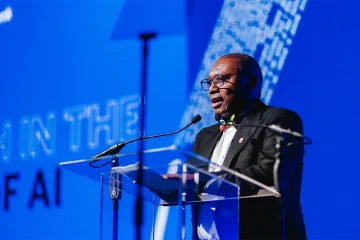
This is an edited version of remarks by Mr. Claver Gatete, United Nations Under-Secretary-General and Executive Secretary of ECA, at AFRICA FOOD SYSTEMS FORUM 2025 – PRESIDENTIAL SUMMIT PLENARY: Delivering the African Food Systems Promise