NEARLY eight decades after its creation, calls for reform of the United Nations Security Council (UNSC) seem more realistic and timely. At this year’s 80th session of the United Nations General Assembly (UNGA), leaders from the Global South, the Caribbean and Eastern Europe renewed their demands for Africa’s permanent representation on the United Nations Security Council (UNSC), arguing that the Council’s outdated structure marginalises a continent central to today’s global challenges.
This exclusion of Africa from the UN’s top decision-making body is not just an oversight but structural racism baked into global governance. Since 1945, the UNSC power-sharing model has privileged five permanent members (the U.S., Russia, China, France, and the U.K.) with veto rights, excluding Africa, home to over 1.4 billion people and a key contributor to global peacekeeping missions.
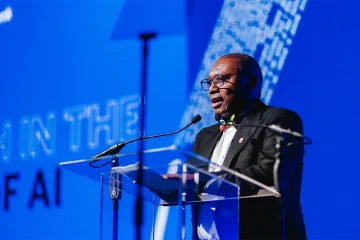
In his address at the UNGA, President William Ruto of Kenya called for an end to what he termed an indefensible historical imbalance and stated that the much-needed reforms would guarantee Africa at least two permanent seats on the UNSC.
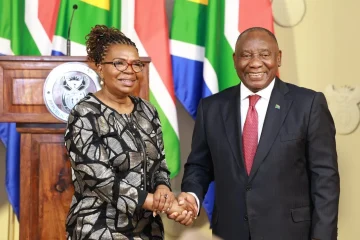
South African President Cyril Ramaphosa echoed the call, warning that the current setup entrenches inequality rather than promoting global justice, while Nigerian President Bola Tinubu went further, framing Africa’s exclusion as a credibility crisis for the UN itself.
For African leaders, the stakes are high. Permanent seats would not only amplify Africa’s voice on global security issues but also give the continent leverage in shaping responses to conflicts, climate change, and pandemics. For the UN, reform could restore faith in its ability to act impartially and effectively.
US Control of the UNSC
Overlaying Africa’s push is growing discontent with the United States’ role in the Council. Washington is in arrears on its UN membership dues, a situation that, by UN rules, should jeopardise its voting rights. Yet the U.S. continues to wield disproportionate influence. The United States, having defaulted on its UN membership dues, should have its voting rights suspended.
Frustration with the United States’ dominance and control of the UNSC, to the protection of Israel by repeated vetoes on Gaza ceasefire resolutions, has sharpened the debate about fairness, legitimacy, and accountability within the UN’s most powerful decision-making body.
Time and again, the US has repeatedly used its veto power to block resolutions calling for a ceasefire in the Gaza Strip, where humanitarian groups warn of escalating atrocities against civilians. For many African leaders, this highlights how a single country’s political alliances can paralyse the Council at the expense of human lives. A Council that cannot act in the face of mass killings is a Council in crisis.
At UNGA80, U.S. President Donald Trump gave a blistering speech, in which he labelled the UN “wasteful” and “corrupt”, accusing it of failing to deliver on its founding mission of ensuring peace and security. But many observers noted that while Washington questions the UN’s credibility, it continues to guard its privileged position within the Security Council.
Equal Say for All Members
The global opinion is that the United Nations Security Council is rotting from within, and the stench of hypocrisy is strongest where the United States clings to its veto power as though it were a divine right. Its conduct in Gaza is indefensible. As tens of thousands of Palestinians are slaughtered in what leading rights organisations call genocide, but the U.S. has shamelessly blocked resolution after resolution demanding a ceasefire. This is not diplomacy but complicity. By shielding Israel with the veto, Washington has reduced the Council to a stage where the powerful excuse the inexcusable while the powerless are left to die.
The veto itself has become the Council’s most destructive weapon. It allows one government to paralyse the collective will of nations, rendering the very body created to preserve peace into a protector of war crimes. Restricting or abolishing the veto is no longer optional but an urgent moral imperative. And if the U.S. cannot meet its obligations, financial or moral, its voting rights must be suspended. Anything less is an endorsement of impunity.
The world cannot continue to indulge this outdated system. The Security Council must be stripped of its sacred cows, forced to reform, and made accountable to all humanity and not just to a handful of powerful states. Otherwise, it will stand exposed for what it has become: a relic of postwar power politics, complicit in genocide, and unfit to speak for the world.
The UN is a global body that should grant equal rights to all members and stop treating African states as visitors or bystanders.