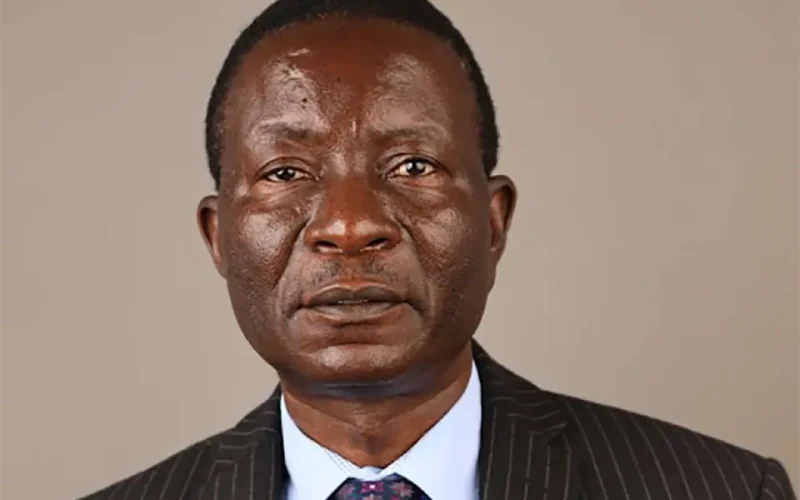
THE evening sky over Nairobi had just begun to darken when gunshots shattered the usual cacophony of rush hour traffic near the City Mortuary roundabout. It was 7:30 PM on Wednesday, a time when most parliamentarians were winding down their day, heading home to their families after hours of legislative debate. For Charles Ong’ondo Were, the Member of Parliament for Kasipul constituency, it would be his final journey.
“I need a conversation with you, mambo si mazuri,” Were had confided to fellow MP Caleb Amisi just hours earlier in the hallowed halls of Parliament. His words – “things aren’t good” – now hang in the air like a premonition unfulfilled.
As Were’s vehicle approached the roundabout, the silhouette of a motorcycle emerged from the shadows. Two men, faces obscured, pulled alongside. In a brutal choreography that lasted mere seconds, one assailant dismounted, approached Were’s car, and fired at point-blank range. The assassin’s bullets found their mark with chilling precision before he retreated to his accomplice waiting on the motorcycle. Together, they vanished into the labyrinth of Nairobi’s streets, leaving behind a crime scene that would send shockwaves throughout Kenya.
Were’s driver, spared by some cruel twist of fate, frantically navigated through traffic toward the nearest hospital. But hope had already fled the scene – the second-term legislator was pronounced dead on arrival.
By dawn, the news had spread across the nation like wildfire in the savanna. Parliament, typically a battleground of competing ideologies, fell silent in collective grief. The orange banners of the ODM party, Were’s political home, seemed to droop a little lower as party officials struggled to comprehend the loss of one of their own.
“A dark day,” lamented Mumias East MP Peter Salasya. “Attacking our leaders is an attack on our democracy!”
National Assembly Speaker Moses Wetang’ula, his usual commanding presence subdued by sorrow, described Were as “a fearless advocate” and “a man deeply committed to democratic ideals. The loss of Hon. Were is not just a tragedy to his family and the people of Kasipul but also a big loss to the people of Kenya.”
In the corridors of Parliament, whispers of fear mingled with demands for accountability. Security concerns, once an abstract concept for many legislators, suddenly became painfully tangible. MPs huddled in small groups, exchanging worried glances as they contemplated their own safety in a country where political violence had once again reared its ugly head.
Health Cabinet Secretary Aden Duale, who had worked alongside Were, said: “I had the privilege of serving with him in Parliament, where he always advocated for the people of Kasipul with clarity and conviction,” he said, his voice firm despite his visible emotion. “Those who planned and executed this heinous crime must face the full force of the law.”
As night fell again on Nairobi, candles began to appear at impromptu memorials across the city. In Kasipul, Were’s constituency in Homa Bay County, elders gathered under a sprawling acacia tree to mourn their fallen son. Women draped in traditional attire sang songs of lament that carried across the hills, their voices a testament to a community’s shattered heart.
The nation watched as police combed through security footage and questioned witnesses, searching for the phantom killers who had executed their plan with terrifying efficiency. The Bodaboda Safety Association of Kenya quickly distanced itself from the crime, condemning those who “misuse motorcycles to perpetrate violence” and tarnish the reputation of honest riders.
As Kenya grapples with this latest political assassination, the questions multiply while answers remain elusive. Was Were’s killing politically motivated? A personal vendetta? Or something more sinister lurking beneath the surface of Kenyan politics?
For now, the only certainty is loss – a family without a father, a constituency without its voice, and a Parliament where one seat will remain painfully empty. As investigations continue, Were’s last words to his colleague echo like an unfinished symphony: “Mambo si mazuri.” Indeed, things are not good in a nation once again confronting the spectre of political violence.
In the heart of Nairobi, a lone street lamp illuminates the spot where Charles Ong’ondo Were drew his final breath. Beneath it, a simple handwritten note attached to a bouquet of flowers reads: “May justice be your legacy.”