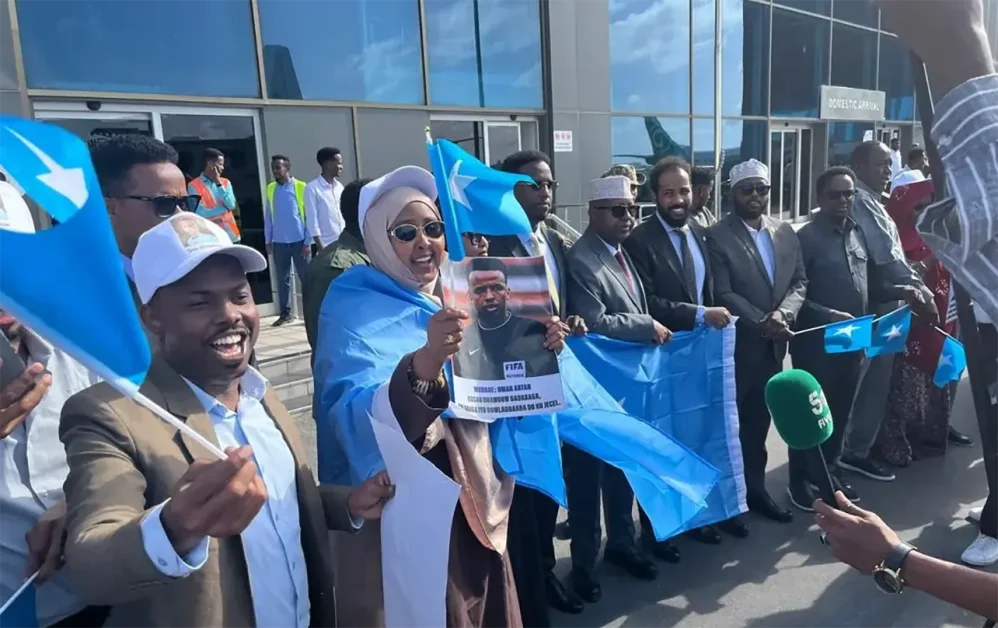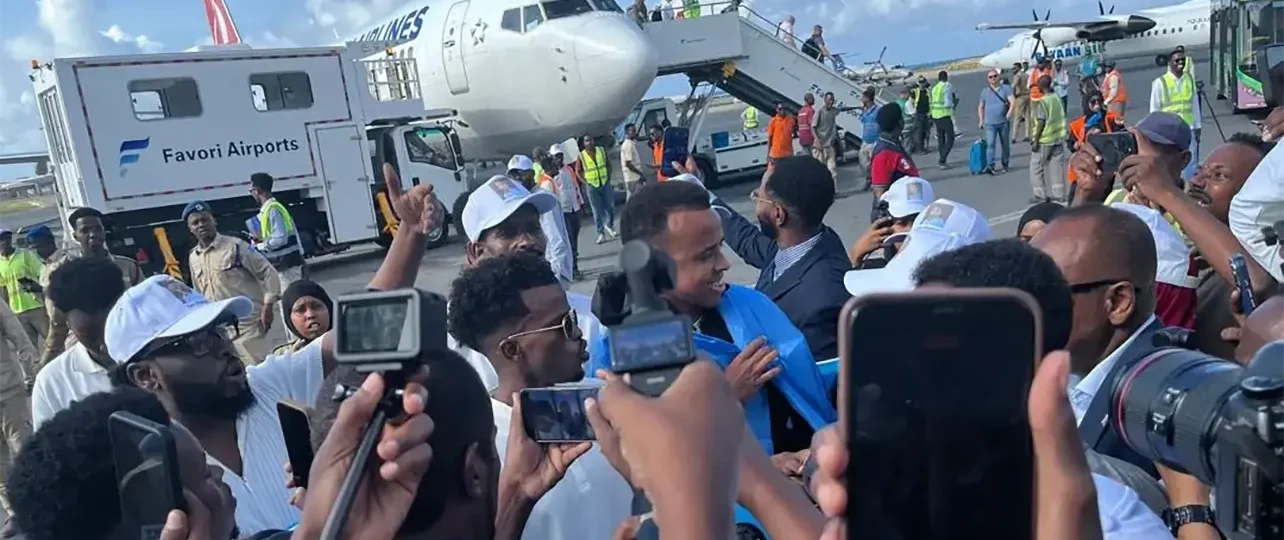

HE missed the 2026 World Cup not because of form or fitness but because a visa line in Washington stood between him and football’s biggest stage. Instead of starting under stadium lights, Omar Abdulkadir Artan stepped off a plane at Aden Adde International this morning into a different kind of spotlight – one of national celebration, waving flags, and the kind of hero’s welcome that turns absence into symbolism.
Artan’s appointment by FIFA was more than a personal milestone. For a country still wrestling with instability, displacement and chronic underinvestment in sport, his presence on the World Cup roster would have been a rare, high-visibility signal: Somalia belongs in football’s global community. That symbolic power is precisely why his denial of entry to the US — reportedly over alleged links to “suspected members of terror organizations” — does more than deny a match official a whistle. It exposes the fault lines where national security, migration policy and global sport collide.
Arriving via Istanbul, Artan did not shrink from the moment. Emotionally thanking FIFA and the Somali people, he said he was “not upset” and would not be “discouraged.” Local officials and supporters turned his return into a pageant of defiance and pride. The reception did domestic political work: it rallied morale, offered a narrative of dignity, and gave leaders a photo-op that reads as international relevance.
Artan was given a special reception by the Prime Minister of Somalia, Hamza Abdi Barre.
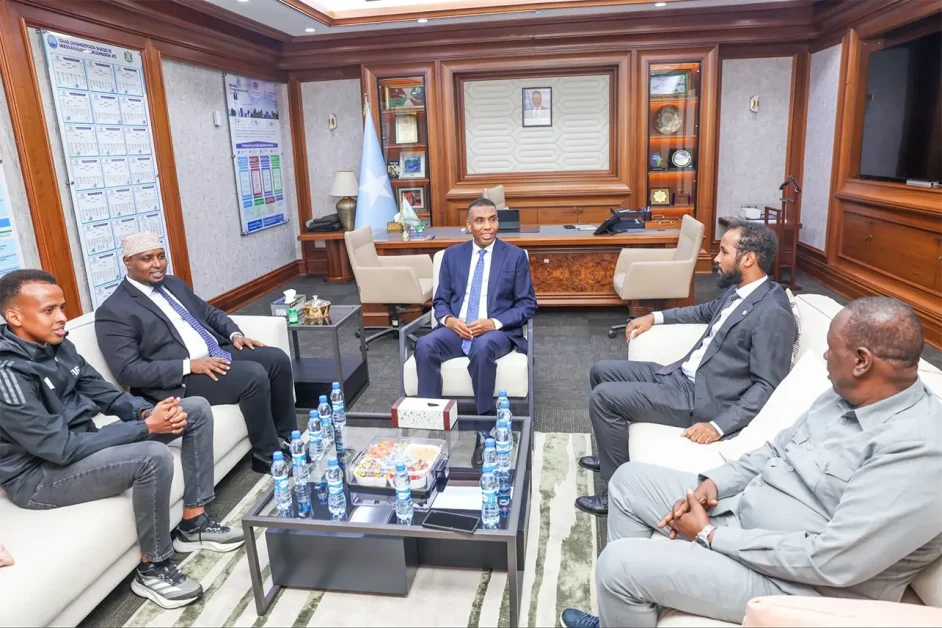
Barre said: “I told our Somali Referee Omar Artan that while his World Cup officiating dream may have been delayed, it has never been diminished. Long before a ball is kicked, he has already won the hearts of millions and secured his place in history.
“Omar Artan has done more than unite the footballing world; he has ignited hope in every child who dares to dream beyond the horizon. Dreams may be deferred, but they are never defeated. I extend my deepest gratitude to FIFA and CAF for recognizing and believing in his talent, integrity, and dedication throughout the years.
“For a lifetime, Omar carried a whistle not as a symbol of authority, but as a commitment to fairness, justice, and the spirit of the game. He devoted himself to ensuring that football was decided by merit, yet fate denied him the stage he so richly deserved.
Today, I had the honor of hosting Omar Artan, an icon, a role model, and living proof that true greatness is not measured by the matches you officiate, but by the lives you inspire.
Omar’s journey reminds us all that character outlasts circumstance, and that those who stand for fairness ultimately leave the deepest legacy”.
But the spectacle also functions as strategic storytelling. A denied visa that is reframed at home as an injustice inflicted by foreign powers does more than console: it rallies public sentiment, pressures international actors for explanations, and converts a professional setback into a national cause célèbre.
This incident lays bare three uncomfortable truths for global football.
– Vetting vs. universality: FIFA can select officials on merit, but host countries’ immigration rules ultimately gate access. When those two systems clash, the people chosen to represent the game become collateral damage.
– Transparency deficit: The US rationale — vague national security concerns — leaves too many questions unanswered. Without clarity, suspicion grows that political or diplomatic considerations, not just routine checks, influenced the decision.
– Institutional accountability: FIFA’s repeated assurances that the World Cup is inclusive ring hollow when accredited referees cannot reach the pitch. If FIFA cannot ensure that its selections can enter the host nation, it must explain how its processes failed and how it will prevent repeats.
Regional reverberations
Across Africa and the diaspora, Artan’s case has sparked outrage, pointed commentary and demands for accountability. High-profile voices have used the episode to critique FIFA leadership and the tournament’s administration, arguing that a global championship should not be held hostage to inconsistent travel restrictions. The episode risks amplifying a narrative that the World Cup is partitioned by politics as much as by geography — an outcome that undermines football’s claim to universality.
The human paradox
For Artan, the irony is cruel and clarifying. He lost the professional pinnacle — the whistle at a World Cup match — but gained something harder to quantify: a public platform and a symbol of perseverance for Somali youth. His measured response — gratitude, resolve, and a steely refusal to show bitterness — fits the script many at home want: competence, resilience, national pride.
What should happen next
– Clear answers: FIFA and the US authorities owe a full, transparent explanation. Was the exclusion an administrative error, a case of misidentification, or a policy decision? Vague public statements only inflame suspicion.
– Better protocols: FIFA must build contingency and coordination mechanisms with future hosts to reduce the risk of accredited participants being barred. That includes pre-clearance processes and rapid appeals.
– Leave a legacy: Somalia should turn the moment into long-term investment: referee training, infrastructure, and pathways for young officials. Turning symbolic capital into concrete support would convert a short-lived triumph into durable progress.
A lesson in optics
Artan’s welcome in Mogadishu is a vivid illustration of how modern sport plays out on two stages at once: the formal field of competition and the political theater of image and identity. The US decision to deny him entry removes him from the first stage but detonates him on the second: a national hero, an argument about fairness, and a story that puts FIFA and the tournament hosts on the defensive.
Bottom line: the World Cup’s claim to be “for the world” is only as strong as the weakest link between selection and access. Omar Artan’s sidelining should prompt more than sympathy and applause; it should trigger institutional fixes and public answers so that future referees chosen on merit can actually answer the whistle — wherever the game is played.