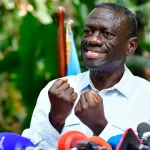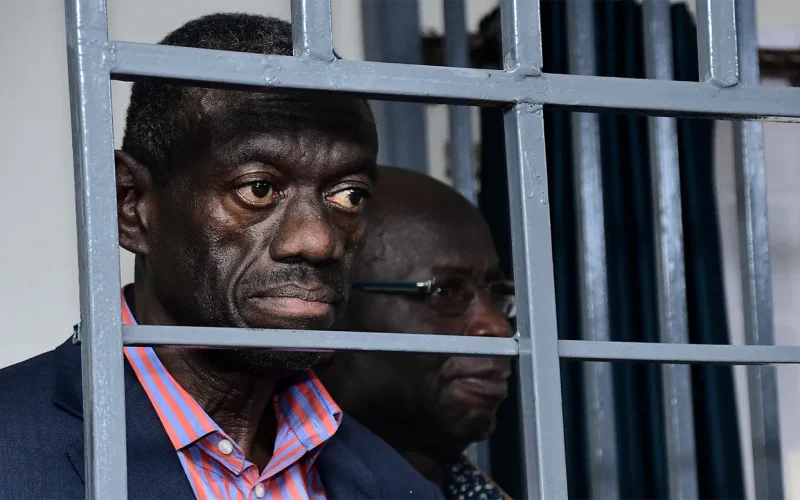
THERE is a particular cruelty in what has happened to Dr Kizza Besigye. He served Yoweri Museveni as physician, as soldier, as political ally, and as a trusted architect of the movement that brought the current president to power in 1986. He knows where the bodies are buried – some of them literally. And for precisely that reason, the Ugandan state has never been able to treat him as an ordinary opponent. It has had to treat him as an existential threat.
That dynamic – the intimacy of the original bond and the ferocity of the subsequent rupture – has defined everything that followed. It defines the circumstances of his abduction from Nairobi on the night of November 16, 2024. It defines the allegations of torture at Makindye military barracks. And it defines the extraordinary public statements attributed to Gen Muhoozi Kainerugaba, Museveni’s son and heir apparent, who allegedly promised the world that Besigye would leave prison only in a coffin.
Now, Besigye and his co-accused Hajji Obeid Lutale have filed a fresh application before the High Court, seeking to halt criminal proceedings entirely on the grounds that the state’s conduct has made a fair trial constitutionally impossible. It is a bold legal gambit. But the facts underpinning it are, if proven, among the most serious accusations of state impunity ever documented in open Ugandan court proceedings.
“Besigye wanted to kill Mzee, so as far as we are concerned, UPDF, he is a dead man walking.”
Post attributed to Gen Muhoozi Kainerugaba, February 2026
The Anatomy of an Abduction
The application alleges that Besigye and Lutale were forcibly seized in Kenya’s capital while attending a book launch hosted by prominent Kenyan lawyer and politician Martha Karua. What happened next, the applicants say, was not a law-enforcement operation – it was a kidnapping conducted by uniformed members of the Uganda People’s Defence Force on sovereign foreign territory.
Three UPDF officers – Gen Muhoozi Kainerugaba as first respondent, alongside Col Peter Ahimbisibwe and Lt Col Ephraim Byaruhanga – are named in the application as directly involved. The pair were allegedly transferred to Uganda without any extradition proceedings, held incommunicado for four days, denied access to lawyers, family members and medical personnel, and then arraigned before the General Court Martial.
That last detail is legally significant. The Supreme Court’s ruling in Attorney General v Michael Kabaziguruka placed explicit constitutional constraints on the trial of civilians before military tribunals. The prosecution was subsequently shifted – but the damage to the process, the applicants argue, is irreparable. A criminal proceeding does not become clean simply because the venue changes. The poisoned tree produces poisoned fruit, whatever court it grows in.
When the Commander Speaks
The most explosive element of the application is not the abduction, serious as it is. It is the documented pattern of public statements attributed to Muhoozi Kainerugaba – statements that, if made by a senior military officer in any jurisdiction governed by the rule of law, would represent an almost unprecedented assault on the independence of the judiciary.
Court documents cite a January 2026 post allegedly made on X: “We will hang KB on Heroes’ Day. That’s the best day for him to die.” A February 2026 post allegedly declared Besigye “a dead man walking.” An April 2026 statement went further: “I think we might hang Besigye by next month. If we don’t hang him, we will shoot him dead. That will be a great day for Uganda.”
The application argues that these statements – individually damaging, cumulatively catastrophic- – amount to the public prejudgment of guilt by a man who is both a named respondent and the son of Uganda’s sitting president. They constitute threats of extrajudicial execution. They exert direct psychological pressure on any judge who must weigh evidence in a case where the most powerful family in the country has publicly announced its preferred verdict.
“The 1st respondent’s statements constitute direct threats to life, psychological and mental torture, public prejudgment of guilt, and interference with the independence and impartiality of the court.”
Court application
The defence further argues that the statements violate the constitutional presumption of innocence — one of the most foundational principles of any justice system — and that they represent a form of psychological torture visited upon a man who is already on remand and in daily awareness that the country’s military has publicly declared him dead.
The Trial That Has Not Yet Begun
By June 2026, after more than eighteen months in detention, the treason trial against Besigye, Lutale and Captain Denis Oola had yet to commence substantive proceedings. The application notes that despite court orders requiring disclosure of prosecution evidence, compliance was significantly delayed. Preliminary proceedings before Justice Emmanuel Baguma have been marked by repeated clashes between a defence team led by Erias Lukwago, Frederick Mpanga and Ernest Kalibala, and a prosecution represented by Assistant Director of Public Prosecutions Thomas Jatiko.
The state’s case, as prosecutors have framed it publicly, involves meetings in Geneva, Athens, Nairobi and Kampala to solicit funds and organise paramilitary operations; contact with a Kurdish intelligence figure identified as Andrew Wilson; the alleged transportation of 36 Ugandan recruits for military training in Kenya; and plans to acquire surface-to-air missiles, ricin poison and counterfeit currency. Drone-based assassination attempts against President Museveni are also alleged. The prosecution claims support through audio and video recordings, social media data, immigration records and telecommunications evidence.
It is a sweeping indictment, rich in the kind of detail that catches headlines. But the defence team’s core argument cuts beneath the charges to a more fundamental question: can any of it be heard fairly, given what has already happened? Advocate Tumusiime Kakuru, in a supporting affidavit, argues that the cumulative weight of alleged violations — unlawful rendition, torture, military detention, public threats from a senior officer — has rendered a fair trial not merely difficult but impossible.
The Deeper Stakes
What Besigye’s case represents goes beyond the personal fate of one man, however consequential that fate may be. It is a stress test of Ugandan constitutionalism at a moment of acute political tension. Uganda is a country whose president has held power for four decades, whose son and likely successor commands the army, and whose political opposition has been systematically criminalised. The rule of law, in such a context, is not an abstraction. It is the last thin barrier between political dissent and physical elimination.
Besigye has contested elections against Museveni four times. He has been arrested, teargassed, and prosecuted before. He has been detained on the eve of the votes. He has returned from exile and walked back into the arms of a state that would prefer he did not exist. He is, by any measure, a man of extraordinary persistence — and extraordinary political courage.
The question now before the High Court is whether the Ugandan constitution means what it says: that no person shall be deprived of liberty without due process; that every accused person is presumed innocent; that courts must be free from political interference. The question before Uganda — and before the African continent watching — is whether a government that ordered, or at minimum permitted, the abduction of an opposition leader from a neighbouring country’s capital can credibly claim the mantle of law.
For Besigye, the courtroom is now the only battlefield left. Whether justice can be delivered inside it is the question Uganda cannot afford to leave unanswered.
What Happens Next
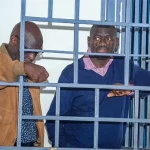
Besigye, Lutale and Captain Oola remain on remand. Justice Baguma has directed both sides to agree on preliminary issues before trial, and has appointed three assessors — John Musana, Sarah Babirye and Richard Okello — to sit alongside the bench. The prosecution’s first witness is scheduled for June 11, 2026. The fresh constitutional application, filed before a separate High Court bench, is expected to generate its own litigation timeline.
The Attorney General and named military respondents had not yet filed responses to the latest application at the time of lodging, according to the judiciary’s electronic case management system. That silence, for now, speaks for itself.
Meanwhile, Besigye has reportedly told the court that Museveni should drop the pretence — should “stop being shy” and simply reintroduce pre-trial detention laws openly, rather than allow the court process to serve as a vehicle for indefinite imprisonment. It is the statement of a man who still believes he is speaking to history. He may be right.