SOUTH Africa’s sprinting scene is blazing with unprecedented brilliance, heralding a golden era in the 100m dash that promises to captivate the world for years to come. At the heart of this electrifying momentum is none other than Akani Simbine, the nation’s sprinting titan, whose recent performances have been nothing short of spectacular.
Akani Simbine continues to dominate the 100m sprint with an ironclad grip on the title of South Africa’s fastest man. Remaining unbeaten this season, Simbine has consistently shattered the sub-10-second barrier, a feat that cements his status among the global elite. His latest victory at the prestigious Diamond League in Morocco was a marvel to witness – a flawless display of explosive power, perfect technique, and unyielding determination. The roar of the crowd as he crossed the finish line was a testament to his magnetic presence on the track and his relentless pursuit of excellence.
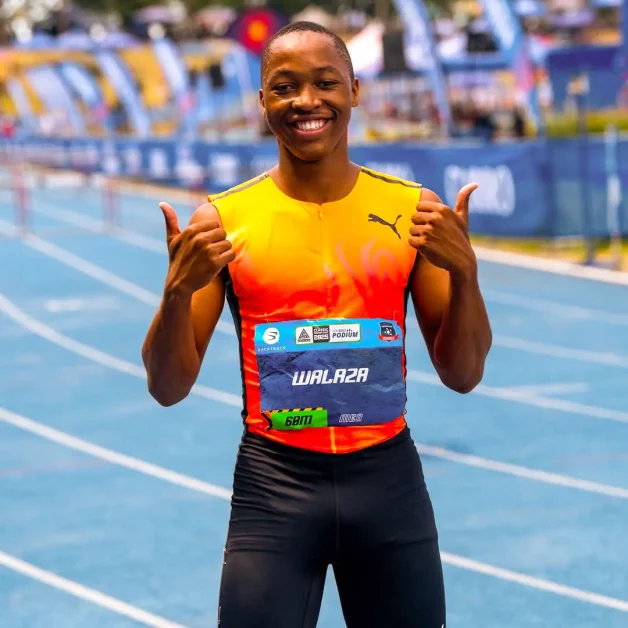
But the story of South African sprinting excellence does not end with Simbine. Emerging from the shadows is Bayanda Walaza, a prodigious talent whose recent triumph in the 100m has sent shockwaves through the athletics community. With a combination of blistering speed, raw talent, and steely composure, Bayanda Walaza is positioning himself as the rightful heir to Akani Simbine’s throne. His victory signals the dawn of a new chapter—not just for South Africa, but for Africa and the world at large.
Together, Simbine and Walaza symbolise a powerful sprinting dynasty in the making. Their rivalry and camaraderie fuel each other’s drive, pushing the boundaries of human speed and inspiring a generation of young athletes across the continent. South Africa’s investment in nurturing sprinting talent is paying off spectacularly, with these two champions lighting the way forward.
Akani Simbine’s unbeaten streak and Bayanda Walaza’s recent 100m victory together signal a transformative new era for African athletics, particularly in sprinting. Simbine, currently in the form of his life, has won all five 100m races he has entered this year, including a stunning Diamond League victory, showcasing his dominance and consistency at the highest level. His ability to consistently run sub-10-second times and break records once held by legends like Usain Bolt has earned him the title of the “Sub-10 King,” inspiring a generation of African sprinters.
Meanwhile, Walaza’s emergence as a 100m champion marks the rise of a new heir apparent to Simbine’s throne, signalling a seamless generational transition that promises to sustain South Africa’s—and Africa’s—presence at the pinnacle of global sprinting. This dynamic duo embodies a powerful narrative of growth and continuity, with Simbine’s experience and leadership providing a foundation for younger talents like Walaza to flourish.
Together, their achievements reflect a broader renaissance in African sprinting, where fierce competition, improved training systems, and rising talent pools are elevating the continent’s status on the world stage. Simbine’s role as a mentor and senior statesman further strengthens this ecosystem, fostering a culture of excellence and ambition among emerging athletes. This combination of established supremacy and fresh talent signals that African sprinting is not only competitive but poised to dominate in the years ahead, rewriting the global athletics landscape.
South Africa is emerging as a powerhouse in the 100m sprint on the global stage due to a combination of exceptional talent, consistent sub-10-second performances, and a supportive athletic environment fostering new stars.
Key reasons include:
- World-Class Athletes and Consistency: Simbine, South Africa’s sprinting icon, has been a dominant force since breaking the 10-second barrier in 2015. He has registered sub-10 times on 29 occasions and holds the South African record of 9.89 seconds. Simbine has been a regular finalist at major global events, consistently ranking among the world’s top 10 fastest men, and his performances have inspired a new generation of sprinters.
- Rising Young Talent: The emergence of young sprinters like Walaza, who recently became the fastest 100m sprinter globally this year with a 9.99-second run, and Gift Leotlela, also breaking the 10-second barrier, signals a deepening talent pool. This infusion of youth alongside established stars ensures sustained competitive excellence.
- Strong National Sprinting Culture and Infrastructure: South Africa benefits from a well-organised athletics system, a growing fitness culture, and favourable natural conditions that encourage year-round training and competition. The country’s history of sporting excellence and access to international competitions post-apartheid have further accelerated athlete development.
- Multiple Athletes in Global Top Rankings: In 2025, twelve South African athletes ranked in the world’s top 10 across various track events, including three in the 100m sprint. This broad base of elite performers reflects a robust sprinting program capable of producing world-class results consistently.
- Inspirational Role Models and Competitive Rivalries: The success of Simbine and the rise of athletes like Walaza create a competitive environment that pushes each sprinter to excel, fostering a sprinting renaissance in South Africa that is now making waves on the global stage.
Together, these factors explain why South Africa is rapidly becoming a sprinting powerhouse, challenging traditional sprinting nations and promising a bright future for the 100m on the world athletics stage.