IN the world of elite athletics, where fractions of seconds and millimetres can determine victory or defeat, two African champions have found themselves fighting battles that extend far beyond the track and ring. Their stories, separated by sport but united by struggle, illuminate a complex intersection of human rights, scientific integrity, and the evolving definition of fair competition in women’s sports.
Caster Semenya’s Pyrrhic Victory
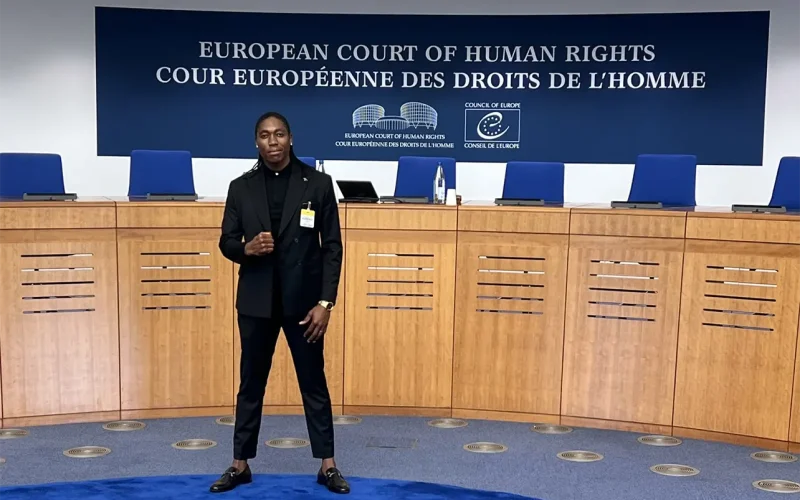
On Thursday, July 10, 2025, the Grand Chamber of the European Court of Human Rights delivered what could be considered both a victory and a reminder of justice delayed. The court ruled that Caster Semenya, South Africa’s double Olympic 800-meter champion, had not received a fair hearing when she challenged World Athletics’ testosterone regulations in Swiss courts.
The ruling represents a significant moment in a battle that has consumed nearly two decades of Semenya’s life. Since her explosive arrival on the world stage in 2009—when she dominated the 800 meters at the World Championships in Berlin only to be subjected to immediate gender verification testing—Semenya has been locked in an exhausting legal and personal struggle with athletics’ governing bodies.
The European Court’s decision does not overturn the World Athletics regulations that require female athletes with differences in sexual development (DSDs) to medically reduce their testosterone levels to below 2.5 nmol/L for at least six months before competition. These rules, which can be satisfied through medication or surgery, remain in place. However, the court’s finding that Semenya was denied due process adds weight to her long-standing argument that the regulations violate fundamental human rights.
“It’s a battle for human rights now. It’s not about competing. It’s about putting athletes’ rights first. It’s about the protection of athletes,” Semenya has stated, emphasising that her fight continues not for personal glory—she has turned to coaching—but for the next generation of athletes who may face similar discrimination.
The scientific foundation underlying these regulations has itself become contested territory. The primary study used by World Athletics to justify the testosterone limits was later found to lack evidence for a direct causal relationship between higher testosterone levels and performance advantage in female athletes. The British Journal of Sports Medicine issued a correction in 2021, stating there was “no confirmatory evidence for causality in the observed relationships reported.” This acknowledgement came four years after the study’s publication and after it had already been used to craft policies that would end Semenya’s competitive career.
The personal cost of these regulations on Semenya has been profound. In her memoir, “The Race to Be Myself,” she writes: “I feel that [World Athletics] has confiscated a large part of my life. I’ve spent as much time fighting them as I have training and racing. They have stolen years of performances not only from me but also from the audience.”
The regulations have also impacted other elite athletes, including Francine Niyonsaba, the 800-meter silver medalist from the 2016 Rio Olympics, who has been forced to compete in different events or face the same medical interventions that Semenya refused to undergo.
Imane Khelif: Boxing’s New Battleground
While Semenya’s courtroom victory provides a measure of vindication, another African athlete finds herself at the centre of a similar controversy in an entirely different arena. Imane Khelif, Algeria’s accomplished boxer with a 37-9 career record and a 2022 world silver medal, has become the focal point of gender verification debates in combat sports.
Khelif’s troubles began in 2023 when she was disqualified from the International Boxing Association (IBA) world championships along with Taiwan’s Lin Yu-ting. The IBA claimed both athletes failed gender verification tests, though the organisation has been notably opaque about the nature of these tests, stating only that they were “not testosterone examinations” but involved “a separate and recognised test.”
The lack of transparency surrounding Khelif’s disqualification has drawn sharp criticism from the International Olympic Committee (IOC), which has severed ties with the IBA over governance issues, opaque finances, and questions about corruption. The IOC has declared both Khelif and Lin eligible for Olympic competition, calling their 2023 disqualification “sudden and arbitrary” and lacking in due process.
“These two athletes were the victims of a sudden and arbitrary decision by the IBA,” the IOC stated. “Towards the end of the IBA world championships in 2023, they were suddenly disqualified without any due process.”
For Khelif, the controversy represents not just a professional setback but a personal assault on her identity. She has competed in women’s boxing throughout her career, winning medals and losing matches without incident until the 2023 controversy. Her participation in the delayed 2020 Tokyo Olympics, where she was eliminated in the quarterfinals, generated no questions about her eligibility at the time.
The boxer has maintained her identity as female and has filed lawsuits against detractors who have questioned her eligibility. Unlike some other high-profile cases involving transgender athletes, Khelif is not known to be transgender, making the application of gender verification policies to her case particularly complex.
The Historical Context of Gender Policing in Sports
The controversies surrounding both Semenya and Khelif are part of a longer history of gender verification in women’s sports that dates back to the early 20th century. When women began competing in larger numbers, sports governing bodies implemented various forms of testing, from visual inspections to chromosome analysis, often with little scientific basis and significant potential for harm.
The practice gained particular attention in the 1930s when Zdeněk Koubek, an athlete from what was then Czechoslovakia, began publicly identifying as a man. This led to calls for examinations of all women competitors, a precedent that would echo through decades of sports governance.
Over time, these verification methods have evolved from crude visual inspections to more sophisticated but still problematic tests. The current focus on testosterone levels represents the latest iteration of this ongoing effort to categorise and regulate women’s participation in sport.
The Broader Implications
The cases of Semenya and Khelif illuminate fundamental questions about the nature of competition, the role of science in sports governance, and the balance between fairness and individual rights. Their experiences highlight several critical issues:
Scientific Integrity: The correction of the study underlying World Athletics’ testosterone regulations demonstrates the importance of rigorous, independent scientific research in policy-making. When regulations are based on flawed or incomplete science, they risk harming athletes unnecessarily.
Due Process: Both cases involve questions about fair hearings and transparent procedures. The European Court’s ruling in Semenya’s case specifically addressed the lack of proper judicial review, while the IOC’s criticism of the IBA centres on the arbitrary nature of Khelif’s disqualification.
Human Rights: The intersection of sports regulations and human rights has become increasingly prominent. Athletes like Semenya and Khelif argue that they should not be forced to alter their bodies or undergo invasive testing to participate in sport.
Privacy and Dignity: The public nature of these controversies has raised questions about athletes’ privacy rights and the psychological impact of having one’s gender questioned in the public arena.
Looking Forward
As both athletes continue their respective battles, their cases serve as catalysts for broader conversations about the future of women’s sports. The challenges they face are not merely personal but reflect systemic issues in how sports governing bodies approach questions of fairness, inclusion, and athlete welfare.
Semenya’s European Court victory, while not overturning the regulations that ended her competitive career, provides a legal precedent for future challenges and validates her claims about procedural fairness. Her transition to coaching allows her to influence the next generation of athletes while continuing her advocacy work.
Khelif’s situation remains more fluid, with her Olympic eligibility confirmed by the IOC, but questions about her future in boxing under other governing bodies still unresolved. Her case has highlighted the need for consistent, transparent, and scientifically sound policies across different sports organisations.
The Human Cost
Beyond the legal victories and policy debates lies a more fundamental question about the human cost of these controversies. Both Semenya and Khelif have spent years of their careers fighting for the right to compete rather than focusing solely on their athletic development. The psychological impact of having one’s gender questioned publicly, the financial burden of legal battles, and the loss of competitive opportunities represent costs that extend far beyond wins and losses in competition.
Semenya’s reflection that World Athletics “has confiscated a large part of my life” captures the personal toll of these battles. Similarly, Khelif’s need to defend her identity while preparing for competition adds a layer of complexity to her athletic career that most competitors never face.
Conclusion
The stories of Caster Semenya and Imane Khelif represent more than individual battles against sports regulations. They embody broader struggles for dignity, fairness, and the right to compete without being forced to change who you are. Their experiences have exposed flaws in scientific research, gaps in due process, and the ongoing challenge of balancing competitive fairness with human rights.
As sports continue to evolve and our understanding of human biology becomes more sophisticated, the cases of these two champions serve as reminders that behind every policy and regulation are real people whose lives and careers hang in the balance. Their persistence in fighting for their rights has already influenced policy discussions and legal precedents, ensuring that their impact will be felt long after their competitive days are over.
The battles fought by Semenya and Khelif are ultimately about more than sport—they are about the fundamental right to compete as oneself, without compromise or alteration. In a world where athletic achievement is often measured in seconds and points, their greatest victory may be in helping to reshape how we think about fairness, inclusion, and human dignity in competitive sport.