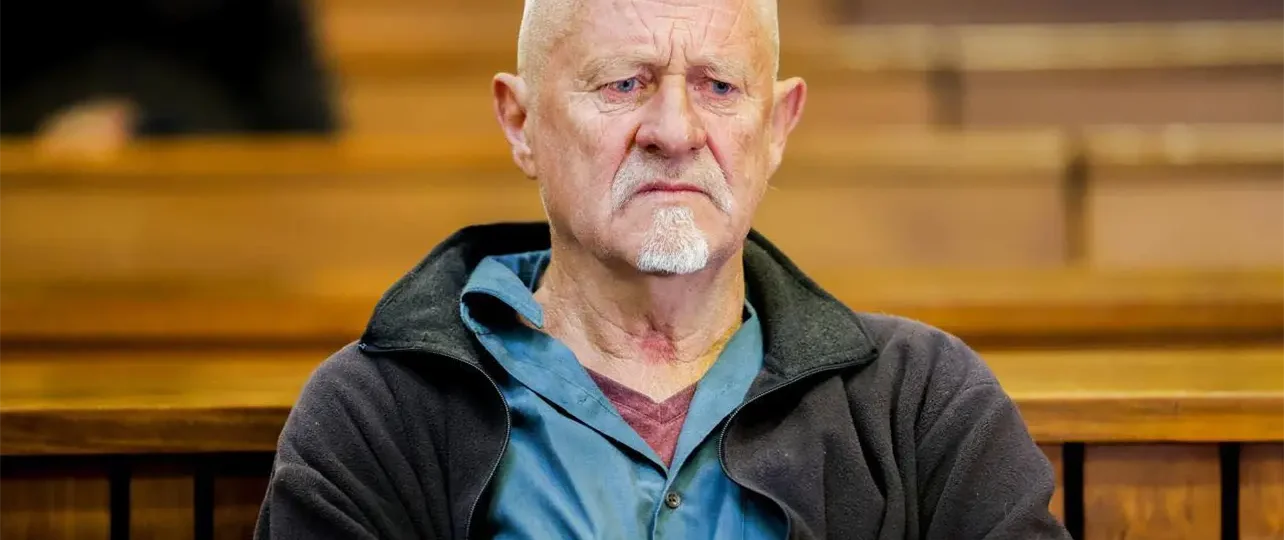

IN a landmark ruling that underscores South Africa’s commitment to confronting its apartheid past, former police officer Johan Marais has been sentenced to 15 years imprisonment for the 1987 murder of student activist Caiphus Nyoka. The High Court in Pretoria delivered this sentence after Marais, now in his mid-60s, pleaded guilty to the brutal killing that occurred during a pre-dawn raid at Nyoka’s family home in Daveyton on the East Rand.
The conviction carries particular weight because Marais never sought amnesty through the Truth and Reconciliation Commission (TRC), leaving him vulnerable to prosecution under South African law. His refusal to participate in the TRC process meant he never publicly acknowledged his crimes or sought forgiveness from the Nyoka family – a decision that has now resulted in his imprisonment nearly four decades after the crime.
The Crime That Shook a Community
On August 24, 1987, apartheid security forces conducted a targeted raid on the Nyoka household in Daveyton, Gauteng, in the early morning hours. Their target was Nyoka, a 23-year-old leader of the Congress of South African Students (COSAS) who had become a prominent voice in the anti-apartheid struggle.
The details of what unfolded that night remain harrowing. After identifying Nyoka, police removed his friends from the room before opening fire. Nyoka was shot multiple times – at least 12 bullets found their mark, ending the life of the young activist instantly. His body was removed without the family’s knowledge, leaving them to discover only bloodstained bedding and the absence of their beloved son and brother.
The family’s anguish was compounded by the authorities’ silence. For days, they were left in the dark about Nyoka’s fate, a cruel psychological torment that extended the trauma of his murder. His parents would die without ever receiving answers or seeing justice for their son’s death.
Remembering Caiphus Nyoka: A Life Cut Short
The Making of an Activist
Born on February 9, 1964, Caiphus Nyoka came of age during one of the most turbulent periods in South African history. Growing up in Daveyton, Gauteng, he witnessed firsthand the injustices of apartheid and chose to stand against them. His leadership of the local COSAS branch positioned him at the forefront of student resistance, coordinating with broader civic organisations in the fight for freedom and equality.
Nyoka’s activism came at a personal cost. He and his family endured constant harassment from security forces – frequent night raids, arbitrary arrests, and sustained intimidation designed to break their spirit. Yet these tactics only seemed to strengthen his resolve. Those who knew him described a young man of extraordinary courage, someone who refused to be silenced despite the very real danger he faced.
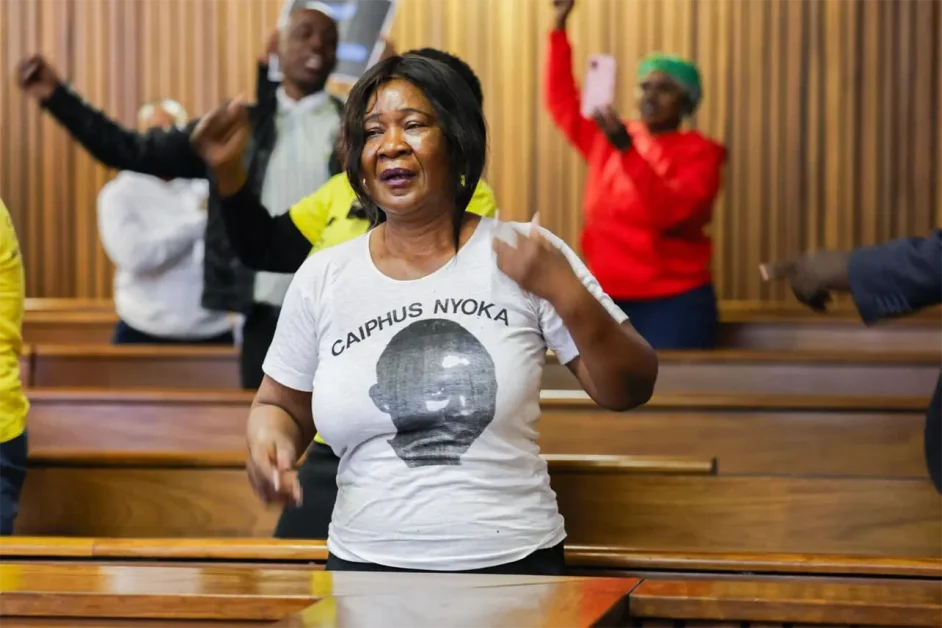
The targeting of Nyoka was no random act of violence. The apartheid state had identified him as a threat to their system of oppression, and his murder was a calculated attempt to decapitate local resistance. The excessive force used – shooting him more than a dozen times – was intended to send a message to other young activists about the consequences of defying the regime.
Nyoka’s death represented more than the loss of one young life; it symbolised the state’s willingness to use extreme violence against those who dared to dream of a different South Africa. His murder joined the long list of apartheid atrocities that would later be documented by the TRC, serving as evidence of the systematic brutality employed to maintain white minority rule.
The Truth and Reconciliation Commission: A Road Not Taken
The TRC, established in the mid-1990s, offered perpetrators of apartheid-era crimes a path to amnesty in exchange for full disclosure and demonstration of political motivation. This process was designed to balance the need for truth with the practical realities of transitioning to democracy without bloodshed.
Marais’s decision not to seek amnesty through the TRC speaks to either an unwillingness to confront his past or a belief that he might escape accountability altogether. By refusing to participate in the commission’s work, he forfeited the opportunity to seek forgiveness from the Nyoka family and the broader South African public. More significantly, he remained liable for prosecution under ordinary criminal law.
The TRC process, while imperfect, provided many families with answers they had long sought and offered some perpetrators a chance at redemption. Marais’s absence from this process meant that the Nyoka family was denied even the basic acknowledgement of their son’s murder, prolonging their suffering for decades.
The path to Marais’s conviction was neither swift nor straightforward. Years of legal delays, including attempts by the defence to stall proceedings through requests for psychological evaluations, tested the resolve of both the justice system and the Nyoka family. Yet the court’s determination to proceed despite these obstacles demonstrated that accountability for apartheid crimes remains a priority in democratic South Africa.
The 15-year sentence handed down to Marais sends a clear message: there is no statute of limitations on justice for crimes against humanity. It affirms that South Africa will not allow perpetrators to escape accountability simply by waiting out the passage of time.
Legacy and Reflection
Nyoka’s life and death embody the sacrifice of countless young South Africans who gave their lives in the struggle against apartheid. His courage in the face of overwhelming state power serves as an enduring reminder of the price of freedom and the resilience of those who refused to accept injustice.
The conviction of Marais, while long overdue, represents more than individual accountability. It honours the memory of Caiphus Nyoka and reaffirms South Africa’s commitment to confronting its past honestly. For the Nyoka family, who have waited nearly four decades for justice, this moment brings a measure of closure to a wound that has never fully healed.
Yet this case also highlights the limitations of transitional justice. The TRC process, groundbreaking as it was, could not compel participation from all perpetrators. Some, like Marais, chose silence over truth, leaving families without answers and communities without closure. His eventual conviction through the ordinary courts demonstrates that multiple pathways to justice may be necessary in post-conflict societies.
The Ongoing Struggle for Truth
The sentencing of Marais closes one chapter in the long book of apartheid’s aftermath, but it also opens new questions about how societies deal with historical injustices. As South Africa continues to grapple with the legacy of apartheid, the Nyoka case serves as both a victory for justice and a reminder of how much work remains to be done.
Nyoka died believing in a South Africa where all people could live in dignity and freedom. While he did not live to see that dream realised, his sacrifice contributed to the liberation that would come seven years after his death. The conviction of his killer, delayed though it was, honours his memory and reaffirms that even in the darkest times, justice may yet prevail.
The story of Nyoka and Marais is ultimately a story about choices – the choice to resist oppression despite the cost, the choice to seek truth over vengeance, and the choice to pursue justice even when it seems impossible. In finding Marais guilty and sentencing him to prison, South Africa has chosen to remember its fallen heroes and hold accountable those who sought to silence them.
This conviction stands as a testament to the principle that justice, however delayed, can still be served. It is also a reminder that the arc of history, while long, can indeed bend toward justice – if everyone has the courage to keep pulling it in that direction.