
FOR decades, Africa has been told what it cannot do. Cannot industrialise. Cannot compete globally. Cannot finance its own development. Cannot break free from the cycle of dependency. Today, those narratives are crumbling under the weight of concrete, steel, and unwavering African ambition.
At the forefront of this transformation stands Aliko Dangote, Africa’s richest man, whose recent multi-billion dollar investments across the continent are not merely business deals—they are declarations of independence, blueprints for self-sufficiency, and proof that Africa’s renaissance will be led by Africans themselves.
Consider the scale: A $2.5 billion fertiliser complex in Ethiopia. A $1+ billion investment in Zimbabwe’s infrastructure. A $4 billion refinancing of Africa’s largest refinery. These are not aspirational figures on paper—these are active construction sites, operational facilities, and signed agreements that are reshaping Africa’s industrial landscape in real-time.
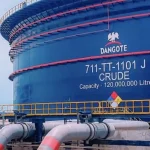
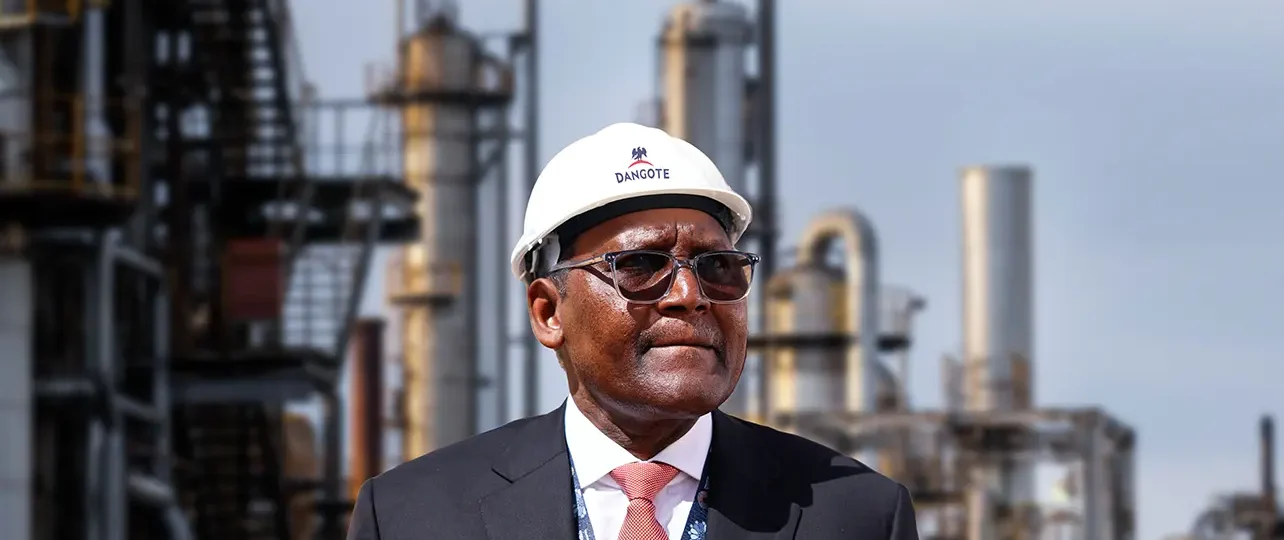
The Dangote Petroleum Refinery, with its staggering 650,000 barrels-per-day capacity, began operations in February 2024. It stands as the world’s largest single-train refinery—not in Europe, not in Asia, but in Nigeria. This isn’t just about oil; it’s about energy security, about keeping wealth on the continent, about African crude refined by African hands for African markets.
Ethiopia: From Hunger to Hope
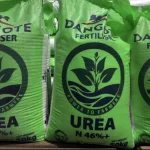
The partnership with Ethiopian Investment Holdings represents something even more fundamental than energy—it addresses food security at its core. The Gode fertiliser complex, designed to produce 3 million metric tons of urea annually, will rank among the world’s top five largest fertiliser production facilities.
Think about what this means for a nation where over 70% of the population depends on agriculture. Ethiopian farmers will no longer wait for imported fertilisers that arrive late and cost too much. They will have access to high-quality, affordable fertilisers produced from their own natural gas reserves—the Hilal and Calub fields that have sat largely untapped while Ethiopia imported what it already possessed beneath its soil.
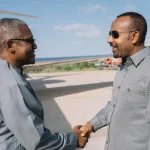
Dr Brook Taye, CEO of Ethiopian Investment Holdings, captured the moment’s significance: “This landmark agreement marks a significant milestone in Ethiopia’s journey toward industrial self-sufficiency and agricultural modernisation.”
Self-sufficiency. Those two words contain multitudes. They speak to a future where Africa feeds itself, powers itself, and builds itself.
The African Financing Revolution
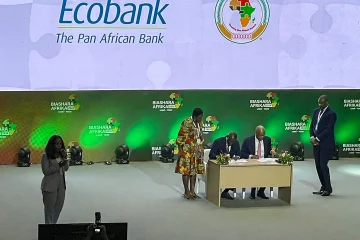
Perhaps the most revolutionary aspect of this transformation isn’t the infrastructure itself—it’s who is paying for it. The $4 billion syndicated financing for the Dangote Refinery attracted strong participation from African and international institutions, with the African Export-Import Bank (Afreximbank) contributing the largest single share: $1.35 billion.
Professor Benedict Oramah, President of Afreximbank, delivered what may be the most important statement in modern African economic history: “Africa’s development can only be meaningfully financed from within. It is only when African institutions lead the way that others can follow.”
This is not rhetoric. This is an African capital, controlled by African institutions, invested in African enterprises, creating African jobs, and building African wealth. The cycle of dependency is not merely breaking—it is being deliberately dismantled and replaced with a model of indigenous capitalism that serves African interests first.
Zimbabwe: Redemption and Return
Dangote’s return to Zimbabwe after abandoning investment plans in 2015 tells another story—one of governance, stability, and renewed confidence. When asked what changed, Dangote’s response was direct: “The government is solid, there is a lot of transparency.”
This is the feedback loop that will define Africa’s next chapter. Good governance attracts investment. Investment creates jobs. Jobs build the middle class. The middle classes demand accountability. Accountability strengthens governance. The virtuous cycle begins.
The $1+ billion commitment to Zimbabwe’s cement, power generation, and petroleum pipeline infrastructure represents more than economic development—it represents faith in Africa’s ability to create the conditions for its own prosperity.
The Strategic Architecture of Transformation
What distinguishes Dangote’s approach from typical foreign investment is its strategic coherence. This is not extractive capitalism that ships raw materials abroad and imports finished goods. This is value-chain development:
Energy Security: The refinery ensures Africa controls its own petroleum products, ending the absurdity of exporting crude and importing gasoline.
Food Security: The fertiliser complex addresses agricultural productivity at scale, potentially transforming yields across East Africa and beyond.
Infrastructure Foundation: Cement and power generation provide the literal building blocks of development—roads, bridges, factories, homes, schools, and hospitals.
Regional Integration: These facilities serve not just their host nations but entire regions, creating supply chains that bind African economies together through mutual interest rather than colonial legacy.
The Ripple Effect
When a 3-million-ton fertiliser plant comes online in Gode, Ethiopia, its impact radiates outward. Construction jobs transform into permanent operational positions. Pipeline infrastructure connects previously isolated regions. Engineering expertise transfers to local workers. Supply chains develop around the facility. Towns grow into cities.
When the Dangote Refinery reaches full capacity, Nigeria will stop haemorrhaging foreign exchange on petroleum imports. That capital stays in Nigerian hands, circulating through the economy, multiplying through investment, building the tax base that funds schools and hospitals.
When cement plants rise in Zimbabwe, housing becomes more affordable, infrastructure projects become feasible, and the very physical landscape of possibility expands.
The Vision Others Dare to Follow
Dangote’s operations now span 17 African countries. This is not empire-building in the colonial sense—it is network-building, creating an African industrial ecosystem where success in one nation enables success in others.
The message to other African entrepreneurs is clear: Scale is possible. Continental ambition is achievable. African problems have African solutions. The capital exists. The resources exist. The markets exist. What’s required is vision, execution, and the courage to think beyond the limitations others have imposed.
From Extraction to Production
For centuries, Africa’s relationship with the global economy followed a brutal pattern: Extract raw materials, ship them abroad, watch others add value, then buy back finished goods at marked-up prices. This system enriched everyone except Africans.
Dangote’s model inverts this entirely. Ethiopian gas becomes Ethiopian fertiliser. Nigerian crude becomes Nigerian gasoline. African resources create African value, generate African employment, and build African wealth.
This is not merely an economic shift—it is a psychological one. It answers the question that has haunted post-colonial Africa: Can we do this ourselves? The answer, increasingly obvious, is yes.
The Long Game
The 40-month timeline for the Ethiopian fertiliser complex. The methodical expansion across 17 countries. The patient accumulated of expertise in cement, then sugar, then salt, then oil refining, now fertilisers and beyond. This is strategic, long-term thinking that builds foundations rather than chasing quick returns.
African development will not happen overnight. But it is happening. In Gode, in Lagos, in Harare, in boardrooms across the continent, where African executives are making decisions about African futures using African capital.
The Challenge to a New Generation
Perhaps Dangote’s greatest contribution is not the refineries and factories themselves, but the demolition of the mental barriers that said such things were impossible for Africans. He has created a template that others can follow, adapt, and improve upon.
The young engineer in Nairobi, the entrepreneur in Accra, the financier in Johannesburg—they now have proof that African-scale ambition can become African-scale reality. The question is no longer “Can it be done?” but “Who will do it next?”
The Verdict of History
Future historians will mark this era as a turning point—not because development was perfect or problems were solved, but because the paradigm shifted. Africa moved from asking for a seat at the table to building its own table.
The Dangote story is ultimately about possibility. It demonstrates that African industrial capacity can compete globally. That African institutions can finance transformation at scale. African leadership can execute complex projects. African workers can operate world-class facilities. That African resources can benefit Africans first.
This is not the end of Africa’s development challenge. Poverty persists. Infrastructure gaps remain. Governance struggles continue. But the trajectory has changed. The momentum has shifted. The future being built is one where Africa is not a recipient of development, but an author of it.
As Professor Oramah declared: “The journey to utilise African resources for its own economic transformation is well underway.”
Well underway, indeed. And accelerating.
Conclusion: The Power of Belief Made Manifest
In the end, Dangote’s greatest product is not cement or fertiliser or refined petroleum. It is belief—belief that Africa can industrialise, belief that African solutions exist for African challenges, belief that the continent’s resources belong to its people, belief that Africa’s time has come.
That belief, backed by billions in investment and manifested in steel and concrete across the continent, is building the Africa that previous generations could only imagine.
The Renaissance is not coming. It is here. And it is being built by Africans, one deal, one country, one transformative project at a time.